

Last updated September 28, 2026
Where lifting usually starts
Lifting almost always begins at an edge, most often the front hairline or the perimeter above the ears and at the nape. Those are the spots that see the most oil, the most sweat, and the most friction from pillows, hats, and hands. The center of the unit rarely goes first. When you notice a corner peeling or the front edge tenting away from the skin, treat it as early feedback about your prep or your adhesive, not a failure of the hair system itself.
The pattern matters because it points at the cause. Front lifting points at sweat, oil, and touching your hairline. Perimeter lifting points at friction and heat. Reading where it starts tells you which fix to reach for first.
The common causes, and how to fix each
Most lifting comes down to a short list of causes. Work through them in order, because the first few are the ones we see most often and the easiest to correct at home.
- Symptom: front edge lifts within a day or two. Cause: scalp oil under the bond. Fix: clean the skin with alcohol or a citrus based prep before attaching, and let it dry fully so no residue is left.
- Symptom: edges creep up after a workout or a hot afternoon. Cause: sweat working under the adhesive. Fix: use a sweat resistant adhesive, dab the perimeter dry through the day, and give heavy sweat a chance to settle before pressing the edge back down.
- Symptom: the whole perimeter loosens in humid weather. Cause: humidity keeping the bond from staying set. Fix: switch to an adhesive rated for humidity and hot climates, and add a scalp protector layer that shields the bond from moisture.
- Symptom: bond feels weak from day one. Cause: a skipped or rushed clarifying wash left oil and old residue on the skin. Fix: do a full clarifying wash, remove every trace of old adhesive, and start each attachment on genuinely clean skin.
- Symptom: skin reacts or the bond never grips well. Cause: no scalp protector between adhesive and skin. Fix: apply a thin scalp protector first, which both guards your skin and gives the adhesive a cleaner surface to hold.
- Symptom: edges lift a few hours after attaching. Cause: not enough cure time before you sweat, shower, or sleep. Fix: follow the full cure window for your adhesive, and keep the fresh bond dry and undisturbed while it sets.
- Symptom: lifting no matter how well you prep. Cause: the adhesive is wrong for your climate or activity level. Fix: move to a stronger or more sweat and humidity resistant product matched to how you actually live.
Scalp oil is the number one reason
If we had to name a single cause, it would be scalp oil. Your skin produces oil constantly, and even a thin film keeps adhesive from ever making full contact. This is why a bond can look perfect when you attach it and start creeping up a few hours later. The oil was there the whole time.
The fix is prep, not more adhesive. Clean the skin with alcohol or a citrus based prep, wipe until the pad comes away clean, and let the area dry completely before the unit touches down. Piling on extra glue over an oily scalp does not solve the problem, it just makes removal harder later.
Sweat, heat, and humidity
Sweat and humidity are the next biggest offenders, and they matter more in some places than others. A dry Phoenix afternoon and a humid Pittsburgh August stress a bond in different ways, and the adhesive that holds through one may struggle in the other. If your edges lift mainly when you are hot or active, the answer is usually a climate matched adhesive plus a scalp protector, not scrubbing harder.
Give heavy sweat time to settle before you press a lifted edge back down, because sealing sweat under the adhesive only traps the moisture that broke the bond in the first place. Through a hot day, a light dab at the perimeter keeps the edges dry and holding.
Cure time and the right adhesive
Adhesive needs time to cure, and rushing that window is a quiet, common cause of lifting. If you sweat, shower, or sleep on a bond before it has set, you interrupt the grip while it is still forming. Follow the full cure time for your product and keep the fresh bond dry, and you remove one of the easiest problems to avoid.
If you have cleaned well, prepped properly, waited out the cure time, and the unit still lifts, the adhesive itself is likely the wrong fit for your skin, your sweat, or your climate. That is a solvable matching problem. Bring the product you are using to your next visit and we will dial in an adhesive and a routine that hold for your real life.
When to bring it to us
Occasional edge lifting is normal and usually fixable with better prep. Come see us when lifting is constant no matter what you try, when the perimeter or knots look worn, or when your scalp is irritated where the adhesive sits. Those point to a fit, wear, or product issue we should look at in person rather than a prep habit you can adjust.
Anything that feels like a skin reaction, a rash, or a sore is a question for a physician, not an adhesive tweak. For everything bond related, we would rather reset your prep and adhesive with you than have you fight a lifting edge every day.
Real work
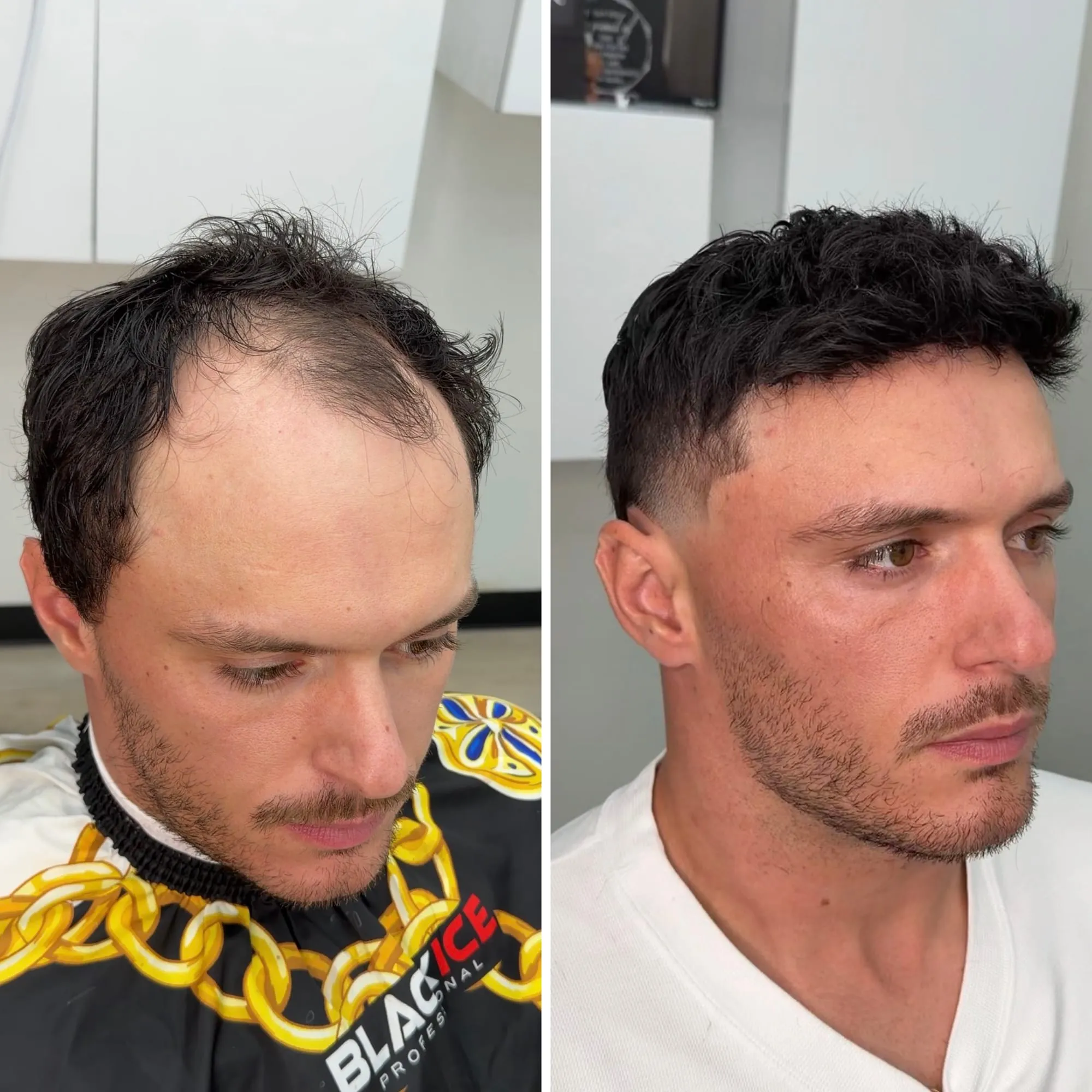
This is what it looks like.
A real client from our chair, photographed before and after his hair system was installed and cut in.
Questions, answered.
Why does my hair system lift at the front first?
The front hairline sees the most scalp oil, sweat, and hand contact, so it loses its seal first. Clean and dry that edge thoroughly before attaching, use a climate matched adhesive, and try to keep your hands off the hairline through the day.
Can sweat make a hair system lift?
Yes. Sweat works under the adhesive and breaks the bond, usually at the edges after a workout or a hot day. A sweat resistant adhesive, a scalp protector, and dabbing the perimeter dry all help. Let heavy sweat settle before pressing a lifted edge back down.
Does a clarifying wash really stop lifting?
It helps a lot. A rushed or skipped clarifying wash leaves oil and old adhesive on the skin, so the new bond never fully grips. A complete wash that removes every trace of residue gives the adhesive clean skin to hold, which is where a strong bond starts.
How long should adhesive cure before I sweat or shower?
Follow the full cure window for the specific adhesive you use, and keep the bond dry and undisturbed while it sets. Sweating, showering, or sleeping on a fresh bond too soon interrupts the grip while it is still forming and is a common cause of early lifting.
What if my hair system keeps lifting no matter what I do?
Constant lifting after good prep and full cure time usually means the adhesive is wrong for your skin, sweat, or climate, or the unit needs attention at the perimeter. Bring your current product to a visit and we will match an adhesive and routine that hold. See a physician for any skin reaction.
Keep reading
Related guides.
Prepping Your Scalp
Wash a few hours ahead, dry the scalp fully, add a scalp protector, then trim the perimeter. The prep routine that makes a hair system bond hold.
Hot Weather
How hair systems hold up to sweat, sun, and desert heat, and what we change for Arizona summers so the bond stays put. A practitioner guide.
How to Attach a Unit
A tool by tool walkthrough for attaching a hair system with tape or glue, including prep, placement, and adhesive cure times before you style.
Adhesive Types
Water based, solvent based, silicone, and acrylic adhesives compared on hold duration, moisture tolerance, and skin contact.