

Last updated September 28, 2026
How to read an adhesive by its chemistry
Every liquid bonding agent for hair replacement is built on one of a few chemistries, and the chemistry is what sets the three things you actually feel: how long the bond holds, how well it survives water and sweat, and how it treats your skin. Brand names change constantly, but the chemistry underneath is stable, so once you can read the chemistry you can predict how a product will behave before you ever try it.
This page is the spec table across all of those chemistries. It is deliberately different from our tape versus glue comparison, which is the head-to-head decision between the two formats an adhesive can take. Here we are one level up, comparing the chemistries themselves, and any of them can be delivered as either a brush-on liquid or a pre-cut tape. Read this to understand the material, then read tape versus glue to choose the format.
The four adhesive chemistries compared
Here is how the common chemistries line up on the axes that decide daily comfort and hold. The hold-duration ranges are typical for a healthy bond in normal conditions, and they shorten in heat, heavy sweat, and oily skin, and lengthen in cool, dry conditions with a well-prepped scalp. What is definitive is the relationship between the chemistries, not an exact number of days for any one person.
| Chemistry | Typical hold duration | Moisture and sweat tolerance | Skin contact and feel |
|---|---|---|---|
| Water based (acrylic emulsion) | Roughly 1 to 5 days | Lowest, softens with heavy sweat, water, and humidity | Gentlest, low tack, easy to release, a common starting point for new wearers |
| Solvent based (acrylic in a fast carrier) | Roughly 1 to 4 weeks | Highest, engineered for sweat, humidity, and swimming | Strongest grip, firmer feel, needs a citrus or oil remover to release cleanly |
| Silicone | Roughly 3 to 10 days | Moderate to high, resists moisture well | Soft, flexible, low-residue feel, often chosen for reactive or easily irritated skin |
| Acrylic paste | Roughly 1 to 3 weeks | High, thick body seals against sweat at the perimeter | Firm and cushioning, builds a thicker bond line, favored for skin and poly bases |
Water based adhesives
Water based adhesives are acrylic emulsions carried in water, so as the water evaporates the bond forms and the fumes are minimal. They are the gentlest on the skin and the easiest to release, which is why they are so often the first adhesive a new wearer learns on and why they suit anyone who reattaches frequently or wants a low-commitment daily bond.
The trade is hold. A water based bond gives the shortest duration of the four and is the first to soften once sweat, humidity, or a shower gets into it. In a hot climate or on an active day that can mean lifting at the edges sooner than you would like. If you want the gentleness of water based but need it to survive more, moving the perimeter to a stronger chemistry while keeping water based across the rest of the base is a common compromise.
Solvent based adhesives
Solvent based adhesives suspend an acrylic in a fast-drying, non-water carrier that flashes off quickly and leaves a tough, water-resistant film. This is the long-hold end of the range and the chemistry built for sweat, humidity, and swimming, which is why men in hot climates or with demanding routines gravitate to it for a bond that lasts weeks rather than days.
That strength has two costs. It grips firmly enough that you should release it with a proper citrus or oil-based remover rather than pulling, so removal is a deliberate step, not a quick peel. And because the film is so tenacious it demands clean, well-prepped skin to bond evenly and to come off without leaving residue. Used correctly it is the most dependable hold available, which is exactly why it is the workhorse for long-wear bonds.
Silicone adhesives
Silicone adhesives sit in the middle. They offer moderate to strong hold with good moisture resistance, but their real signature is feel: a soft, flexible, low-residue bond that many people with reactive or easily irritated skin tolerate better than firmer acrylic films. If a water based bond feels too short-lived but a solvent based one feels too aggressive on your skin, silicone is often the middle path.
Because silicone is naturally slick, the surface it bonds to matters more than with other chemistries, so clean, oil-free prep is what unlocks its hold. Get the prep right and you get a comfortable bond that lasts several days to over a week without the firm grip of a solvent film. Skin that reacts to adhesives is a comfort and fit question we solve with material choice and prep, and any true allergy or persistent skin reaction is a question for your physician, not something to push through.
Acrylic pastes
Acrylic pastes are thick, high-solids adhesives applied in a heavier layer rather than a thin brush coat. That body is the point: the thicker bond line cushions the base, seals well against sweat at the perimeter, and delivers long hold, which is why pastes pair naturally with skin and poly bases where a smooth, sealed edge keeps the front looking undetectable.
The thickness that makes a paste seal so well also makes it a more deliberate application and a more thorough removal, since a heavier layer takes more care to lay down evenly and more remover to lift cleanly. For wearers who want a durable, well-sealed bond on a skin base and do not mind a more involved routine, an acrylic paste is a strong, honest choice.
- Want the gentlest bond and reattach often: water based leans your way
- Want the longest, most sweat-proof hold and will remove with solvent: solvent based wins
- Have reactive or easily irritated skin and want a soft feel: silicone is the middle path
- Run a skin or poly base and want a thick, well-sealed perimeter: an acrylic paste fits
Matching adhesive to base, climate, and routine
Three inputs decide which chemistry is right for you. Your base material comes first, because a delicate lace front and a smooth skin base reward different adhesives, and a paste that suits poly can be too heavy for fine lace. Your climate comes next, since heat and humidity push everyone toward higher moisture tolerance, which is why our Peoria, Arizona wearers often run stronger bonds than the same person would need in a mild season. Your routine comes last: how often you want to reattach, how hard you sweat, and how much removal effort you will accept.
In practice many wearers do not pick one chemistry for the whole unit. A very common setup is a stronger solvent based or paste bond around the perimeter, where lifting starts, and a gentler water based or silicone bond across the interior, which balances a secure edge against comfort and easy release. There is no single best adhesive, only the best match for your base and your life, and that match is something we dial in together.
What we set at your fitting
At The Hair Experience we treat adhesive as part of the fitting, not an afterthought. Nico Rigano, Ivette Rigano, and Denisse Diaz match the chemistry to your specific base, your scalp, and your climate at our studios in Peoria, Arizona and Eighty Four, Pennsylvania, then walk you through prep, application, and clean removal so the bond behaves the way this page describes. Skin type, sweat, and activity all factor in, and we would rather start you gentle and build up than push a hold your skin does not want.
If your current adhesive is lifting early, feeling harsh, or leaving residue, that is usually a chemistry-and-prep mismatch we can correct quickly. Bring your routine and your climate to a consultation and we will map the right chemistry, and the right format, to how you actually live.
Real work
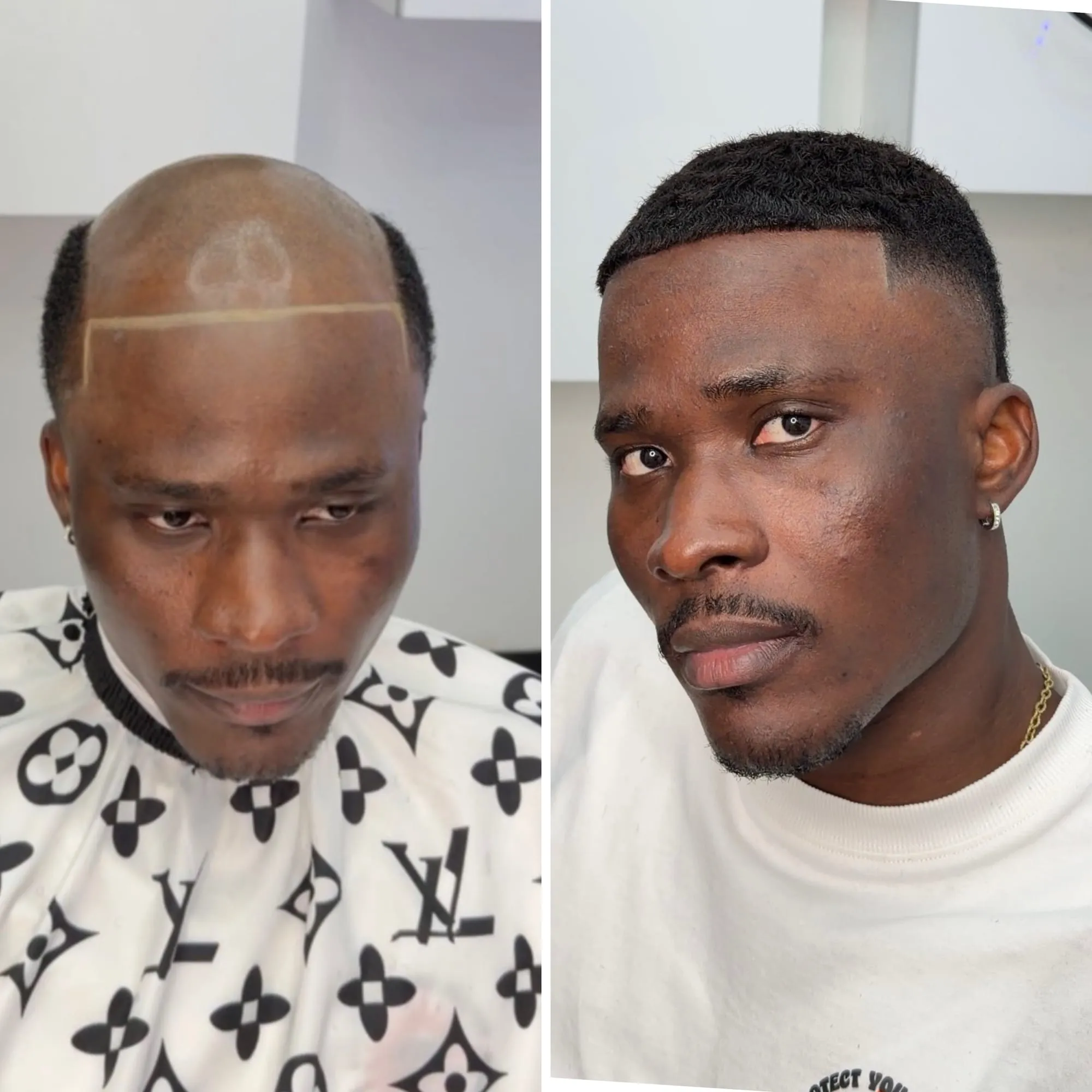
This is what it looks like.
A real client from our chair, photographed before and after his hair system was installed and cut in.
Questions, answered.
What are the main types of hair system adhesive?
Four chemistries: water based (acrylic emulsion), solvent based (acrylic in a fast carrier), silicone, and acrylic paste. Water based is the gentlest with the shortest hold, solvent based holds longest and resists sweat best, silicone offers a soft feel for reactive skin, and paste gives a thick, well-sealed perimeter.
Which adhesive holds the longest?
Solvent based adhesives, which can hold roughly one to four weeks and are the most sweat and water resistant. Acrylic pastes also run long. Water based gives the shortest hold, usually one to five days. All ranges shorten in heat, humidity, and heavy sweat.
What is the difference between adhesive types and tape versus glue?
Adhesive type is the chemistry (water based, solvent, silicone, or acrylic), which sets hold, moisture tolerance, and skin feel. Tape versus glue is the format that chemistry comes in, a pre-cut tape or a brush-on liquid. Any chemistry can be delivered as either format, so the two choices stack.
Which adhesive is best for sensitive skin?
Many wearers with reactive or easily irritated skin do best on silicone or a gentle water based bond, since both feel softer than a firm solvent film. Clean, oil-free prep matters most. A true allergy or a persistent skin reaction is a question for your physician, not something to push through.
Can I use different adhesives on the same hair system?
Yes, and many wearers do. A common setup is a stronger solvent based or paste bond around the perimeter where lifting starts, and a gentler water based or silicone bond across the interior for comfort and easy release. We help you dial in the mix at your fitting.
Keep reading
Related guides.
Tape vs Glue
Tape typically holds a hair system one to two weeks, liquid glue two to four weeks. How sweat, humidity, and base type decide which to use.
Attachment Methods
Tape, bonding, and clip attachment for hair systems compared by hold, comfort, and how they suit your routine. How to attach a hair system.
Removing a System
How to remove a hair system without damaging your hair: the right solvent, the technique, and why studio removal protects your scalp and the unit.
Why It Is Lifting
A hair system usually lifts because of scalp oil, sweat, humidity, a skipped clarifying wash, or the wrong adhesive. Here is the cause and the fix.