

Last updated September 28, 2026
Why one system is a single point of failure
When you own a single unit, everything rides on it. It is on your head most days, which means it never gets a full stretch of time off the scalp to dry out and recover between wears. It also means that the day something goes wrong, you have no fallback.
Things do go wrong, and usually at the worst moment. The most common ways a solo unit leaves a man stuck are predictable, which is exactly why planning around them is worth doing.
- A bond lifts early before an event and there is no time to reattach cleanly
- The unit is at the studio for a repair or re-ventilation and you have nothing to wear in the meantime
- A haircut, color refresh, or deep clean takes it out of rotation for a day or two
- You travel and a bottle leaks, a bag is lost, or the heat and sweat of the trip cut a bond short
- Normal wear finally catches up and the base needs replacing sooner than the calendar suggested
How rotation extends the life of each unit
A hair system wears from being worn, and a lot of that wear comes from the base staying warm and damp against the scalp day after day with no chance to fully dry. Adhesive residue builds at the perimeter, the base holds moisture, and knots and lace take the strain of every attach and remove cycle.
Rotating two identical units cuts each one's share of that load roughly in half. While one is on your head, the other is off, clean, dry, and resting. That downtime is not idle time, it is recovery. A base that dries completely between wears holds up better and longer than one that never gets the chance.
- Each unit spends far less total time bonded to the scalp over its life
- Adhesive and residue get cleaned off fully instead of layering wear on wear
- The base dries all the way through before it goes back on
- You always have a fresh, ready unit for a last minute plan
- One can go to the studio for maintenance while you keep wearing the other
How a two-system rotation works day to day
The routine is simple once it is set up. The goal is to keep both units on a similar wear pattern so they age together and stay a close match, rather than running one hard while the other sits new in a drawer.
- Wear unit A through your normal attachment cycle, then remove it
- Clean unit A fully, then let it dry and rest while unit B goes on
- Wear unit B through its cycle while unit A recovers
- Alternate on that rhythm so both units log similar time and wear evenly
- Send one in for its studio maintenance or repair while you wear the other, then swap it back in
Why the two systems should be identical
For a rotation to feel seamless, the backup cannot be an afterthought. It needs to be built to the same specification as your main unit, the same base construction, density, hair length, color, wave, and hairline. When both are cut in and blended to match, switching between them is invisible to everyone around you and to you in the mirror.
This is one reason we take a careful template and full spec at your consultation. With your build on file, ordering a matched second unit is straightforward, and both age on the same path so the match holds over time rather than drifting apart.
Why a backup supports a higher-value first purchase
Some men hesitate to invest in a well built unit because they worry about being left with nothing if it is out of action. A second identical system removes that worry, and that changes the math on the first purchase in your favor.
Because rotation lightens the load on each unit and a backup covers you during maintenance and travel, a more capable build is easier to commit to with confidence. You are not betting everything on one fragile item. You are running a pair that back each other up, which is a more durable and lower stress way to wear day to day. We work through whether one unit or two fits your life during the consultation, so the plan matches how you actually live rather than a generic rule.
When one system is enough
A backup is not mandatory for everyone. If you wear only occasionally, keep your unit off for long stretches, or are still in your first weeks deciding whether daily wear suits you, a single system may be all you need for now. In that case each unit already gets plenty of rest between wears, so the rotation benefit is smaller.
The case for two grows the more you wear, the more you travel, and the more you rely on always looking your best without a gap. If any of those describe you, a second identical unit is one of the highest value decisions you can make. We will give you an honest read on where you sit rather than pushing a second unit you do not need.
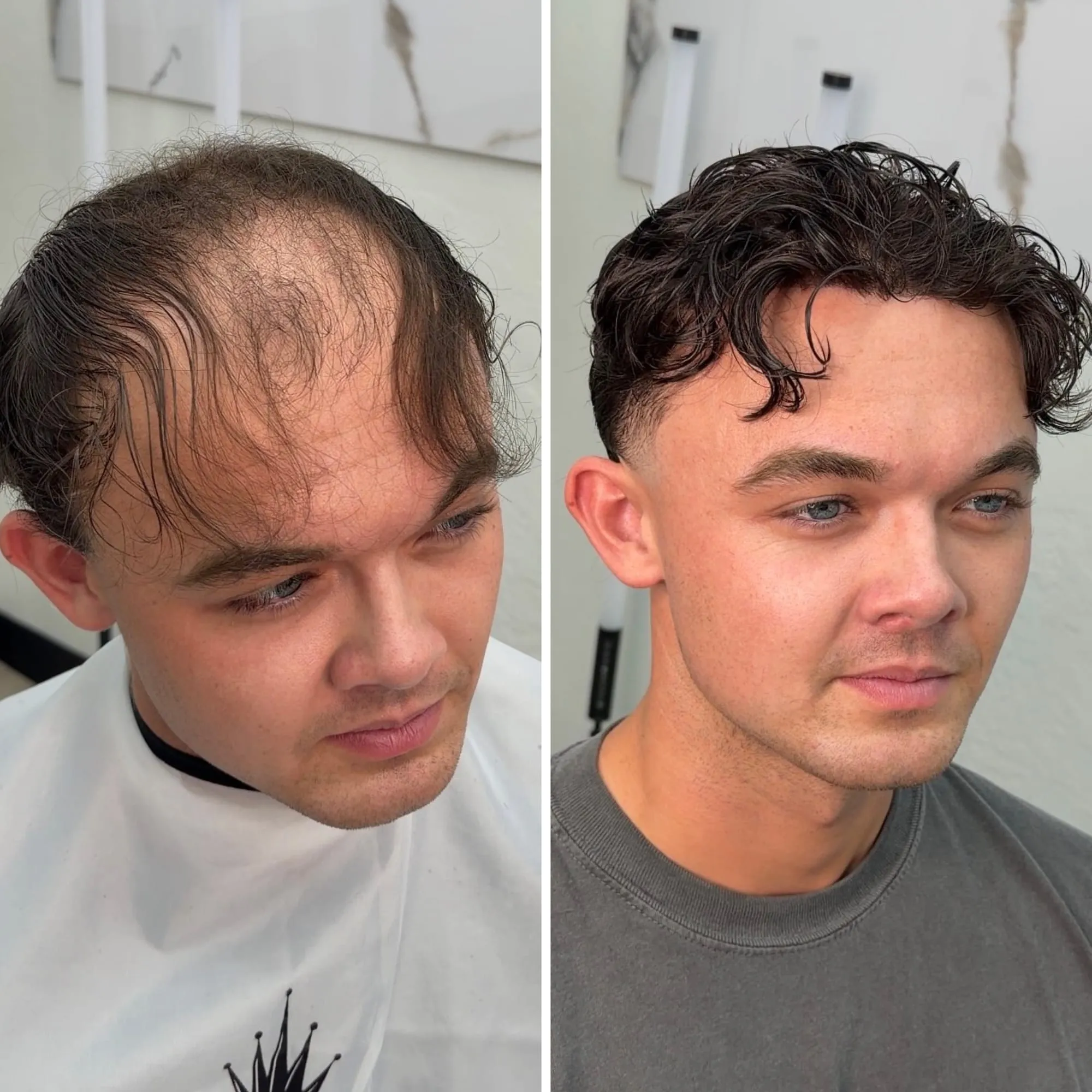
Real work
This is what it looks like.
A real client from our chair, photographed before and after his hair system was installed and cut in.
Questions, answered.
Do I really need two hair systems?
Not everyone, but most daily wearers benefit. If you wear most days, travel, or cannot afford a gap in how you look, a second identical unit lets each one rest and dry between wears and covers you during maintenance or a mishap. Occasional wearers can usually start with one.
Does rotating two units make them last longer?
Yes. Each unit spends far less total time bonded to the scalp, gets cleaned and dried fully between wears, and takes fewer attach and remove cycles. A base that recovers between wears holds up better than one worn continuously, so both units tend to last longer.
Should the second system be identical to my first?
Yes. A backup only feels seamless when it matches the same base, density, length, color, wave, and hairline, and is cut in to blend the same way. With your spec on file from your consultation, ordering a matched second unit is straightforward.
How do I rotate two units evenly?
Alternate them on a similar wear pattern so they age together. Wear one through its cycle, then clean it and let it fully dry and rest while the other goes on. Keeping both on a similar rhythm keeps them a close match over time.
Can I wear one while the other is being repaired?
That is one of the main reasons to own two. When one unit is at the studio for maintenance, a repair, or re-ventilation, you simply wear the other, so you are never left without something ready to go.
Keep reading
Related guides.
How Long Hair Systems Last
How long a hair system lasts depends on the base, your routine, and maintenance. Here is what to expect and how to make yours last longer.
Hair System Maintenance
How to keep a hair system clean, secure, and natural: your at home routine, the maintenance schedule, and what a studio visit covers.
When to Replace
Replace a hair system when the base thins or yellows, knots let go at the part, tangling stops brushing out, or density drops past a repair.
Repair and Re-Ventilation
How hand-knotting replacement strands, base restitching, and poly recoat restore a hair system, plus the honest repair-vs-replace line we draw.