

Last updated September 28, 2026
What repair and re-ventilation actually mean
Ventilation is the craft of knotting individual hairs into the base, one small loop at a time, so the hair looks like it is growing out of your scalp. Re-ventilation is doing that work again in an area that has thinned, whether from natural shedding, over-brushing, or an area that took the brunt of daily friction. Repair is the wider category. It covers the base itself: torn lace, a lifted seam, a poly edge that has gone brittle, or a front that no longer holds a clean line.
The point of both is life extension. A hair system is a hand-built unit, so restoring one is closer to tailoring than to swapping a part. When the foundation is healthy, targeted repair keeps a good match on your head longer and spreads the value of the original build across more time.
Hand-knotting replacement strands (re-ventilation)
When a section has thinned or shed unevenly, we add hair back by hand-knotting new strands into the existing base with a ventilating needle. Done well, the repaired zone blends into the surrounding density so there is no visible seam between old and new hair.
- We match the replacement hair to the unit by color, curl or wave pattern, and thickness so the repair disappears
- Strands are knotted into the open holes of the base in the same direction as the surrounding hair, which keeps the part and the fall looking natural
- Knot size and type are matched to the zone: lighter, less visible knots near a lace hairline, sturdier knots through the interior where strength matters more
- Density is built gradually to blend into what is already there rather than dropping in a dense section that reads as a repair
- For a single-piece refresh, re-ventilating the front third is common because that is where friction and styling take the most hair over time
Base restitching and seam repair
Bases take stress at their seams and edges, which is where two materials meet or where the perimeter meets the world every day. A lifted or split seam does not always mean the unit is finished. Restitching rejoins the layers so the base holds its shape and the bond sits flat again.
- A torn lace section can be rebuilt with matching mesh and re-knotted so the repair carries hair like the rest of the base
- A separated seam between a lace center and a poly perimeter is restitched so the two materials sit flush and the edge stops catching
- Small holes or runs in lace are stabilized before they spread, which is why bringing a unit in early keeps a minor fix minor
- A stretched or wavy front edge can be trimmed and re-formed so the hairline sits clean against the skin
Poly recoat and edge rebuild
Polyurethane perimeters and skin bases take the direct hit from adhesive and removal cycles. Over time the poly can thin, go cloudy, or grow tacky where solvent has broken it down. A recoat lays a fresh layer of polyurethane over the worn zone so the edge grips tape or glue cleanly again and stops fraying.
Recoating is a good example of a repair that buys real time. Instead of retiring a unit because one perimeter strip wore out, we rebuild that strip and keep the rest of the healthy base in service. It also resets the surface that touches your scalp, which often fixes a bond that had started lifting early for no obvious reason.
Common problems and how they get fixed
Most of what comes across our bench falls into a short list of patterns. Reading the symptom usually points straight at the cause and the fix.
- Thinning through the front or part: hair lost to friction and styling, fixed by re-ventilating the zone with matched strands
- A perimeter edge that lifts early: worn or solvent-softened poly, fixed by cleaning and recoating the edge
- A seam that catches or peels: separated base layers, fixed by restitching the join flush
- A front line that looks ragged: a stretched or frayed lace edge, fixed by trimming and re-forming the contour
- Knots showing lighter than they should: color fade at the knots, addressed cosmetically at the same visit rather than replacing the unit
- Hair that has gone dry or shiny in one area: surface wear, improved with conditioning treatment, though heavy uniform wear points toward replacement
The repair-versus-replace decision
The deciding question is whether the damage is local or spread out. One thin area, one lifted seam, or one tired edge on an otherwise sound base is a repair. When the base has thinned across the whole unit, when multiple seams are going at once, or when the hair has lost its body everywhere rather than in one spot, repair stops being economical and a fresh unit is the honest recommendation.
Time on the head matters too. A newer unit with a single problem is almost always worth repairing. A unit near the end of its normal lifespan may not be worth a major re-ventilation, because you would be investing in a base that is about to reach its limit anyway. We weigh the extent of the wear, the age of the unit, and how well it still matches you, and we tell you plainly which way the math points.
How we handle repairs at the studio
When you bring a unit in, we inspect the base and the hair under good light, name what is wrong, and tell you whether a repair is worth it before any work starts. If it is, we match hair and materials to your unit and do the ventilation, restitching, or recoat in the studio. If it is not, we say so rather than sinking your money into a base that is on its way out.
Repair and re-ventilation are part of the ongoing maintenance side of what we do, alongside reattachment and cut-ins. For the booking details and turnaround on that service, our hair system repair service page has the specifics, and our maintenance guide covers how repairs fit into a regular upkeep rhythm.
Real work
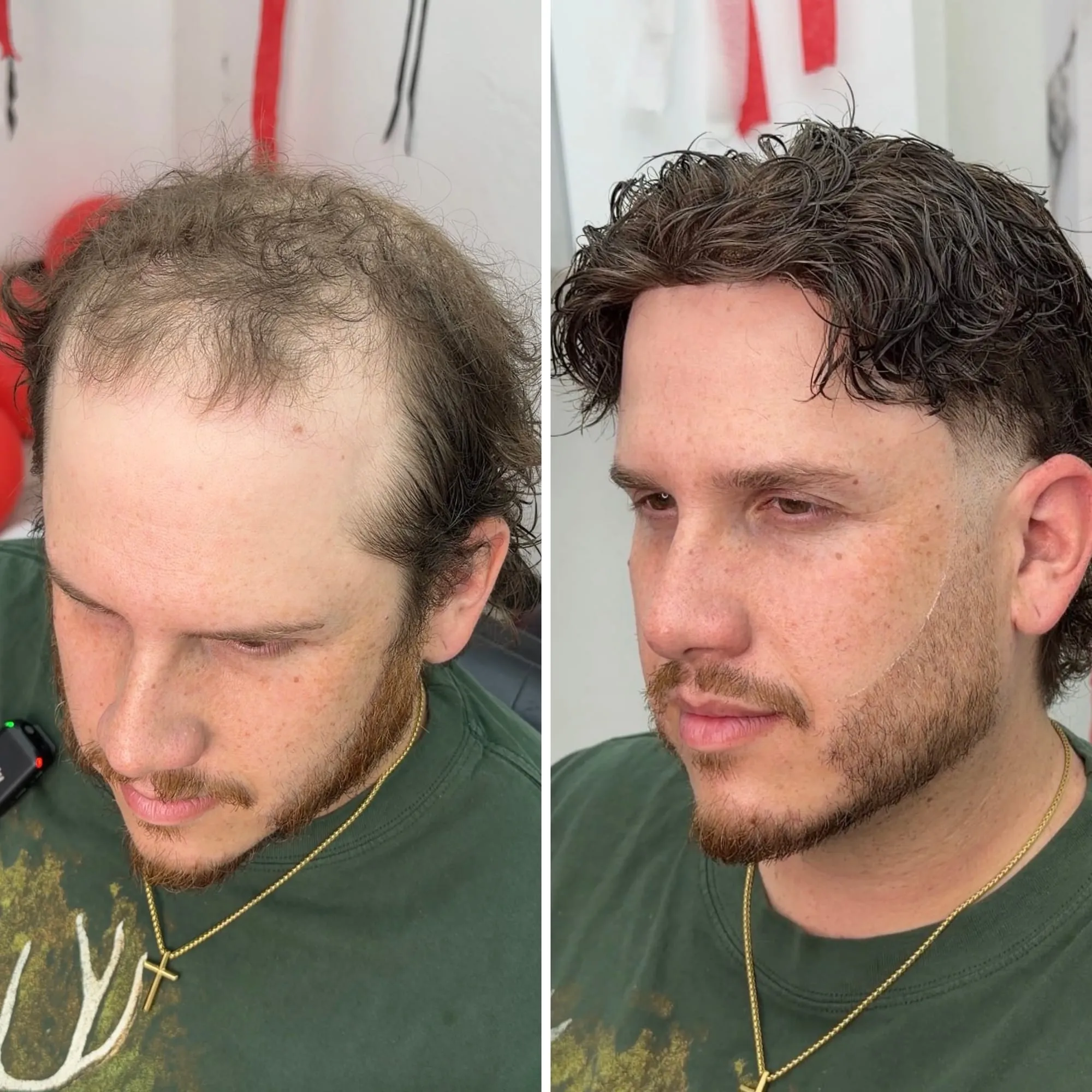
This is what it looks like.
A real client from our chair, photographed before and after his hair system was installed and cut in.
Questions, answered.
What is re-ventilation on a hair system?
Re-ventilation is hand-knotting fresh strands back into a base that has thinned or shed, using a ventilating needle. The new hair is matched to the unit by color, curl, and thickness and knotted in the same direction as the surrounding hair so the repaired area blends in with no visible seam.
Can a torn hair system base be repaired?
Often, yes. A torn lace section can be rebuilt with matching mesh and re-knotted, a separated seam can be restitched flush, and small runs can be stabilized before they spread. Bringing a unit in early keeps a minor tear a minor fix. Damage spread across the whole base is usually a sign to replace.
What is a poly recoat?
A poly recoat lays a fresh layer of polyurethane over a worn perimeter or skin zone so the edge grips tape or glue cleanly again and stops fraying. It resets the surface that touches your scalp and often fixes a bond that had started lifting early, letting you keep an otherwise healthy base in service.
When should I repair a hair system instead of replacing it?
Repair when the damage is local: one thin area, one lifted seam, or one tired edge on a base that is otherwise sound and still matches you. Replace when the wear is spread across the whole unit, when several seams are failing at once, or when the unit is already near the end of its normal lifespan.
Will a repair be noticeable in the hair?
When it is done well, no. We match the replacement hair to your unit and build density gradually so the repaired zone blends into the surrounding hair rather than reading as a repair. The goal with every repair is that you cannot tell where the old hair ends and the new hair begins.
Keep reading
Related guides.
Hair System Maintenance
How to keep a hair system clean, secure, and natural: your at home routine, the maintenance schedule, and what a studio visit covers.
Ventilation Methods
Knotting works on lace and mono, V-loop and injection only on skin. Ventilation method sets how invisible roots look and how well hair resists shedding.
How Long Hair Systems Last
How long a hair system lasts depends on the base, your routine, and maintenance. Here is what to expect and how to make yours last longer.
Tools & Supplies
The categories of tools and supplies a hair system barber needs, and how to choose each one, with no brand endorsements and no prices.