

Last updated September 28, 2026
The two decisions: shape and chemistry
Every tape choice is really two choices stacked together. Shape is the physical format of the adhesive you place on the base, and chemistry is what that adhesive is engineered to do once it is down. People shopping for tape tend to fixate on hold strength alone, but the shape matters just as much for a clean, comfortable perimeter, because a tab that follows your hairline contour lies flatter and lifts less than a straight strip forced around a curve.
Shape covers contoured tabs, straight strips, and continuous rolls. Chemistry covers how long the bond is meant to last and how it behaves against showering, swimming, and heavy sweating. A front hairline usually wants a thin, comfortable, shorter-hold tape so removal stays gentle on delicate lace, while the crown and back can carry a stronger, longer-hold, more water-resistant tape because that zone takes the most stress and shows the least. Matching each zone is the whole game.
Tape shapes and formats compared
Here is how the common tape shapes and formats line up on the things that decide comfort and hold. The hold-duration ranges are typical for how these tapes behave in daily wear, and they move with your climate, your activity, your skin oil, and how well the scalp and base were prepped. No amounts appear here because tape is a supply detail set at your appointment, not a published price. What is definitive is the relationship between the formats.
| Tape type | Shape or format | Typical hold duration | Water resistance |
|---|---|---|---|
| Contoured front tab | Pre-cut curved tab shaped to a hairline | Roughly 1 to 2 weeks | Moderate, chosen for comfort and clean release at the front |
| Straight tab (A, B, C, CC shapes) | Pre-cut straight or blended tabs in set widths | Roughly 2 to 4 weeks | Moderate to high depending on the specific tape |
| Roll tape (thin) | Continuous roll cut to any length | Roughly 3 to 7 days | Lower to moderate, favors comfort over longevity |
| Roll tape (extended or ultra hold) | Continuous roll cut to any length | Roughly 3 to 6 weeks | High, built for sweat and showering |
| Liner or transfer tape | Sheet applied to the base, backing peeled at attach | Roughly 2 to 4 weeks | Moderate to high, depends on the film used |
| Sensitive or gentle tape | Roll or tab, low-tack formula | Roughly 2 to 5 days | Lower, prioritizes skin comfort over grip |
Contoured tabs and front tabs
Contoured tabs are pre-cut to follow a curve, which is why they are so common at the front hairline where the base bends and the skin flexes with every expression. Because the tab already matches the shape, it lies flat without the puckering or lifting you get when a straight strip is bent around a contour, and that flatness is what keeps a front edge invisible. A tab that lifts at the corner is the single most common giveaway, so shape matters most exactly where detection matters most.
The lettered tab systems (often labelled A, B, C, and CC among others) are simply standard widths and profiles, some tapered, some blended thin at one edge so there is no ridge under the hairline. A blended or feathered front tab keeps the transition from skin to base smooth to the touch. Front tabs usually pair with a gentler, shorter-hold chemistry on purpose, because you want that delicate zone to release cleanly at removal rather than fight you and stress the lace.
Roll tape and liner formats
Roll tape is the flexible workhorse. You cut it to whatever length a section needs, which lets you run a continuous bead around a perimeter or reinforce a specific stress point without being limited to a pre-cut size. Thin rolls prioritize comfort and a shorter, gentler hold, while extended and ultra-hold rolls are formulated to survive weeks, heavy sweat, and daily showering. The tradeoff is honest: the longer and stronger the bond, the more deliberate the removal has to be so you protect both the base and your skin.
Liner or transfer tape works differently. Instead of taping the scalp, you apply the adhesive film to the base itself ahead of time, peel the backing, and press it down when you attach. Many wearers find this cleaner and more repeatable, especially for a self-install, because the tape is already positioned on the unit before it ever touches the head. Liner formats span the same comfort-to-high-hold and water-resistance range as rolls, so the format is about workflow while the chemistry still decides longevity.
Matching hold and water resistance to how you live
Hold duration and water resistance are the levers that fit tape to your routine. Reattachment frequency, climate, and how much you sweat or swim should drive the choice far more than a wish for the strongest possible grip. Over-gripping a delicate front does not make it last longer, it just makes removal harder and risks the lace. Under-gripping a sweaty crown means daily lifting. The right answer is usually zone by zone, not one tape everywhere.
- Daily or near-daily reattachment: a thinner, gentler, shorter-hold tape keeps removal easy on the skin
- Extended wear of two weeks or more: a longer-hold, higher water-resistance tape around the perimeter
- Hot, humid climate or heavy sweating: prioritize water resistance and consider a stronger crown tape
- Regular swimming or long showers: an ultra-hold, high water-resistance format, applied to well-prepped skin
- Sensitive skin or adhesive reactions: a low-tack sensitive tape, and defer any skin concern to a physician
- Delicate lace front: pair a contoured front tab with gentler chemistry to protect the knots at removal
What we set at your appointment
Tape is one piece of a larger attachment plan, and it works best when it is matched to your base, your reattachment schedule, and your prep routine rather than bought at random. Skin oil, residue, and how the scalp is cleaned before attachment change how any tape performs, so the exact tape we recommend is decided with your unit in front of us, not guessed from a chart. Two men with what sounds like the same setup can need different tape once climate and activity are counted.
What we can promise before you sit down is the logic here: choose the shape that lies flat on each zone, choose the chemistry that matches how long you wear and how much you sweat, and treat the front and the back as different jobs. Bring your routine and your climate to the appointment and we will map the right tape shapes and hold to both, and show you how to remove them cleanly so your base lasts.
Real work
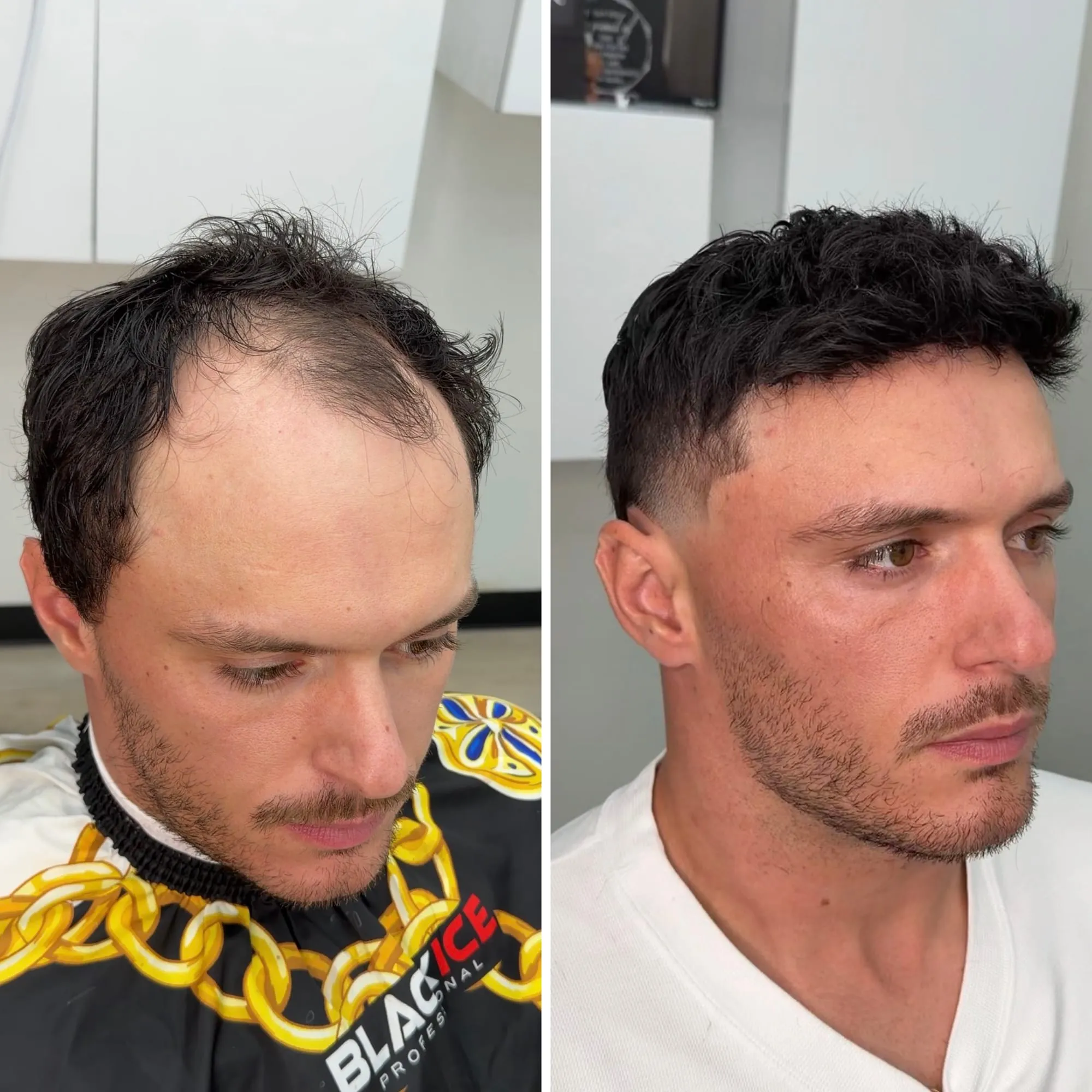
This is what it looks like.
A real client from our chair, photographed before and after his hair system was installed and cut in.
Questions, answered.
What is the difference between tape tabs and roll tape?
Tabs are pre-cut shapes, often contoured to follow a hairline, so they lie flat at the front without puckering. Roll tape is a continuous roll you cut to any length, which is more flexible for perimeters and stress points. Many wearers use contoured tabs at the front and roll or liner tape elsewhere.
Which hair system tape has the strongest hold?
Extended and ultra-hold roll tapes are built for the longest bonds, often several weeks, with high water resistance for sweat and showering. Stronger is not automatically better, though. The strongest tape on a delicate lace front makes removal harder and risks the knots, so match hold to the zone.
What tape is best for sweating or swimming?
A high water-resistance, extended or ultra-hold format applied to clean, well-prepped skin holds up best against sweat and swimming. Prep matters as much as the tape, because oil and residue shorten any bond. If you swim often, we will map a stronger perimeter tape at your appointment.
How do I choose tape for the front hairline?
The front usually wants a thin, contoured or blended tab with a gentler, shorter-hold chemistry. That combination lies flat so the edge stays invisible and releases cleanly at removal, which protects the delicate lace. Save the stronger, longer-hold tapes for the crown and back.
Does tape damage the hair system base?
Used and removed correctly, tape is gentle on the base. Damage usually comes from over-strong tape on a delicate front or from pulling a bond off dry. Match hold to the zone, use a proper remover, and take the front off slowly. For any skin reaction, defer to a physician.
Keep reading
Related guides.
Attachment Methods
Tape, bonding, and clip attachment for hair systems compared by hold, comfort, and how they suit your routine. How to attach a hair system.
Tape vs Glue
Tape typically holds a hair system one to two weeks, liquid glue two to four weeks. How sweat, humidity, and base type decide which to use.
Adhesive Types
Water based, solvent based, silicone, and acrylic adhesives compared on hold duration, moisture tolerance, and skin contact.
Tools & Supplies
The categories of tools and supplies a hair system barber needs, and how to choose each one, with no brand endorsements and no prices.