

Last updated September 28, 2026
The short answer on hold length
Both tape and glue are attachment methods, meaning they are what fixes the base of your hair system to your scalp between salon visits. Neither one is permanent, and both are designed to be removed cleanly and redone on a cycle. The difference people care about is how long that cycle is, and that is set mostly by moisture, movement, and the formulation you use.
Double-sided tape gives a clean, predictable hold that usually lasts one to two weeks before it needs to be refreshed. Liquid adhesive, applied as thin coats that are allowed to become tacky before the unit is set down, usually holds two to four weeks, with soft acrylic bonds landing on the shorter end and firmer solvent-based hard bonds on the longer end. Heat, sweat, and humidity pull every one of those numbers toward the low side of the range.
Tape versus glue at a glance
Here is how the two methods compare on the attributes that actually decide the outcome. The hold ranges are typical for how these adhesives behave in daily wear, and they shift with your climate, your activity level, and how carefully your scalp is prepped. No figures here are prices. What is definitive is the relationship between the two methods.
| Attribute | Double-sided tape | Liquid glue (bond) |
|---|---|---|
| Typical hold per attachment | 1 to 2 weeks | 2 to 4 weeks, some hard bonds slightly longer |
| Sweat and humidity tolerance | Moderate, weakens sooner in heavy sweat | Higher, hard bonds hold best against moisture |
| Common product widths | About 0.5 in (12 mm), 0.75 in (19 mm), 1 in (25 mm) | Applied as 2 to 4 thin coats, no fixed width |
| Contour options | Straight strips plus shaped front contours (A, AA, C, CC) | Brushed to any base shape by hand |
| Application time | Faster, press strips and set the unit | Slower, each coat must flash to tacky first |
| Removal | Peels off with a citrus or oil-based remover | Needs a solvent remover and more dwell time |
| Best base match | Skin (poly) and reinforced lace edges | Skin and lace, strongest on skin bases |
| Learning curve | Easier, forgiving for a first unit | Steeper, coat control takes practice |
How tape holds a hair system
Tape is a double-sided medical-grade adhesive that comes in straight strips, rolls, and pre-cut front contours shaped to follow a hairline. You lay it around the perimeter and any internal contact zones of the base, remove the liners, and press the unit down. Because it is a dry, physical bond, the result is consistent and you know exactly where the hold is, which is why tape is where most people start and why many stay with it for good.
The trade-off is duration. Tape sits on top of the scalp rather than curing into a continuous film, so body oil, sweat, and humidity work under the edges over time and lift it sooner than glue would. In a hot Arizona summer or a humid Pennsylvania stretch, a tape hold that lasts two weeks in mild weather can ask to be refreshed closer to one. The upside is that tape is fast to apply, easy to remove, and gentle on the scalp, which makes it forgiving while you learn your own routine.
How glue holds a hair system
Liquid adhesive, often just called glue or bond, is brushed onto the scalp in thin coats. Each coat is left to flash off until it turns tacky, then the base is set into it, so the finished bond is a continuous film under the whole contact area rather than a set of strips. That full-coverage seal is why glue resists sweat and water better and why it can carry a hold for two to four weeks.
There are two broad families. Soft or acrylic bonds stay flexible, feel comfortable, and generally hold on the shorter end of the range, which suits sensitive skin and shorter wear cycles. Hard or solvent-based bonds cure firmer, resist moisture the best, and hold longest, which suits heavy sweating, swimming, and long stretches between resets. The cost of that longer hold is time and technique: coats have to be even, the tack has to be judged right, and removal needs a proper solvent and patience so you protect both your scalp and the base.
- Sweat heavily or live somewhere humid and want the longest hold: a hard bond leans your way
- Have sensitive skin or want comfort and flexibility: a soft bond or tape fits better
- Want the fastest, most forgiving routine: tape is the easier daily method
- Swim often or want maximum water resistance: a hard-bond glue holds best
Which one is right for you
The honest answer is that most people are well served by tape and only need glue when their sweat, activity, or wear cycle demands it. If you want a simple routine, reset your unit every one to two weeks, and are not swimming daily or working up a constant sweat, tape gives you a clean hold with the least fuss and the easiest removal. Plenty of long-term wearers never move past it.
Glue earns its place when moisture is the problem to solve. If you sweat heavily, train hard, work outdoors in the heat, swim regularly, or simply want to stretch the interval between resets toward three or four weeks, a bond holds better and longer than tape can. Many wearers also combine the two, running a bond across the bulk of the base for staying power and a shaped tape contour along the front for a clean, serviceable hairline edge. There is no single correct choice, only the one that matches how you live.
Skin, humidity, and getting the most from either method
Whichever method you choose, the scalp underneath decides how long it holds. A clean, oil-free, fully dry scalp is the single biggest factor in a bond that lasts, because both tape and glue fail from the edges inward when oil or moisture gets under them. Prepping with a proper scalp cleanser, letting the skin dry completely, and keeping the hairline area free of heavy moisturizers all push your hold toward the top of its range rather than the bottom.
Climate is the other lever. Heat and humidity shorten every adhesive, so the same product that comfortably holds two weeks in mild conditions may ask for attention sooner in an Arizona July or a humid Pennsylvania summer. That is not a defect, it is physics, and the fix is to plan resets around your season and your sweat rather than a fixed calendar. We match the method, the specific product, and the reset interval to your skin, your climate, and your routine at your consultation, and we will show you how to apply and remove it safely so the result looks right and stays comfortable.
Real work
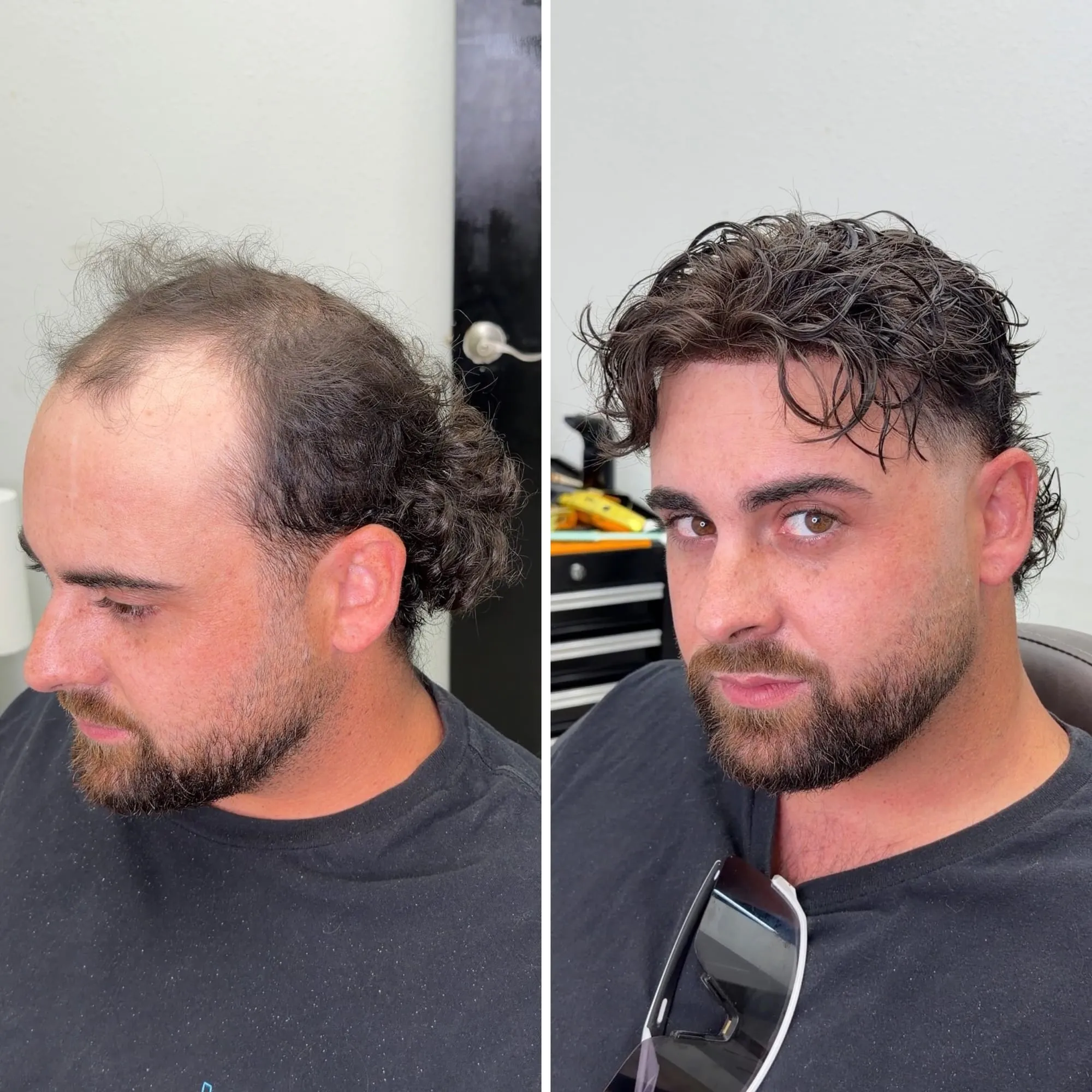
This is what it looks like.
A real client from our chair, photographed before and after his hair system was installed and cut in.
Questions, answered.
Does tape or glue hold a hair system longer?
Glue usually holds longer. Tape typically lasts one to two weeks per attachment, while liquid adhesive typically holds two to four weeks, with firm hard bonds on the longer end. Heat, sweat, and humidity shorten both.
Is tape or glue better for heavy sweating?
Glue, specifically a hard or solvent-based bond, resists sweat and humidity best because it cures into a continuous water-resistant film. Tape works for moderate activity but can lift sooner once you are sweating heavily or in a humid climate.
Is tape easier to use than glue?
Yes. Tape is faster to apply, more forgiving, and easier to remove with a citrus or oil-based remover, which is why it is the usual starting point. Glue takes practice to coat evenly and needs a solvent remover and more dwell time.
Can you use tape and glue together?
Many wearers do. A common approach is a liquid bond across the main body of the base for staying power, with a shaped tape contour along the front hairline for a clean, easily serviced edge. It combines longer hold with a tidy front.
How often should I reattach either way?
Plan around your method and your climate rather than a fixed date. Tape usually resets every one to two weeks and glue every two to four, and both come in sooner in heat, humidity, or heavy sweat. We set your interval to your skin and routine at consultation.
Keep reading
Related guides.
Options Compared
Hair systems, transplants, SMP, medication, shaving, or nothing. An honest side by side of coverage, reversibility, commitment, and upkeep.
Attachment Methods
Tape, bonding, and clip attachment for hair systems compared by hold, comfort, and how they suit your routine. How to attach a hair system.
Reattachment Interval
Most men reattach a hair system every two to four weeks. What sets your number: adhesive class, scalp oil, sweat, and climate. How we find yours.
Removing a System
How to remove a hair system without damaging your hair: the right solvent, the technique, and why studio removal protects your scalp and the unit.