

Last updated September 28, 2026
Why hair systems tangle when your own hair does not
The hair in a system is real hair, but it is no longer connected to a living follicle, so it never receives the oils your scalp produces to keep strands slick and separated. Over weeks that hair dries out, the cuticle roughens, and dry strands catch on each other. That is the difference. Your growing hair repairs and lubricates itself all day. A system relies entirely on you to replace what it cannot make.
Matting is what happens when tangling is left alone. Loose knots pull tighter with every movement until a section felts together into a dense pad that a comb can no longer pass through. The good news is that matting is almost always preventable, and it builds slowly enough that you can catch it early if you know where to look.
The friction hot spots: nape and crown
Two areas mat first because they take the most rubbing. The nape, at the back of the neck, drags against shirt collars, jackets, and car seats all day. The crown, at the back of the head, is where you press into a pillow every night. Both spots also sit where your hand naturally rubs when you are tired or stressed.
If you find a rough spot, it is almost always in one of these two zones. Check them first when you comb, and treat them as the early warning system for the whole unit.
- Nape: collar friction, coat linings, seat backs, and headrests
- Crown: pillow contact overnight and habitual rubbing or scratching
- Anywhere a hat band or headphones sit for long stretches
Cause and fix, point by point
Nearly every tangling problem comes back to one of four habits. Match your symptom to the cause and apply the fix, and you rarely need anything more.
- Cause: conditioner skipped or rinsed too fast. Fix: condition every wash, focus on the mid lengths and ends, leave it a couple of minutes, and rinse gently. This is the single biggest lever against matting.
- Cause: hair dried in the wrong direction. Fix: always dry and comb the way the hair is meant to fall, from root to tip. Rough towel scrubbing and blow drying against the grain force strands to cross and lock.
- Cause: friction at the nape and crown. Fix: reduce rubbing where you can, wear a smooth collar, and comb these zones first so small tangles never grow.
- Cause: sleeping with no protection. Fix: use a smooth pillowcase, ideally satin or silk, and keep the hair off the pillow where you can so the crown is not ground in all night.
- Cause: combing from the roots down. Fix: start at the ends and work up in short sections, so a tangle is teased loose instead of dragged into a knot.
Your daily anti-tangle routine
None of this takes long once it is a habit. The aim is to keep the hair slick, moving in one direction, and free of the small knots that turn into mats.
- Comb through gently morning and night with a wide tooth comb or a loop brush made for systems
- Always start at the ends and work upward, holding the base so you are not tugging the bond
- Keep a leave in conditioner or a light detangling mist on hand for dry ends between washes
- Never comb or brush hard when the hair is soaking wet, since wet hair stretches and snaps more easily
- Check the nape and crown daily and clear any early roughness before it sets
Washing and drying without creating tangles
Most matting is set in motion at the sink. Piling the hair on top of your head and scrubbing it in circles is the fastest way to wind strands together. Instead, let water and product run down the length of the hair in the direction it grows, and handle it as little as possible while it is wet.
Drying is just as important. Blot with a towel, do not scrub, and if you use a dryer keep it on a cool or low setting and point the airflow down the hair shaft rather than up into it. A hair system cannot repair heat or friction damage the way growing hair slowly can, so gentle habits here pay off for the whole life of the unit. Our washing and shampoo guides cover the products and steps in full.
How to recover a unit that has already matted
If a section has started to felt, do not yank at it and do not cut into it blindly. Saturate the matted area with a slippery conditioner or a dedicated detangling product and let it sit so the strands can slide. Then, holding the base steady, work from the very tips inward with your fingers first and a wide tooth comb second, freeing a little at a time.
Severe matting, or matting right at the knots where the hair meets the base, is worth bringing to us rather than fighting at home. We can often detangle, wash, and recondition a unit back to smooth in the studio, and if a small area is truly past saving we can advise on repair or re-ventilation instead of you damaging more of the hair. Bring it in before you reach for scissors.
Real work
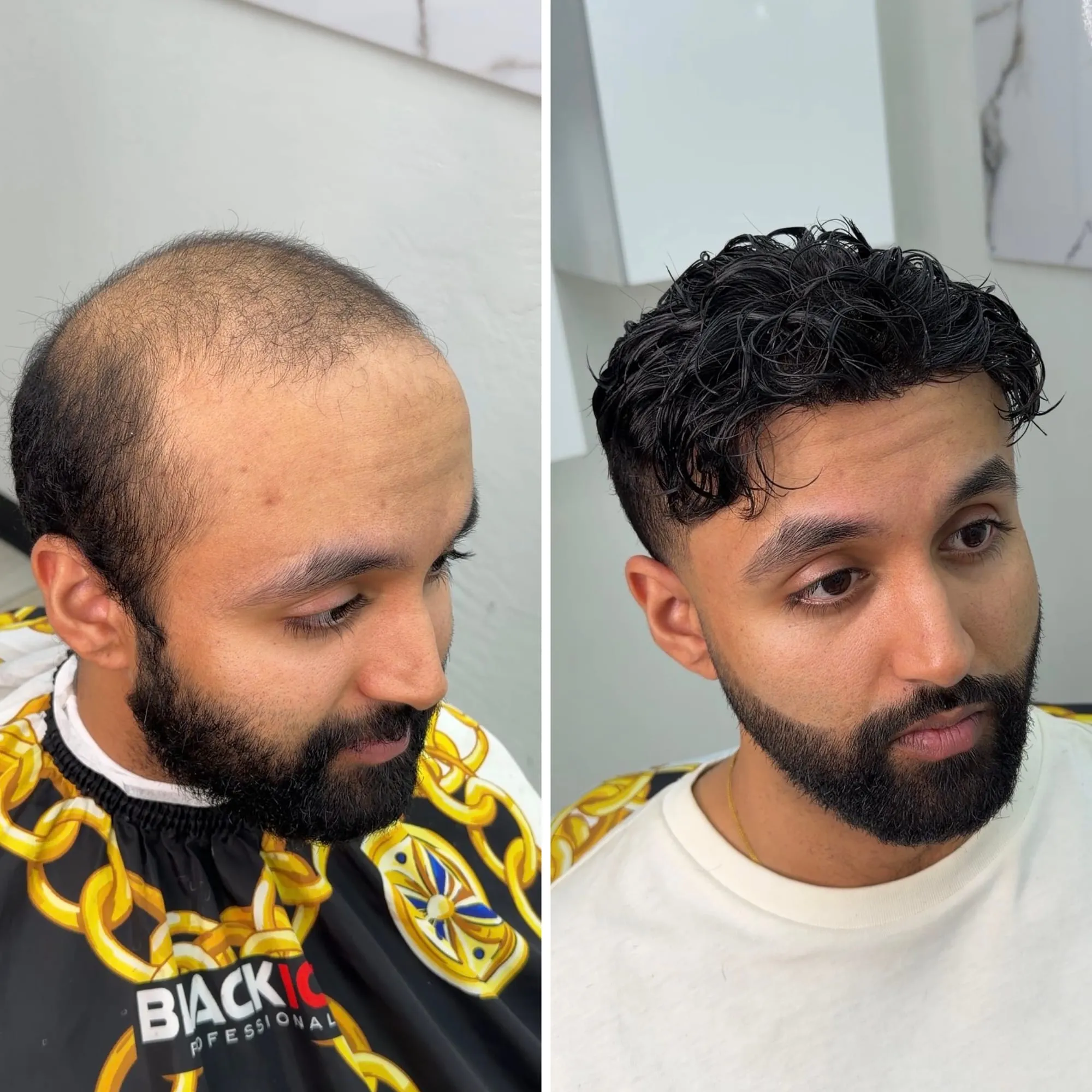
This is what it looks like.
A real client from our chair, photographed before and after his hair system was installed and cut in.
Questions, answered.
How do I stop my hair system from tangling?
Condition it at every wash, comb it gently from the ends upward in the direction the hair falls, dry it downward rather than scrubbing, and protect the crown at night with a smooth pillowcase. Tangling is friction on dry hair, so keeping it conditioned and moving one way solves most of it.
Why does the back of my hair system keep matting?
The nape and crown take the most friction. The nape rubs on collars and seat backs all day, and the crown presses into your pillow all night. Check both areas first when you comb, reduce rubbing where you can, and use a satin or silk pillowcase.
Does skipping conditioner cause matting?
Yes, and it is the most common cause we see. The hair no longer gets oil from your scalp, so without conditioner the strands dry out, roughen, and catch on each other. Condition every wash, concentrating on the mid lengths and ends.
Can a badly matted hair system be saved?
Often, yes. Saturating the area with conditioner and gently working from the tips inward recovers many mats. For severe matting or matting at the knots, bring the unit to us before cutting into it, since we can usually detangle and recondition it or advise on repair.
What kind of comb should I use?
A wide tooth comb or a loop brush designed for hair systems, used gently and always from the ends up while you hold the base. Fine tooth combs and hard bristle brushes drag through knots and stress both the hair and the bond.
Keep reading
Related guides.
Washing a Hair System
A clean, honest wash routine for hair systems: deep clean off the head, wash root to tip, keep water off the perimeter, and air dry.
Shampoo and Conditioner
Use a sulfate free, alcohol free shampoo and keep conditioner mid-shaft to ends, off the base. The product rules that protect a hair system.
Styling a Hair System
Style a hair system with a light hold product, gentle heat, and a soft touch at the perimeter. Which products work and which to avoid.
Sleeping In It
Yes, you sleep in your hair system. Here is how the bond holds overnight, what the first few nights feel like, and simple habits that protect it.