Last updated September 28, 2026
The short answer, start to finish
Styling a unit is not complicated once you see the order of operations. The mistakes we fix in the chair almost always come from product choice and heat, not from a lack of skill. Here is the routine we teach every client who leaves with a new hair system.
- Start with clean, damp hair, not soaking wet and not bone dry
- Comb it into the direction you want while it is still damp
- Dry on low or medium heat, shaping with a brush or your fingers as you go
- Add a small amount of a light, water based product once the hair is dry or nearly dry
- Keep every product at least a finger width away from the front edge and the perimeter
- Build hold in thin layers, checking the mirror between passes
- Finish with a light mist of flexible hold spray if you need it to last the day
Why product choice matters more than technique
The single biggest difference between a unit that looks great for a year and one that looks tired in a few months is what you put on it. The hair on a system is not attached to a living scalp, so it does not get replenished with natural oils and it cannot repair itself. That means harsh ingredients do lasting damage instead of washing out and growing back.
Two categories cause most of the trouble. High alcohol products, like many strong hold gels and some hairsprays, dry the hair out and speed up the color fade and frizz that make a unit look worn. Heavy oil and wax based products do the opposite problem: they build up, attract dust, and creep into the base and the bond line, which weakens your adhesive and shortens how long each attachment holds. Neither is a small issue over time.
What to reach for, and what to skip
You do not need a shelf of products. You need one or two that are kind to the hair and gentle on the bond. When in doubt, lighter and water based wins.
- Good: water based pomades and light styling creams that rinse out cleanly
- Good: flexible or medium hold sprays used sparingly, away from the edges
- Good: a light leave in conditioner or detangler to keep the hair soft and manageable
- Skip: high alcohol gels and stiff, crunchy hold products that dry the fibers
- Skip: heavy waxes, thick oils, and greasy pomades that build up and migrate into the base
- Skip: anything with added sunscreen chemicals or strong dyes near the hairline, which can discolor a light base over time
Protecting the perimeter and the hairline
The perimeter is the most fragile and most visible part of any unit, so it gets the most careful handling. This is the strip where the base bonds to your skin, and it is where a natural, undetectable front lives or dies. Product that lands here does two kinds of harm: it can lift the adhesive and break the bond early, and it can leave residue or shine right at the hairline where people look hardest.
The habit to build is simple. Apply product to your palms first, work it into the mid lengths and ends, and let only what is left on your hands touch the area near the front. Style the hairline itself with a damp brush or your fingertips and nothing else. If you want more hold up top, add it in the middle of the unit, not at the edge.
Heat, drying, and shaping
Heat is a tool, not a shortcut. A blow dryer on low or medium is perfect for shaping and adding volume, and it is how you lock in a direction that lasts through the day. What you want to avoid is high, direct heat held in one spot, which can singe fine fibers and dry out the base. Keep the dryer moving and keep it at a comfortable distance.
For most looks, damp is the magic window. Comb the hair into place while it is damp, then dry it in that shape with a round or paddle brush. Flat irons and curling tools can be used on human hair units, but keep them on a low setting and treat the hair like it is delicate, because it is. If you like a matte, textured finish, a tiny amount of water based clay worked through dry hair does the job without the buildup of a wax.
Common styling problems and quick fixes
Most day to day complaints trace back to one of a few habits. Here is how to read them and what to change.
- Looks greasy or flat by midday: you are using too much product or an oil based one, so switch to a lighter water based product and use less
- Front edge lifting early: product is reaching the perimeter, so keep hold products a finger width back and clean the bond line at each reattachment
- Hair looks dry, frizzy, or dull: high alcohol products or high heat are the likely cause, so drop to a flexible spray and lower your dryer setting
- Shine that reads as fake: too much silicone or oil, so rinse it back and finish with a matte, water based product instead
- Style will not hold direction: you are styling dry, so wet it down, comb the direction in, and dry it into shape
The barber side of a good style
There is a limit to what daily styling can do, and that limit is the cut. A unit that is blended and cut into your own hair at the sides and back is far easier to style at home than one that is left long and uniform. The taper, the weight, and the way the front is thinned all get decided in the chair, and they set you up to spend thirty seconds on a look instead of ten minutes fighting it.
This is where our two worlds meet. We fit and style hair systems for clients at our Peoria, Arizona and Eighty Four, Pennsylvania studios, and we also train barbers and stylists to cut and blend units through our education side. If your style feels harder than it should, the answer is often a maintenance visit and a fresh cut in, not a new product. Bring it in and we will dial in a shape that styles itself.
Real work
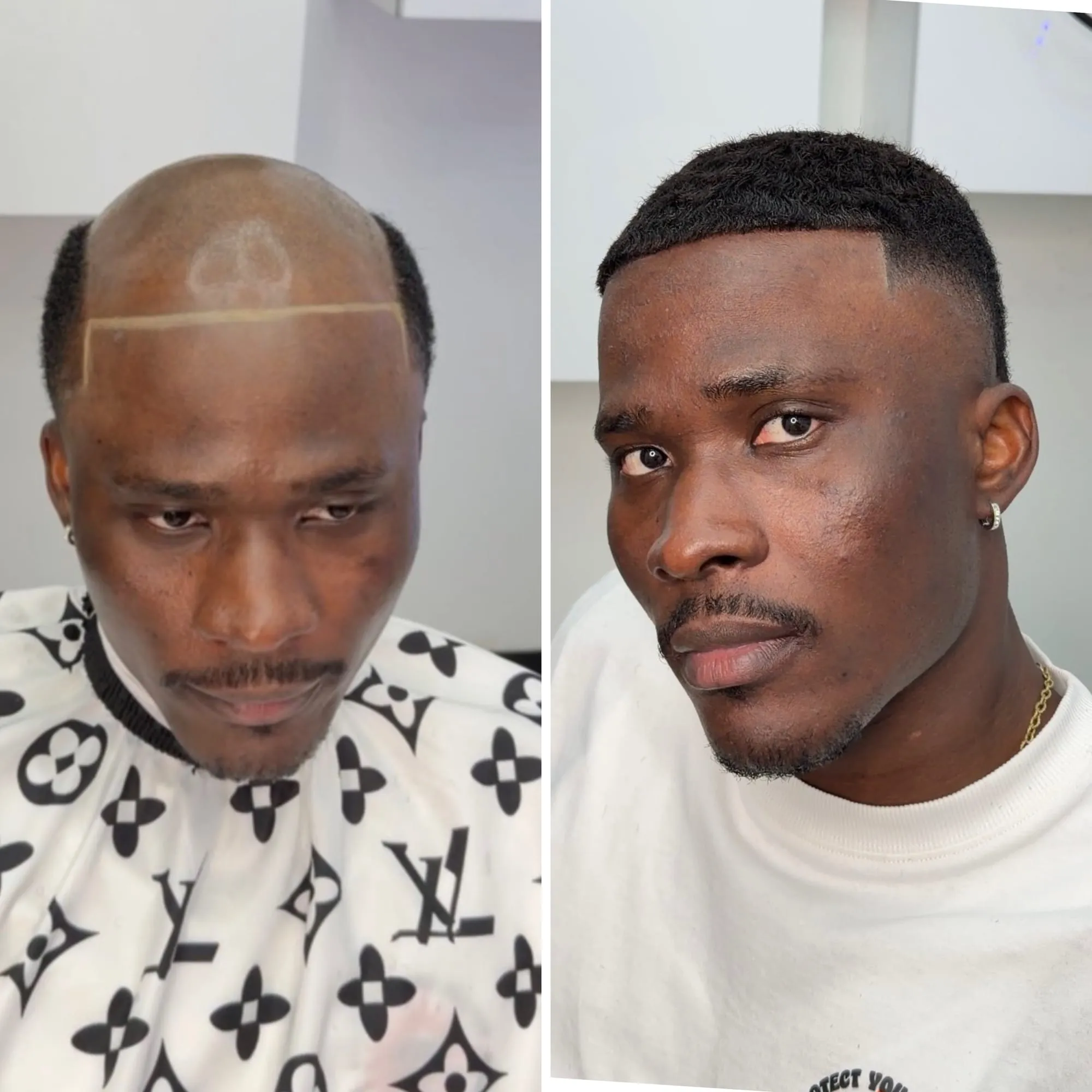
This is what it looks like.
A real client from our chair, photographed before and after his hair system was installed and cut in.
Questions, answered.
Can I use regular hair products on a hair system?
Some, but choose carefully. Light, water based pomades and creams are fine. Avoid high alcohol gels and hairsprays, which dry the hair out, and heavy oils and waxes, which build up and can weaken your adhesive bond. The hair cannot repair itself, so gentle products protect your investment.
How do I keep product off the hairline and edges?
Work product into your palms first, apply it to the mid lengths and ends, and let only the residue on your hands touch the front. Style the hairline itself with a damp brush or your fingertips. Keeping hold products a finger width back protects the bond and keeps the front looking natural.
Can I use a blow dryer, flat iron, or curling iron?
Yes, on human hair units, at low to medium heat. Keep a blow dryer moving rather than holding it in one spot, and treat flat irons and curling tools as low heat only. High, direct heat can singe fine fibers and dry out the base, so gentle and moving is the rule.
Why does my hair system look shiny or greasy?
Usually too much product or an oil or silicone based one. Switch to a lighter, water based product, use a smaller amount, and finish with a matte spray if needed. If shine persists after washing, bring it in and we will check the hair and your product routine.
How is styling a unit different from styling a fresh haircut?
The technique is nearly the same. The two extra rules are product choice, favoring light and water based over heavy or high alcohol, and protecting the perimeter, keeping hold products off the bonded edge. A good cut in and blend at the studio makes daily styling much faster.
Keep reading
Related guides.
Hair System Maintenance
How to keep a hair system clean, secure, and natural: your at home routine, the maintenance schedule, and what a studio visit covers.
Living With a Hair System
What daily life with a hair system is really like: sleeping, showering, styling, and the small habits that keep it looking its best.
Tools & Supplies
The categories of tools and supplies a hair system barber needs, and how to choose each one, with no brand endorsements and no prices.
Does It Look Natural
A well fitted, well cut hair system blends into your own hair and hairline. Here is what makes a hair system look natural and undetectable.