

Last updated September 28, 2026
Arizona licenses the person and the place separately
The single most common thing barbers miss is that Arizona regulates two different things, and both matter. There is the license that says you personally are qualified to work on hair and scalp, and there is the license that says the physical space you work in meets the state's standards for an establishment. You can hold a valid personal license and still be out of compliance if the room you install in is not a licensed establishment, or is not covered by one.
We run our home studio in Peoria under exactly this framing, and it is the first thing we teach in the class here. Sort out the person and the place as two separate boxes to check, not one.
- Personal license: proves you are qualified to cut hair and work on the scalp
- Establishment license: covers the physical space where you do the work
- Both must be current and in good standing at the same time
Which license covers non-chemical hair replacement work
Most of what a hair replacement install involves is non-chemical: templating the scalp, ordering and preparing a hair unit, attaching it with tape or adhesive, then cutting it in and blending it to the client's own hair. That work sits comfortably inside a barbering or cosmetology scope, because both cover cutting and styling hair and working on the scalp.
What determines the exact license you need is usually the mix of services you plan to offer, not the hair replacement piece on its own. If you already cut hair for a living under a barbering or cosmetology license, you are often most of the way there. If your plan later includes chemical services around the hair replacement work, that can change which credential you need, so it is worth mapping your full service list before you assume your current license covers everything.
This is why we do not tell anyone in the class a single license name and leave it there. The honest answer is that it depends on your existing credential and your intended services, and the board is the only authority that can confirm your specific case.
- List every service you intend to offer, not just the install
- Match that list against what your current license already covers
- Flag any chemical service separately, since it can change the requirement
- Confirm the match with the board before you rely on it
The space you work in needs its own license
Whether you install out of a booth in an existing shop, a private room, or your own studio, the space itself generally has to be a licensed establishment or fall under one. A private, discreet room is the right setup for this work anyway, since men getting into hair replacement usually value privacy over a busy open floor. That preference lines up neatly with the sanitation and setup standards an establishment license exists to enforce.
If you rent a chair or a room inside someone else's licensed shop, you need to know exactly how their establishment license applies to you and your services. Do not assume it automatically covers a new service line you are adding. Ask, in writing, and confirm with the board if there is any doubt.
- A dedicated, private, well-lit station rather than the open walk-in floor
- Clean water, sanitation, and storage that meet establishment standards
- A clear answer on whether a shared shop's license covers your work
Where licensing ends and the client's physician begins
Licensing covers you as a hair professional working on hair and scalp. It does not turn you into a medical provider, and hair replacement is a cosmetic service. A hair system covers the appearance of thinning or a receding area, it does not treat, cure, regrow, or diagnose anything.
That distinction is not just marketing language, it protects your license. When a client asks about the underlying cause of their thinning, a scalp condition, a medication effect, or anything that sounds medical, the correct move is to refer them to their physician or dermatologist. You fit and maintain the hair unit. Their doctor handles the medical side. Keeping that line clean is part of staying compliant, not separate from it.
Verify with the Arizona board before you take a client
The state board that oversees barbering and cosmetology licensing in Arizona is the authority on all of this, and its requirements are what actually govern your work. Statute and rule numbers change over time, so rather than quote a specific citation here, we point you to the board directly. A ten-minute call or a look through the current licensing and establishment pages on the board's site will tell you exactly what applies to your credential and your setup today.
If you are training with us at the Peoria studio, Nico Rigano, Ivette Rigano, and Denisse Diaz walk you through this verification step as part of getting set up, because the fastest way to lose a business you just built is to skip it. Treat the board check as step one, before inventory and before your first booking.
- Confirm your personal license covers the exact services you will offer
- Confirm the space you work in is a licensed establishment or covered by one
- Confirm renewal timing and any continuing-education requirement
- Save what the board tells you in writing, then book your first client
Real work
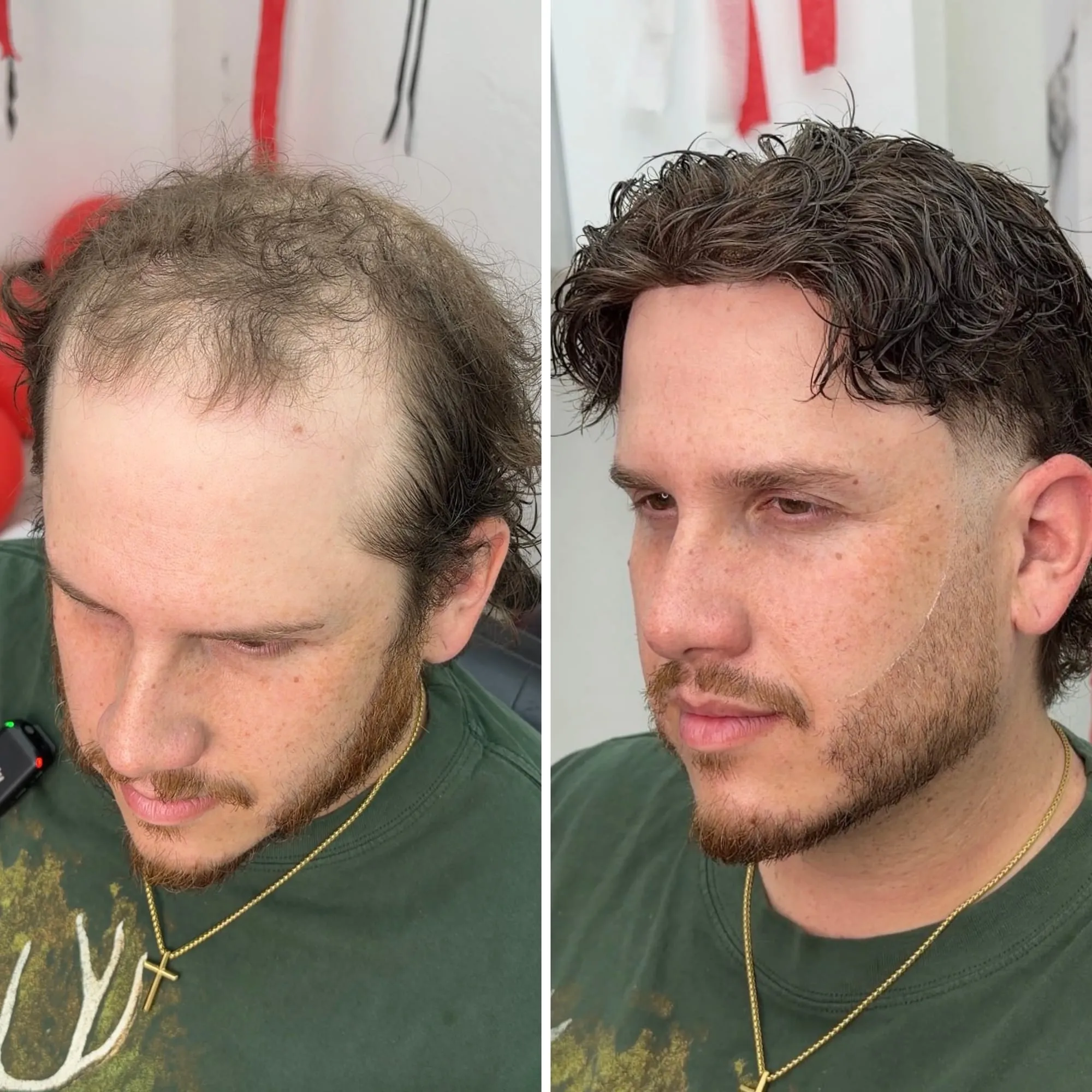
This is what it looks like.
A real client from our chair, photographed before and after his hair system was installed and cut in.
Questions, answered.
Do I need a special hair replacement license in Arizona?
Usually there is no separate hair replacement license. The non-chemical work of templating, attaching, cutting in, and maintaining a hair unit generally falls under a barbering or cosmetology license, because it involves cutting hair and working on the scalp. Confirm your specific situation with the Arizona board, since it depends on your existing credential and your full service list.
If I already hold a barbering or cosmetology license, am I covered?
Often you are most of the way there, but do not assume. What you can do depends on the services you plan to offer and how your current license reads. Map your full service list and confirm with the board before you rely on it, especially if you plan to add any chemical service alongside the hair replacement work.
Does the room I work in need its own license?
Generally yes. Arizona licenses the space as an establishment separately from the person, so your booth, room, or studio needs to be a licensed establishment or clearly fall under one. If you rent inside someone else's licensed shop, confirm in writing how their license applies to your added service line.
A client asked me about the cause of their thinning. What do I do?
Refer them to their physician or dermatologist. Hair replacement is a cosmetic service that covers the appearance of thinning, it does not treat, cure, or diagnose anything. Keeping the medical questions with a doctor, and the fit and maintenance with you, protects both the client and your license.
Keep reading
Related guides.
Licensing
Do you need a license to do hair replacement? What barbers and stylists should know about requirements in Arizona, Pennsylvania, and beyond.
Licensing by State
A state-by-state index of hair replacement licensing that links our Arizona and Pennsylvania pages. More states coming; always verify with your board.
Scope of Practice
Can a barber do hair replacement, or does it need a cosmetology license? Where the scope line sits, and why cutting and coloring the unit is the trigger.
How to Become a Hair Replacement Artist
The path from barber to hair replacement artist: the skills, the training, and how to add hair systems as a high margin service line.