

Why the front is the hardest zone
A receding hairline is almost always the first thing you notice and the first thing other people notice. It sits at eye level, it catches direct light, and it moves every time you raise your eyebrows. That is exactly why the front of a system has to be built more carefully than anywhere else on the head.
The goal at the front is not a thick, solid line. Real hairlines are irregular, slightly ragged, and lighter in density than the hair behind them. A front that is too dense or too straight reads as artificial no matter how good the hair is, so the work at the edge is about restraint as much as coverage.
How we rebuild the hairline in our chair
We start by looking at where your hairline sat before it receded and where it makes sense to place it now, given your face shape and age. A hairline that is dropped too low for a man in his forties fools no one. We would rather set a front that is honest to your age and looks like it grew there.
From there the unit is fitted over the receded area and the front is cut and thinned by hand. The hairs right at the edge are refined so the line breaks up naturally instead of stopping in a hard band. This hand work at the front is the difference between a system you second guess in the mirror and one you forget you are wearing.
Working with the hair you still have
A receding hairline usually means you still have solid hair through the mid and back of your head. That is an advantage. We are not replacing everything, we are rebuilding the front and temples and then blending the system into your existing hair so the two read as one head of hair.
That blend is what makes a receding-hairline case look natural. Your own hair frames and covers the perimeter of the unit, colour and texture are matched to what you already have, and the whole thing is cut as a single style rather than something obvious sitting on top of your head.
Choosing the front of the unit
For a receding hairline, the material at the very front matters more than anywhere else. A fine, translucent front lets the base disappear against the skin so there is no visible edge where the hairline begins. This is the same thinking behind a frontal-focused system, where the priority is an undetectable front rather than maximum durability.
There is a trade off worth understanding. The most invisible front materials are also the most delicate, so they ask for gentler handling and more frequent attention. A slightly sturdier front lasts longer but sits a fraction less invisibly. We walk you through which side of that line fits your routine before anything is ordered.
- A fine, see-through front for the most undetectable hairline
- A hand-cut, irregular edge instead of a hard, straight line
- Density kept lighter at the front and built up behind it
- Colour and texture matched to the hair already framing your face
Living with a rebuilt hairline
Because the front is the most visible and most delicate part, it is also the part that tells you when maintenance is due. As the bond ages at the hairline, that is your cue to come in. Staying on a regular maintenance rhythm is what keeps the front looking the way it did on day one.
Cost is driven by the same things that drive any hair replacement: the base material you choose at the front, the type of hair, and how often you come in for maintenance. A more invisible, more delicate front generally means more frequent visits, and we are upfront about that so there are no surprises after you commit.
Is it right for a receding hairline specifically
If your recession is at the temples and the front while the rest of your hair is holding, a system is well suited to your situation because it targets exactly the zone that has thinned. You keep what you have and rebuild only what you have lost.
The honest way to find out is a consultation. We look at your hair in person, talk through what you want the front to do, and tell you plainly whether a system is the right call for you. If it is not, we will say so.
Real work
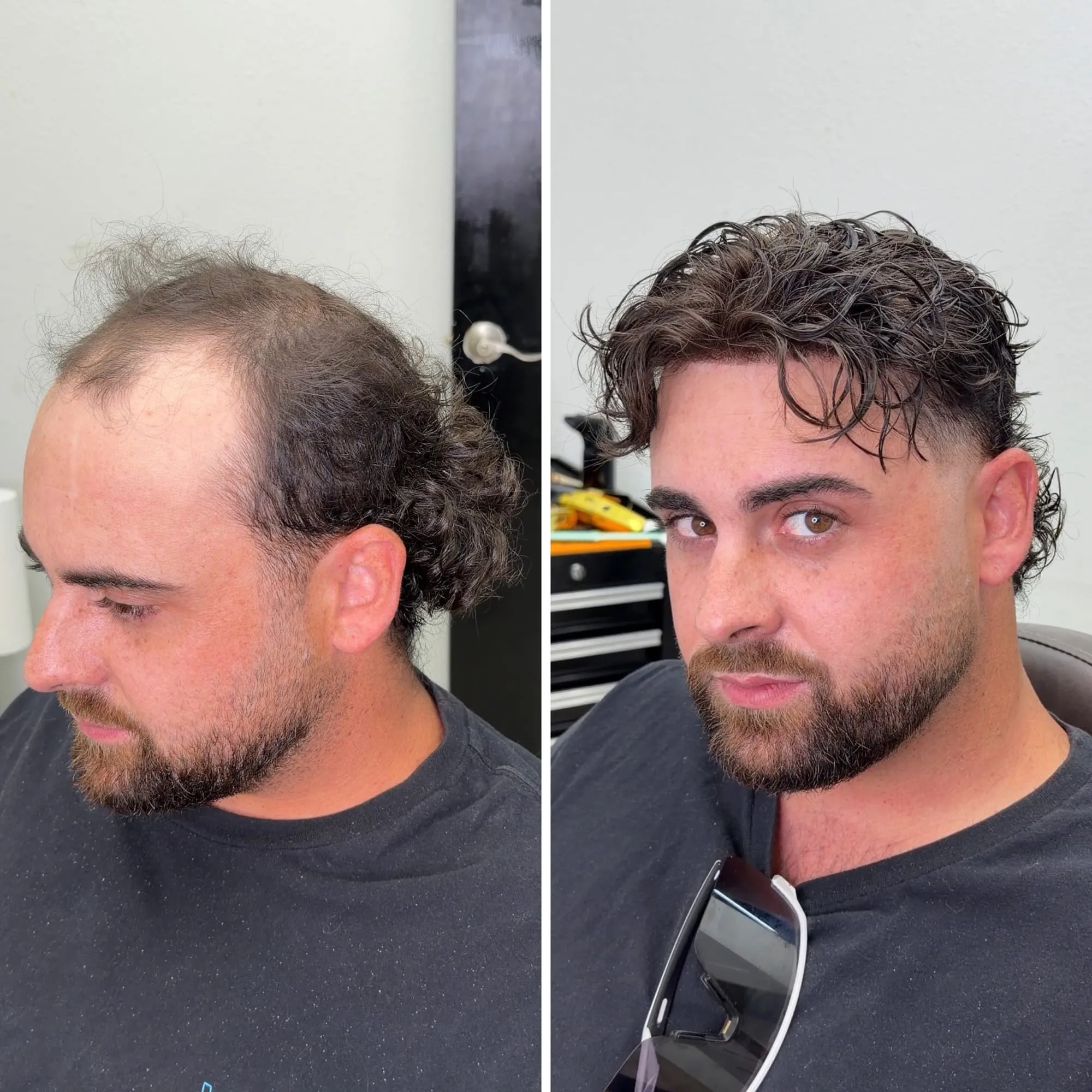
This is what it looks like.
A real client from our chair, photographed before and after his hair system was installed and cut in.
Questions, answered.
Can a hair system fix just my receding hairline and temples?
Yes. The unit is built over the receded zone and blended into the hair you still have, so we rebuild the front and temples without touching the areas that are holding fine.
Will the front look fake or too thick?
It should not. A natural front is lighter in density than the hair behind it and cut with an irregular edge by hand, so it breaks up the way a real hairline does instead of forming a hard band.
How low should my new hairline sit?
Low enough to look right for your face and honest for your age. A hairline dropped too low reads as artificial, so we set a front that looks like it grew there.
Does the front need more maintenance than the rest?
Often yes. The most invisible front materials are also the most delicate, so they ask for gentler handling and a regular maintenance rhythm to keep the hairline crisp.
Keep reading
Related.
Thinning Crown
How a hair system covers a thinning crown without surgery: coverage over the vertex blended into the hair around it, whorl and all.
For Young Men
Why a hair system fits men in their 20s and 30s. Full hair now, no surgery, built for an active life and natural at close range.
For Black Men
How a hair system is matched to coil and curl pattern, density, and skin tone for Black men, so the result reads as your own textured hair.