

Last updated September 28, 2026
A hair system is a spec order, not a stock product
When you buy something off a shelf, the price is fixed because the product is fixed. A hair system is the opposite. Two men sitting in our chair on the same afternoon can walk out with units that cost very different amounts, because the units themselves are different. The base is cut to the shape of one man's head. The density is dialed to match how thick his existing hair is so nothing looks abrupt where the unit meets his own growth. The hair itself is chosen to match his color, texture, and how much grey he carries.
That is why a menu price is misleading before we have even discussed what you want. There is no one hair system with one price any more than there is one suit with one price. There is the hair system built for you, and its cost is the sum of the choices that go into it.
What actually moves the number
Pricing is not a mystery and it is not arbitrary. It is driven by a short list of real, physical factors. Here they are, ranked roughly by how much they tend to swing the total, with the actual figure set at your consultation once we know which apply to you.
- Custom versus stock build. A unit made to a template of your head costs more than a ready-made base we adjust, because someone builds it to your measurements.
- Hair type and origin. Certain hair, including European hair, is rarer and commands more than more widely available hair.
- Hair length. Longer hair, generally past roughly six inches, uses more raw material and costs more than shorter lengths.
- Base material and construction. A fine, near-invisible base such as a silk top or an ultra-thin skin is more delicate and more labor-intensive to build than a sturdier everyday base.
- Base size. A larger area of coverage uses more material and more ventilation work than a small piece.
- Density and knot work. Higher density and hand-tied detail at the hairline take more time to produce.
- Service cadence. How often you come in to have the unit cleaned, reattached, and refreshed shapes what you spend over a year, separate from the unit itself.
Why a price quoted before an assessment is a bait number
When a studio throws out a low figure over the phone or on a landing page before anyone has looked at your head, that number is doing a job, and the job is getting you in the door emotionally invested. It is almost always the floor: the cheapest, smallest, most basic build they offer, quoted as if it were what you would actually leave with.
Then the assessment happens. You need a larger base than the floor price assumes. You want a natural hairline, which means finer base material. Your color needs more grey blended in. Every one of those is a legitimate upgrade, but now it arrives as a series of add-ons stacked onto a number you had already accepted in your head. That is how a teaser figure quietly becomes a much bigger one. We would rather not start the relationship that way.
How we handle pricing instead
We assess first, then quote. In your consultation we look at your scalp, the hair you still have, your color and texture, how you live, and how hands-on you want to be with upkeep. From there we walk you through the specific build we would recommend and what drives its cost, so the number you hear is the number for your unit, not a placeholder that moves later.
You will also get the honest trade-offs. If a slightly sturdier base would cost less and serve you better than the most invisible option, we say so. If owning two units so one can rest actually saves you money over a year, we lay that out. The goal is a figure you can trust because it is tied to real specs you understand, decided together and in the open.
This policy is a feature, not a dodge
Not publishing a price is easy to read as a studio hiding something. In this trade it is usually the reverse. The vendors most eager to publish a single low number are the ones counting on the gap between that number and what you actually need. A studio that assesses before it quotes is telling you the price is real and specific to you.
You are welcome to ask about cost at any point, and we will explain exactly what goes into it and why. What we will not do is invent a figure for a head we have not seen. That figure would be fiction, and you deserve better than fiction when you are deciding on something you will wear every day.
Real work
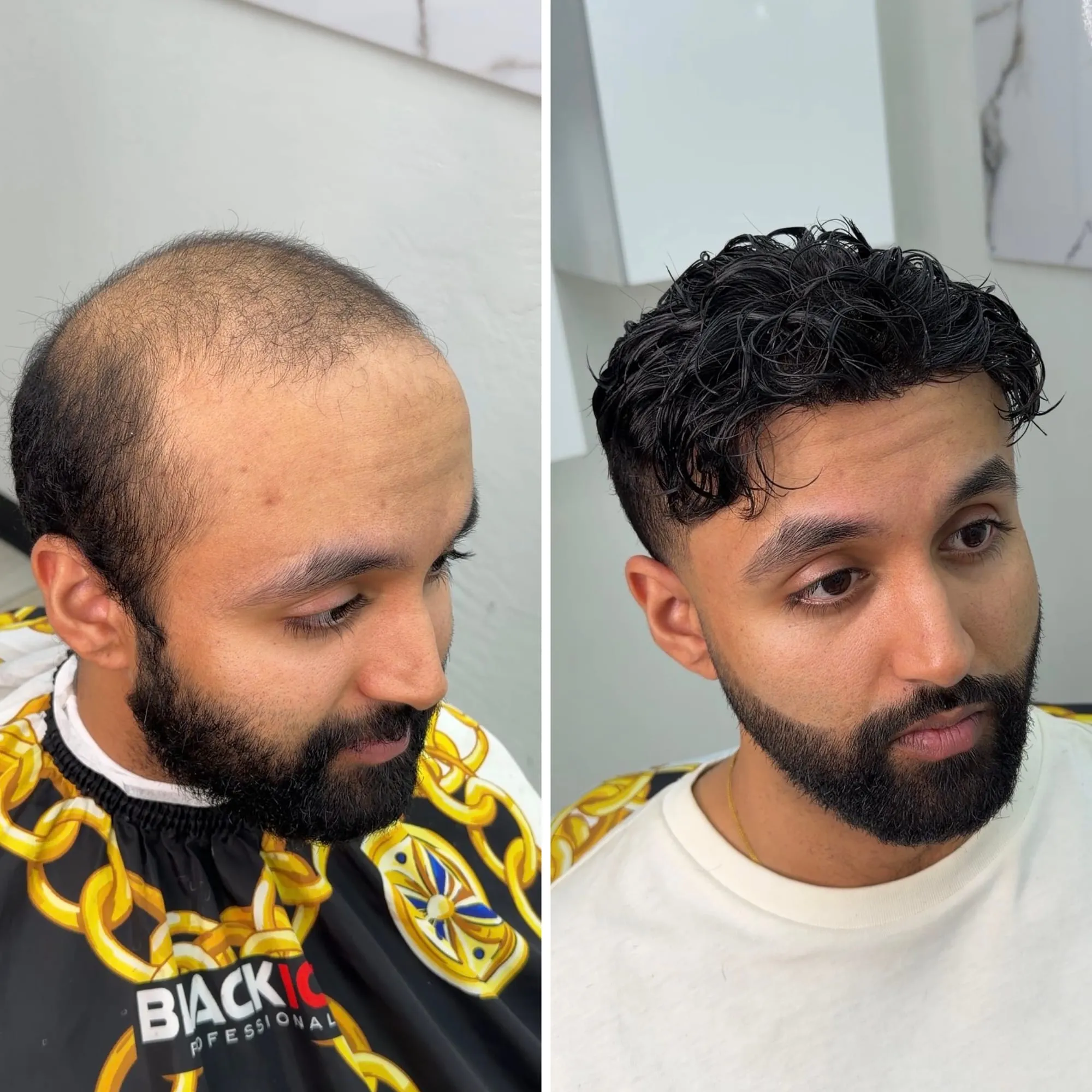
This is what it looks like.
A real client from our chair, photographed before and after his hair system was installed and cut in.
Questions, answered.
Why won't you just tell me a price over the phone?
Because a hair system is a custom-spec order, and the specs that drive cost (base construction, hair type, density, and coverage area) can only be measured once we see your scalp and hair in person. A phone figure would be a guess, and guesses quoted early tend to climb later.
Isn't a studio that hides its price hiding something?
It is fair to wonder, but it is usually the reverse. The vendors quickest to advertise one low number are often counting on the gap between that teaser and what you actually need. Assessing before quoting is how we make sure the figure you hear is real and specific to you.
What are the biggest things that change the cost?
Roughly in order: whether the unit is fully custom or a stock base we adjust, the hair type and origin, hair length, the base material and construction, the base size, and the density. How often you service the unit also shapes what you spend over a year.
When will I know what mine costs?
At your consultation. Once we have looked at your head and agreed on the build, we walk you through the recommended specs and what drives the cost, so the number is tied to your actual unit rather than a placeholder that shifts later.
Does a higher price always mean a better hair system?
No. The best unit is the one matched to your head, your climate, and how hands-on you want to be. Sometimes a sturdier, less expensive base serves you better than the most invisible option. We tell you the honest trade-offs rather than steering you to the priciest build.
Keep reading
Related guides.
Cost Drivers
Hair system cost is set by base size, base material, hair origin, density, wave, color, custom vs stock, and service cadence. Here is the ranked picture.
Cost Per Year
What a hair system costs to run per year and month comes down to how long it lasts, your maintenance rhythm, and supplies. Here is the whole picture.
What to Expect at Your Consultation
Your first hair replacement consultation, step by step: the assessment, your options, and the plan you leave with. No pressure, no obligation.