

What each base actually is
All three do the same job. They are a thin, near invisible foundation that individual hairs are knotted or injected into, and that foundation is what bonds to your scalp. What changes is the material and how thick it is, and that single difference drives everything else you feel day to day.
- Lace is a fine breathable mesh, usually Swiss or French, with tiny open holes your scalp shows through
- Skin is a very thin transparent polyurethane film, so light it reads as bare scalp
- Poly is the same polyurethane idea but built thicker for strength and a firmer adhesive grip
Realism, especially at the hairline
This is where lace earns its reputation. The open mesh lets your scalp color read straight through, so a well built lace front can look like hair growing out of skin, with no visible edge. When men tell us they want to run their fingers back off their forehead without a second thought, we are usually talking about lace at the front.
Skin is close behind and has one real advantage. Because the film is clear and the front edge can be shaved down to almost nothing, there is no knot to hide and the hairline can look clean and undetectable in the right light. Poly is the least invisible of the three up close, so we rarely put a thick poly edge right at the hairline where people look hardest.
Breathability and comfort in heat
Lace wins on airflow. Those open holes let heat and sweat move through, which matters a great deal in a Phoenix summer and matters plenty in a humid Pittsburgh August too. If you run hot, sweat heavily, or train hard, breathability is not a luxury, it is what keeps the unit comfortable and the bond honest.
Skin and poly are solid films, so they breathe less. That is not automatically a problem. Plenty of men wear skin comfortably every day, and the trade is a smoother feel and easier cleaning. But if overheating is your main worry, we lean toward lace or toward a base that is lace through the middle with a poly perimeter.
Durability and how long a base lasts
Here the order flips. Poly is the most durable by a clear margin. The thicker film resists tearing, takes repeated adhesive and removal cycles well, and tends to be the longest lasting of the three. If you are rough on a unit or want the most life per base, poly is the workhorse.
Skin sits in the middle. It is more forgiving than lace and easy to keep clean, but the thinnest skin bases, the ones that look the most invisible, are also the ones that wear through soonest. Lace is the most delicate. The fine mesh can fray at the edges and around the knots over time, which is the price you pay for how good it looks and how well it breathes.
Upkeep and daily routine
Cleaning is where skin shines. Adhesive and residue wipe off a smooth poly film quickly, so removal and re bonding are fast and low fuss. That makes skin a strong pick for men who reattach the unit themselves and want a simple routine.
Lace takes more care. Residue works into the mesh, so cleaning is slower and gentler, and the material rewards a light touch. Thicker poly is easy to clean like skin but its firm grip can mean a more deliberate removal so you do not stress the bond or your scalp. None of this is difficult once you have done it a few times, and we walk you through the exact routine for whatever base you leave with.
How we choose in our chair
We do not start with the material. We start with your priorities. If an undetectable hairline is the whole point, we build a lace or skin front. If you overheat or sweat hard, breathability moves lace up the list. If you want maximum durability and a firm hold, poly leads. Most of the time the honest answer is not one material at all.
A lot of the units we fit are hybrids. A common build is lace through the front and top for realism and airflow, with a poly perimeter for a strong adhesive bond and a longer lasting edge. That is a decision we make together at your consultation once we have looked at your scalp, your hair, your climate, and how you actually live. For a deeper look at the two most detail heavy zones, see our pages on the frontal hair system and the thin skin hair system.
Real work
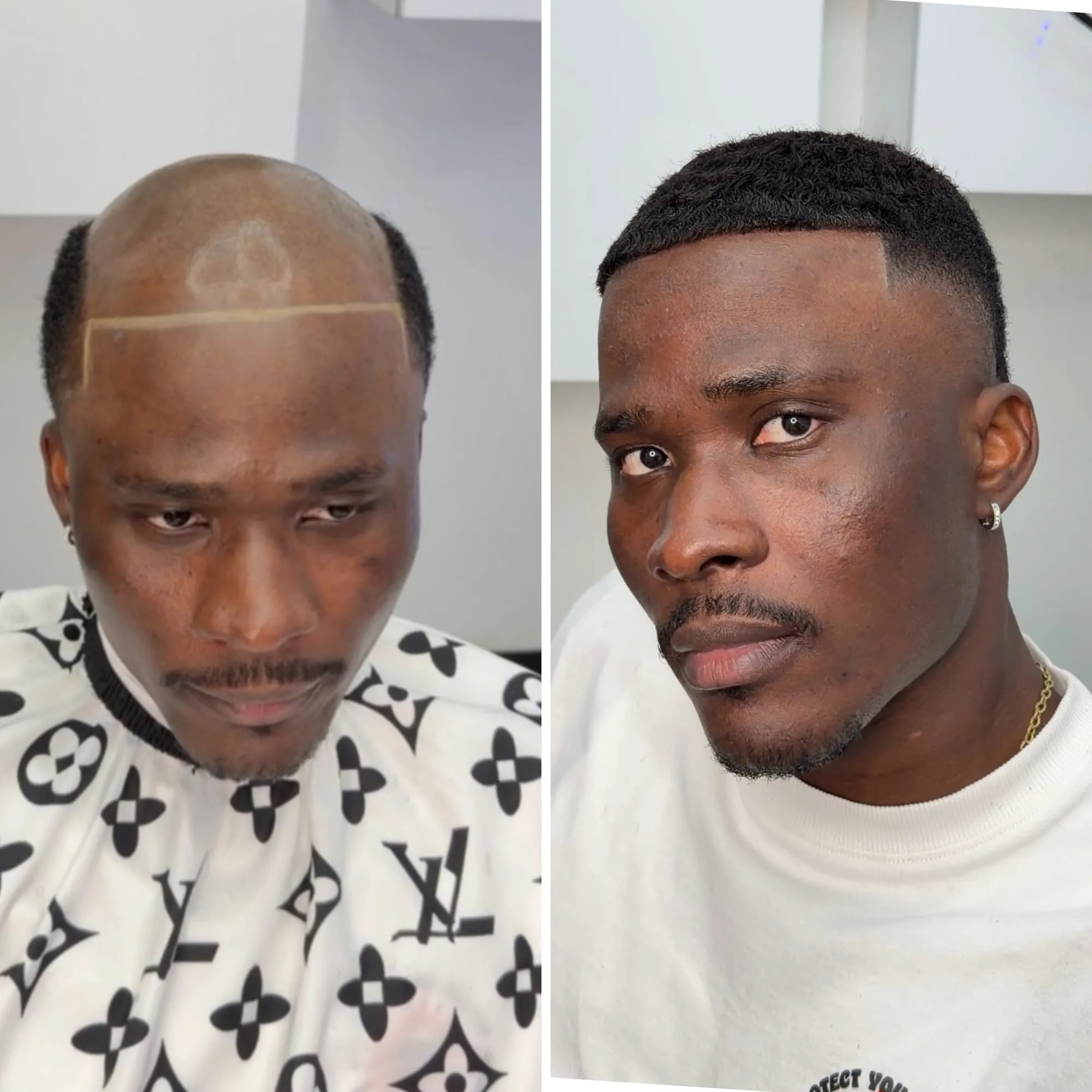
This is what it looks like.
A real client from our chair, photographed before and after his hair system was installed and cut in.
Questions, answered.
Which base looks the most natural?
Lace and skin both read as undetectable at the hairline when they are built and fitted well. Lace has the edge for a truly invisible, breathable front. Skin is close and easier to clean. Thick poly is the least invisible up close, so we keep it away from the hairline.
Which base lasts the longest?
Poly, by a clear margin. The thicker polyurethane film resists tearing and handles repeated adhesive and removal cycles best. Skin is next, and the thinnest, most invisible skin bases wear soonest. Lace is the most delicate because the fine mesh can fray over time.
Is lace or skin better for a hot climate?
Lace, because the open mesh lets heat and sweat pass through. Skin and poly are solid films that breathe less. If overheating is your main concern, we usually recommend lace or a lace center with a poly perimeter.
Do I have to pick just one material?
No. Many of the units we fit are hybrids, often lace at the front and top for realism and airflow with a poly perimeter for hold and durability. We match the build to your scalp, climate, and routine rather than forcing a single material.
What is a skin base, exactly?
Skin is a very thin, clear polyurethane film, sometimes called thin poly. It is light enough to read as bare scalp, wipes clean fast, and gives a clean hairline. It sits between lace and thick poly on both realism and durability.
Keep reading
Related guides.
Frontal Hair System
A frontal hair system covers the front and top where hair recedes, blending into the hair you still have. Here is who it suits and how it differs.
Thin Skin Systems
A thin skin hair system is a fine polyurethane base that gives the most invisible scalp look. Here is how thin and ultra thin skin bases feel and wear.
Types of Hair Systems
Lace, skin, and poly hair systems compared by look, feel, durability, and upkeep, so you can choose the right base for your hair and lifestyle.
Does It Look Natural
A well fitted, well cut hair system blends into your own hair and hairline. Here is what makes a hair system look natural and undetectable.