

Last updated September 28, 2026
Start with when the itch shows up
The timing of the itch tells us more than the itch itself. Before you change anything, notice the pattern. It points straight at the cause, and that saves you from guessing.
- Itches most when you sweat or the room is hot: heat and moisture are trapped against the scalp
- Itches worse the longer you go between reattachments: residue has built up or the bond is aging out
- Itched from the very first day of a fresh install: the bond may be set too tight or product was left on the skin
- Itches in one specific spot rather than all over: usually a residue pocket or a lifted edge in that area
Cause one: trapped sweat and sebum
Your scalp keeps producing oil and sweat under the base, and a solid film base or a heavy bond gives that moisture nowhere to go. Warm months in Peoria and humid stretches in Eighty Four both make this worse. The result is a damp, warm layer against the skin that feels itchy long before anything is actually wrong.
The fix is airflow and cleaning, not scratching. If you run hot or sweat heavily, a more breathable base like lace, or a lace center with a firmer perimeter, moves a lot of that heat out. Between wears, a proper scalp cleanse clears the oil that would otherwise sit and irritate.
- Rinse and gently clean the scalp at each reattachment so oil does not accumulate
- Choose a more breathable base if heat and sweat are your main trigger
- Give the scalp fully dry time during any planned break from the unit
- Blot sweat rather than digging under the edge with your fingers
Cause two: product and adhesive residue
Old adhesive, tape gum, and film from heavy styling products build up on the scalp and on the underside of the base. That layer is one of the most common reasons for a low, nagging itch, because it sits directly on the skin and holds onto grime. It also weakens the next bond, so residue is worth clearing for two reasons at once.
Removing residue properly is a technique, not just more scrubbing. A dedicated adhesive remover breaks the gum down so it lifts off cleanly instead of rolling into sticky beads that cling to the skin. We show every client the exact routine for their base and adhesive so residue never gets a head start.
- Use a purpose made adhesive remover, not force, to lift old bond
- Clean both the scalp and the underside of the base at every removal
- Rinse thoroughly so no remover or cleanser is left behind, which can itch on its own
- Keep heavy oil based styling products off the bonded area
Cause three: wearing a bond past its window
Every bond has a comfortable life span. As it ages, the adhesive gets grabby, edges start to lift, and moisture and debris work their way underneath. That combination reads as itch, especially around the perimeter. Pushing a bond well past its window is one of the most avoidable causes we see.
The answer is a reattachment rhythm that fits how you live, not the longest stretch you can tolerate. If the itch reliably arrives on day nine or day ten, that is your signal to reattach sooner, or to talk with us about an adhesive and schedule that better match your skin and activity.
Cause four: a bond set too tight
A bond applied under tension, or adhesive spread too thick right at the hairline, can pull on the skin and feel itchy or tight from the first day. This is a fit and application issue, and it is one we would rather catch and correct than have you live with. A hair system should feel secure, not gripped.
If a fresh install itched immediately and evenly, tell us. Often it is a small adjustment to how the perimeter is set or how much adhesive goes where. That is exactly the kind of thing a maintenance visit is for, and it is far easier to fix than to endure.
What to do right now, and when to see a doctor
Resist the urge to scratch under the base, which can lift the bond and make everything worse. Work the causes in order instead. A clean scalp, a fresh and correctly set bond, a breathable base if you run hot, and a reattachment schedule that matches your skin will resolve the large majority of itching we hear about.
There is a line where this stops being a maintenance question. Spreading redness, raw or broken skin, persistent flaking, swelling, or anything that looks like an allergic reaction to an adhesive is a medical matter. Take the unit off, stop using the product involved, and see a physician or dermatologist. We are happy to help you find an adhesive that suits sensitive skin once a doctor has cleared things up.
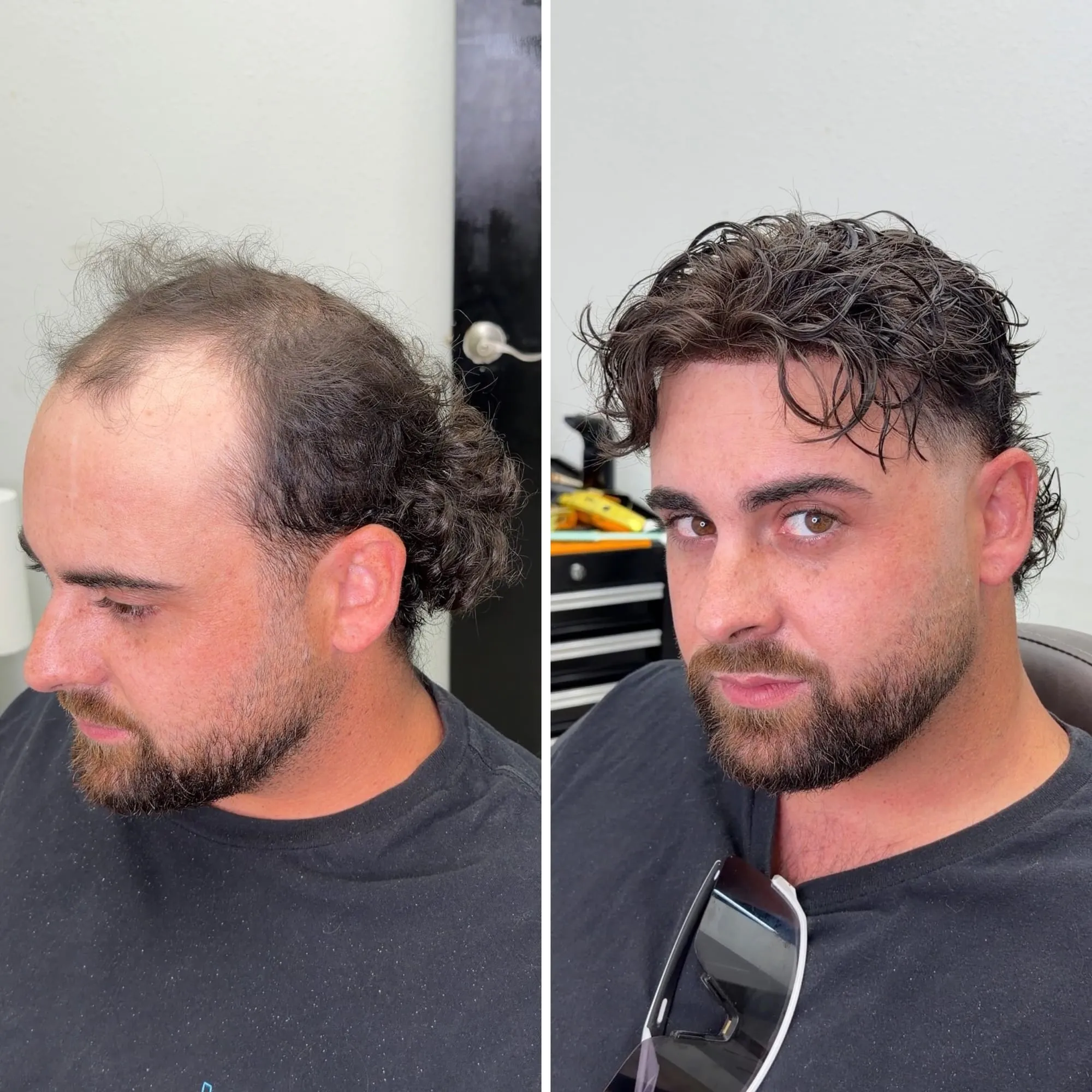
Real work
This is what it looks like.
A real client from our chair, photographed before and after his hair system was installed and cut in.
Questions, answered.
Why does my scalp itch more when I sweat with a hair system?
Sweat and scalp oil get trapped under the base with nowhere to escape, especially under a solid film base or in hot, humid conditions. A more breathable base and a thorough scalp cleanse at each reattachment usually settle it. Blot sweat rather than digging under the edge.
Can leftover adhesive cause an itchy scalp?
Yes. Old adhesive and product residue sitting on the scalp and on the underside of the base is one of the most common causes. Use a proper adhesive remover to lift it cleanly at every removal, and rinse fully so no remover or cleanser is left behind.
Does an itchy scalp mean I am allergic to my hair system?
Usually not. Most itching traces back to trapped sweat, residue, an aging bond, or a bond set too tight, all of which are fixable. Spreading redness, raw skin, swelling, or a reaction that will not settle is different and should be checked by a physician.
How soon should I reattach if the itch keeps coming back?
If the itch reliably shows up on the same day of your cycle, that is your signal to reattach sooner. Match your rhythm to your skin and activity rather than stretching a bond as long as possible. We can help set a schedule and adhesive that fit you.
My new install itched right away. Is that normal?
An immediate, even itch after a fresh install often means the bond was set a little tight or adhesive was spread too thick at the hairline. Tell us so we can adjust the perimeter or application. It is a quick fix at a maintenance visit and not something to live with.
Keep reading
Related guides.
Scalp Health
How to keep the scalp under a hair system clean and healthy. Cleaning, breathability, and the early signs worth acting on. No scare tactics.
Adhesive Types
Water based, solvent based, silicone, and acrylic adhesives compared on hold duration, moisture tolerance, and skin contact.
Hot Weather
How hair systems hold up to sweat, sun, and desert heat, and what we change for Arizona summers so the bond stays put. A practitioner guide.
Hair System Maintenance
How to keep a hair system clean, secure, and natural: your at home routine, the maintenance schedule, and what a studio visit covers.