

The short version
A transplant moves hair you already have from the back and sides to where you want it. It does not create new hair. That single fact decides most of whether it is worth it for you, because the amount of coverage you can get is capped by the donor area on your own head.
So the honest answer is conditional. It is a good fit for some men and a poor one for others, and the studios selling it rarely say the second part out loud. We do not perform transplants and have nothing to sell you here, so we can be plain about both sides.
When a transplant actually makes sense
There is a real candidate profile where surgery does its job well. If you see yourself in most of the points below, it is a reasonable route to research.
- Your loss has stabilised, so a surgeon can plan around a pattern that is not still moving
- You have a dense, healthy donor area at the back and sides with hair to spare
- You want modest, targeted restoration, such as rebuilding a hairline, rather than full coverage
- You are comfortable waiting close to a year to judge the final result
- You accept the outcome is permanent and cannot be redesigned later if your taste changes
The limits nobody puts in the ad
The biggest one is donor supply. A surgeon is redistributing a fixed amount of hair, so heavier loss almost never comes back to the density you had at twenty. Coverage that looks full in a tight camera shot can read thin under bright light or on a shaved-down cut.
Timeline is the second. Transplanted hair usually sheds within the first weeks before it regrows, and the honest verdict on a result lands months later, not on the drive home. If your loss is still progressing, you can also thin around the transplanted hair over time, which is how some men end up back for a second procedure.
And it is a surgical procedure with the recovery, healing, and variability that implies. Results depend heavily on the individual surgeon's skill and on how your own body heals, neither of which comes with a guarantee.
The permanence myth, both directions
People say transplants are permanent, and the moved follicles usually are. What is not permanent is the surrounding picture. The native hair around a graft can keep thinning on its own schedule, so a result that looked complete at first can open up again years later.
The flip side matters just as much. Permanent means fixed. If you dislike the density, the hairline shape, or how it ages, you cannot undo it. That is a heavy commitment to make against a look you have only seen in someone else's before and after.
The non-surgical route we actually run
A hair system is a different trade entirely. It is a custom hair unit fitted, cut, and blended into your own hair, so the coverage and density are chosen by you rather than limited by your donor supply. You walk out of the first appointment with a full head of hair instead of waiting most of a year to find out what took.
It is reversible and adjustable, which is the opposite of surgery. You can change the hairline, the density, or the length as your taste and age shift. It asks for ongoing maintenance rather than a one-time procedure, and for a lot of the men in our chair that ongoing relationship is the point, because it is what keeps the result looking real.
Neither route is automatically better. If you are weighing them head to head, our companion guide lays the two out side by side without the sales pitch.
How to decide for yourself
Start by being honest about your donor area and whether your loss has settled, because those two facts do more to determine a good transplant outcome than any marketing. If either is shaky, weight the decision toward the non-surgical side.
Then get a real look at both options in person before you commit to anything irreversible. A consultation with us costs you nothing but an hour, and you can see a hair unit on real clients and decide with your own eyes rather than on a promise.
Real work
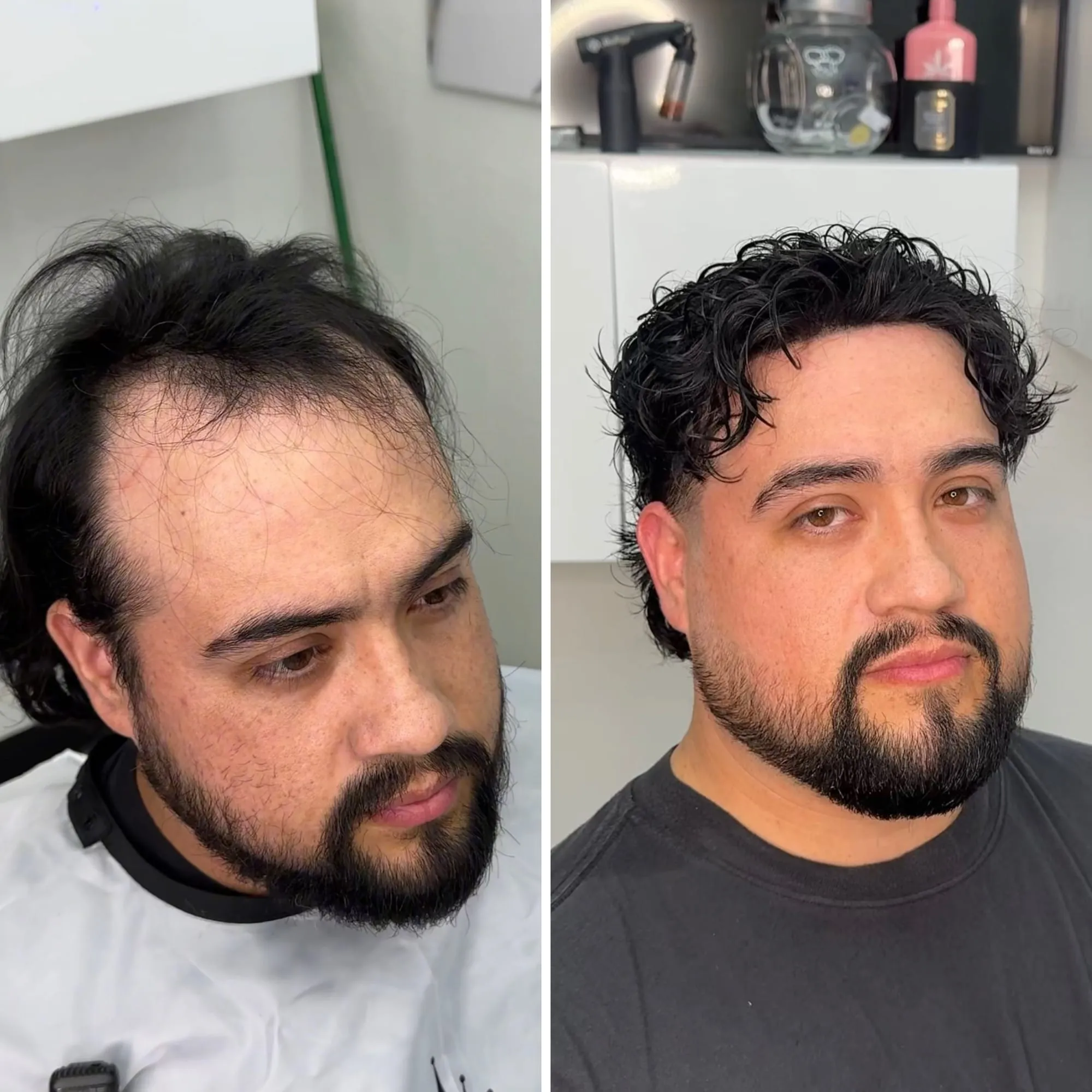
This is what it looks like.
A real client from our chair, photographed before and after his hair system was installed and cut in.
Questions, answered.
Is a hair transplant permanent?
The transplanted follicles are usually permanent, but the native hair around them can keep thinning on its own. So the moved hair stays while the overall picture can change, which is why some men return for a second procedure years later.
Who is not a good candidate for a transplant?
Men whose loss is still advancing, whose donor area at the back and sides is thin, or who want full coverage from limited donor supply tend to be poor candidates. Realistic density is capped by the hair you already have.
How long until you see transplant results?
Transplanted hair usually sheds in the first few weeks and then regrows, so the honest final result lands closer to a year out. It is not a same-day change, which is one of the biggest differences from a hair system.
What is the non-surgical alternative?
A custom hair system, which is a hair unit fitted, cut, and blended into your own hair. It gives full coverage the same day, is adjustable and reversible, and is not limited by your donor supply. It does ask for ongoing maintenance.
Do you offer hair transplants?
No. We are a non-surgical hair replacement studio, so we have no service to sell you here and can be straight about when surgery does and does not make sense. If you want to compare, book a consultation and see a hair system in person.
Keep reading
Related guides.
Hair System vs Hair Transplant
A side by side look at hair systems and hair transplants: results, timeline, upkeep, and who each one suits. Non surgical vs surgical, honestly.
What Is a Hair System
A hair system is a custom hair unit fitted and blended into your own hair for a full, natural look. Here is how non surgical hair replacement works.
Choosing a Studio
The questions to ask, the red flags to avoid, and what separates a great hair replacement studio from an average one.