

Last updated October 27, 2026
The short version
If you want the fast answer: PRP tries to slow loss and thicken existing follicles over a course of sessions, with results that vary and are never promised. A hair system is fitted in one appointment and gives you a full, styled head of hair the same day, at any stage of loss. If your loss is early and there is still hair to strengthen, PRP is a conversation for a doctor. If you want a visible result now, or the area is already bare, a system is the direct route.
What PRP actually is
PRP stands for platelet rich plasma, and the process is more medical than most men expect. A clinician draws a small amount of your blood, spins it in a centrifuge to concentrate the platelets, then injects that concentrate into the thinning areas of your scalp. The idea is that the growth factors in your own platelets nudge tired follicles to hold on and produce thicker strands. We fit hair systems, we are not a clinic, so treat this as plain background and take anything about your own scalp to a doctor.
Two things are easy to miss going in. PRP is rarely one and done; it is usually a short course of sessions spaced weeks apart, then maintenance sessions to hold any gains. And it is biology rather than coverage, so the result is gradual and never guaranteed. Whether it helps you, and by how much, is genuinely individual.
The honest gap: what PRP can and cannot do
This is the part that saves men a lot of time, and it is rarely said plainly. PRP can only act on follicles that are still alive. Where you have thinning, shrinking hair, it may thicken what is there and slow the decline. Where the scalp is already bare, there is nothing to stimulate, so it will not fill a bare front or a smooth crown. PRP is a way to defend and strengthen existing hair, not a way to create hair where it has gone.
- May slow loss and thicken existing hair for some men, judged over months
- Works best early, while follicles are thinning rather than gone
- Does nothing on fully bare skin, because there is nothing there to stimulate
- Results vary person to person and are never guaranteed
- Needs repeat sessions to hold any effect
What a hair system does instead
A hair system takes the opposite approach. It is a custom unit of real hair, built to your head and your color, then bonded to your scalp and cut into whatever hair you still have. It adds the hair rather than trying to coax more from your follicles, which is why it works at any stage, including the bare areas PRP cannot touch.
The difference you feel most is time. A system is a same day result; you walk in thinning or bare and walk out with a full, styled head of hair, with no course of sessions and no waiting months to learn whether it took. The trade is that a system is a routine rather than a treatment, cleaned, re-cut, and reattached on a schedule, with the unit eventually replaced.
Side by side
Here is the honest head to head on the factors that actually decide it. Read the row that matters most to you first. There are no prices here, because PRP pricing belongs to a clinic and a system depends on your unit and your maintenance rhythm, which we work out with you in person.
| Factor | Hair system | PRP therapy |
|---|---|---|
| Coverage | A full head of hair at any stage, including bare areas | Only where living follicles remain, nothing to add on bare skin |
| Who it suits | Any stage of loss, wants a visible full result now | Early to moderate thinning with hair still present to strengthen |
| Timeframe | Same day, finished at the first fitting | A course of sessions first, then results judged over months, and they vary |
| Upkeep | Maintenance visits to clean, re-cut, and reattach | Repeat sessions on a schedule to hold any effect |
| Reversibility | Fully reversible, you can stop any time | Not something you reverse, stop and any effect fades as loss resumes |
Can you run both
Yes, and for some men it makes sense. PRP works on your biology and a system works on your appearance, so there is no conflict. A man who wants to protect his thinning hair can pursue PRP with a doctor while wearing a system for the full look today, the way some men pair hair loss medication with a system.
It is optional rather than necessary. A well fitted system does not need PRP underneath it to look right. If you are weighing both, raise it at a consultation and we will tell you honestly whether it adds anything for you.
Where we stand
We fit and maintain hair systems and we do not perform PRP, so we have no reason to talk you into it or out of it. The straight version is this: if your loss is early, you still have hair to strengthen, and you are comfortable waiting to see what a course of sessions does, PRP is worth discussing with a doctor. If you want a full result you can see today, or the area is already bare, that is a hair system, and that is our chair.
This guide sits alongside our wider resources on non-surgical hair replacement for men. When you want to see honestly what a system would do for your stage of loss, book a consultation at our Peoria, Arizona or Eighty Four, Pennsylvania studio and we will give you the real answer for you.
Real work
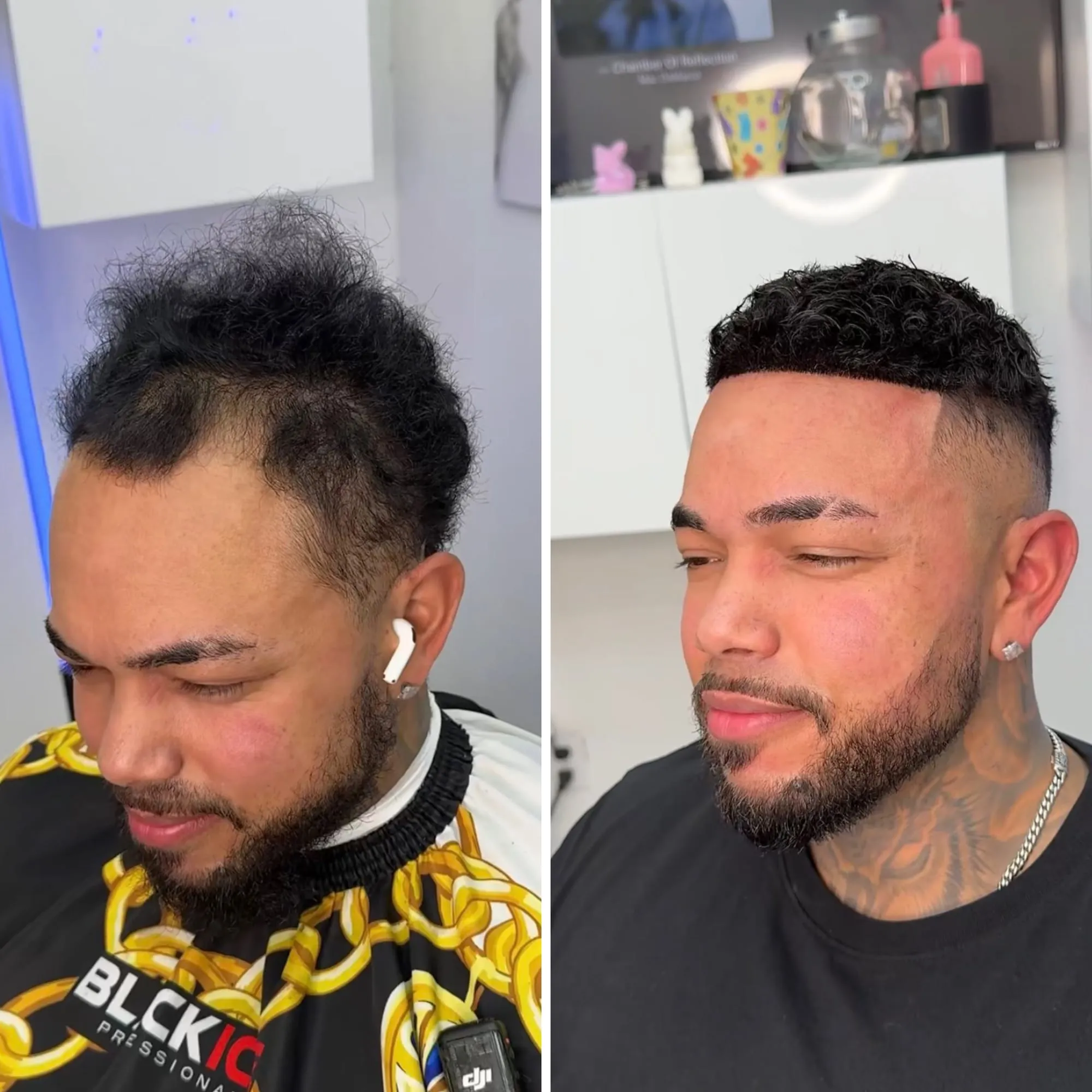
This is what it looks like.
A real client from our chair, photographed before and after his hair system was installed and cut in.
Questions, answered.
Does PRP regrow hair?
PRP is used to try to slow loss and thicken the hair you still have, not to reliably regrow hair on a bare scalp. It can only act on follicles that are still alive, and results vary. Whether it suits you is a question for a doctor. A hair system adds the hair itself, at any stage of loss.
Is PRP or a hair system better for a receding hairline or thinning crown?
If the area still has fine, living hair, PRP may thicken it and slow the decline over time. If the front or crown is already bare, there is nothing for PRP to stimulate, so a hair system is what actually covers it. The deciding question is whether there is still hair there to strengthen.
Can I do PRP and wear a hair system at the same time?
Yes. PRP works on your biology and a system works on your appearance, so they sit on separate layers with no conflict. Some men protect their existing hair with PRP under a doctor while a system handles the full look now. It is optional, so ask at a consultation whether it is worth it.
How long do PRP results last compared with a hair system?
PRP results are gradual and need repeat sessions to hold, because the effect fades if you stop and loss continues. A hair system is a same day result, maintained on a schedule with the unit replaced on a cycle. One asks for patience and ongoing top-ups, the other is visible immediately.
What is actually involved in a PRP session?
A clinician draws a small amount of your blood, concentrates the platelets in a centrifuge, and injects them into your scalp, usually across a course of sessions. We are a hair studio rather than a clinic, so take the specifics to a doctor. A hair system involves no needles and no blood, just a fitting and a cut.
Keep reading
Related guides.
Hair System vs Hair Transplant
A side by side look at hair systems and hair transplants: results, timeline, upkeep, and who each one suits. Non surgical vs surgical, honestly.
Options Compared
Hair systems, transplants, SMP, medication, shaving, or nothing. An honest side by side of coverage, reversibility, commitment, and upkeep.
Hair System vs SMP
A hair system adds real hair you can style. SMP tattoos the look of stubble onto your scalp. Here is who each one actually suits, honestly.