

Why the yearly view is the honest one
Most men ask what a hair system costs and stop at the first appointment. That is the wrong frame. A system is worn, maintained, and eventually replaced, which makes it more like running a car than buying one. The number that actually matters is what a full year looks like once you are settled into a routine.
The good news is that the yearly picture is steadier than the upfront one. Once you know your replacement interval and your maintenance rhythm, the cost stops moving. There are no hidden line items in year two that were not there in year one. What we set out at your consultation is what it stays.
Driver one: how long each unit lasts
The single biggest lever on annual cost is how many units you go through in a year, and that comes down to the base you chose and how you treat it. A very fine base gives the most invisible front and wears out fastest. A sturdier base lasts longer and trades a little at the hairline. Neither is wrong, but they land at different points on the yearly total.
How you live matters as much as what you buy. Heat, heavy sweat, chlorine, salt water, and harsh products all shorten a unit's life. Arizona heat is a genuine factor here rather than a footnote, and it is one reason we talk about climate at the consultation instead of pretending every wearer is the same.
- Finer bases look best and are replaced more often
- Sturdier bases stretch the interval between replacements
- Sun, sweat, and swimming age a unit faster
- Gentle products and proper drying extend its life
Driver two: your maintenance rhythm
Maintenance visits are the steady heartbeat of the yearly cost, and they are also what keeps the whole thing looking like your own hair. A visit takes the system off, cleans it and your scalp, re-cuts and blends it to your current growth, and reattaches it. The more often you need that, the higher the annual figure.
Your interval is set to you, not applied as a blanket rule. Someone who trains most days and sweats hard will come in more often than someone in an office. The interval is a real cost driver, so it is worth being honest about your routine when we set it, because a schedule that fits your life is cheaper to keep than one you fight.
Driver three: supplies between visits
Between appointments you use adhesive or tape, a remover, and shampoo and conditioner suited to the unit. Individually these are small, but they repeat, so they belong in the yearly math. How much you get through depends on your attachment method and how often you reattach at home versus leaving it to us.
This is the part men underestimate and then find is smaller than they feared. It is real, but it is not the driver. The base and the maintenance rhythm move the yearly total far more than the consumables do.
- Adhesive or tape, used up in proportion to how often you reattach
- Remover for clean take downs
- Shampoo and conditioner that will not attack the base
How to lower your yearly cost honestly
There are real ways to bring the annual number down, and none of them involve cutting corners on how it looks. The most effective is rotating two units so each one rests between wears, which meaningfully extends the life of both and often pays for itself over time. Keeping your maintenance visits on schedule is the next, because a lifting bond or a tired unit left too long usually costs more to put right than the visit would have.
Choosing a base that matches how you actually live, rather than the finest one available, is the quiet one. If you work outdoors or train hard, a slightly sturdier build will serve your budget better than the most delicate lace, and you will barely notice the difference at the front once it is cut in.
Turning it into a monthly figure
Once you know your replacement interval, your maintenance rhythm, and your supply habit, the yearly cost divides cleanly into a monthly one. That is how most men end up thinking about it, as a steady line in the budget rather than an occasional lump. This page deliberately stays on the drivers rather than numbers, because your figures depend on the choices above.
For what shapes the upfront investment and how pricing is structured overall, see the cost pillar. For the specific numbers that apply to your hair, your routine, and your climate, a consultation is the only honest source, and there is no obligation attached to it.
Real work
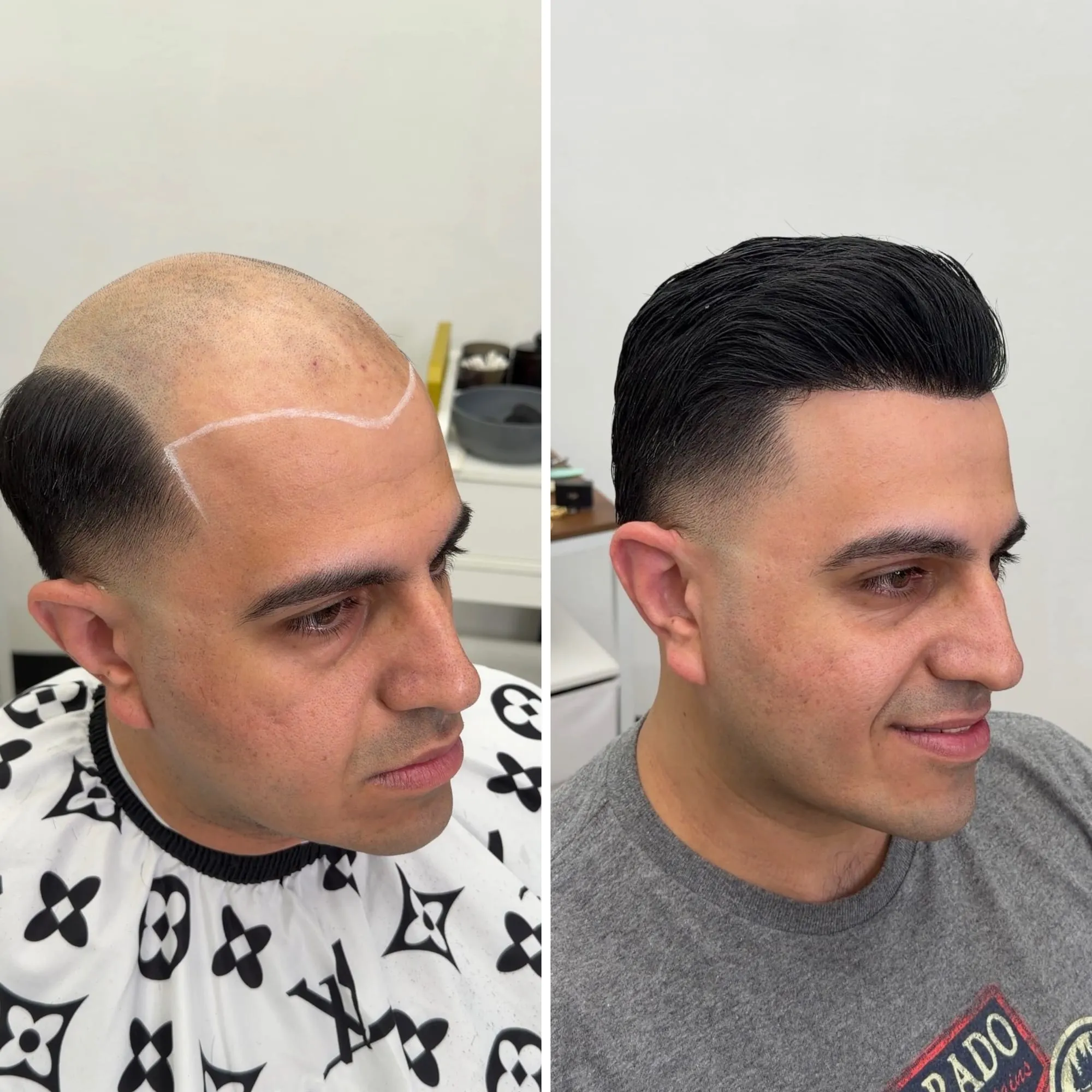
This is what it looks like.
A real client from our chair, photographed before and after his hair system was installed and cut in.
Questions, answered.
Is a hair system a monthly cost or a yearly one?
Both views describe the same thing. The natural unit is the year, because units are replaced and maintenance happens on a repeating cycle. Divide that yearly rhythm and you get the monthly figure most men budget with.
What makes the biggest difference to yearly cost?
How long each unit lasts and how often you come in for maintenance. The base you choose and how you treat it drive replacement frequency, and your routine drives the maintenance interval. Supplies matter least.
Does a second system cost more or save money?
It is an extra unit upfront, but rotating two systems lets each one rest, which extends the life of both. Over time that often lowers the yearly total, and it means you are never caught without a backup.
Will my costs change from one year to the next?
Not once you are settled. The yearly rhythm is steady. What we set out at your consultation is what it stays, with no surprise line items appearing later.
Keep reading
Related guides.
How Long Hair Systems Last
How long a hair system lasts depends on the base, your routine, and maintenance. Here is what to expect and how to make yours last longer.
Hair System Maintenance
How to keep a hair system clean, secure, and natural: your at home routine, the maintenance schedule, and what a studio visit covers.