

What a hair system barber actually does
The work is more than gluing on a unit. A hair system barber assesses the head, matches color, texture, and density, attaches the system, then cuts and blends it into the client's existing hair so the two read as one. That last step is where a barber's core skill carries over directly, because a system that is not cut in looks bought no matter how good the unit is.
The other half of the job is what keeps a chair full: maintenance. Systems come off, get cleaned, re-cut, and reattached on a schedule. That rhythm is the difference between a one-time sale and a client who sits in the same chair every few weeks for years.
- Consult, assess the scalp, and set realistic expectations
- Match color, texture, and density to the client's own hair
- Attach the unit securely using the right method for the client's skin and routine
- Cut and blend the system into existing hair for an undetectable result
- Run scheduled maintenance visits that clean, re-cut, and reattach
Why barbers are adding it
Cutting alone is a volume business. You are trading time for a fixed cut ticket, and there are only so many chairs and so many hours. Hair replacement changes the shape of the business. It is a specialized service with far fewer people offering it well, and it comes with built-in repeat visits because a system has to be maintained.
The barbers who add it are not chasing a novelty. They are looking for a service that rewards skill instead of speed, that most competitors down the street cannot offer, and that turns a walk-in haircut relationship into a standing appointment. The demand is already sitting in your chair. Men who are thinning ask about options constantly, and most barbers have nothing to send them to.
The skills that carry over, and the ones you have to learn
A good barber is already most of the way there on the parts clients notice. You can read a head shape, you understand blending, and you can finish a cut. Those instincts transfer straight into hair replacement work.
What is genuinely new is the system itself: template taking, base selection, attachment chemistry, and how to work with a unit instead of only growing hair. None of it is out of reach for someone who already cuts well, but it is not something you pick up by watching a few videos. It is a craft learned hands on, on real units, with someone correcting you.
How you actually become one
The path is straightforward but it has an order. You need to be licensed, because working on paying clients is a state-regulated activity and hair replacement generally falls inside a barbering or cosmetology scope rather than being a separate credential. From there it is structured training, then reps.
Certification proves you have been trained in the craft. It is not a license and it does not replace one, so confirm your own state's rules with your board before you build a plan around it. What certification gives you is the actual ability to do the work, and a mentor to call when a real client is in the chair and something is not going the way the class did.
- Confirm your licensing scope with your state board
- Take a certification class built for barbers new to hair systems
- Practice on real units until template, cut, and blend become instinct
- Lean on mentorship for the first live installs, when the stakes are real
Mentorship is what makes it stick
A weekend class teaches you the process. It does not teach you what to do when a client's skin reacts, when a hairline sits wrong, or when a bond lifts early. That knowledge comes from doing the work with someone experienced watching, which is why the training that lasts pairs a certification with one-on-one mentorship rather than sending you off with a certificate and a handshake.
For a working barber, that support is the difference between adding hair replacement and quietly dropping it after two frustrating clients. The craft has a learning curve, and the people who get through it are the ones who had someone to call.
Real work
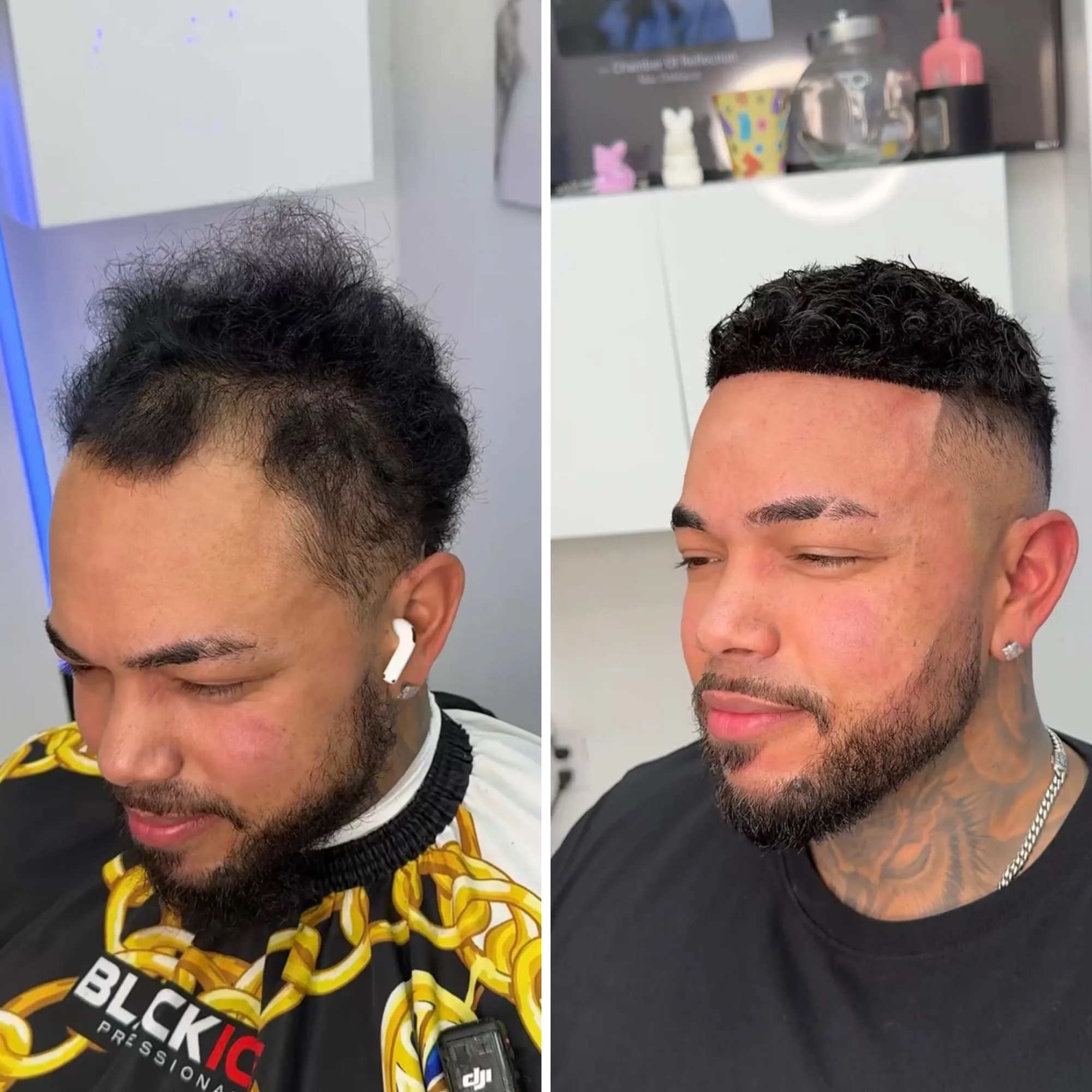
This is what it looks like.
A real client from our chair, photographed before and after his hair system was installed and cut in.
Questions, answered.
Do I need to be a barber already to become a hair system barber?
You need to be licensed to work on paying clients, and in most places that means a barbering or cosmetology license. If you already cut well, the transferable skills give you a real head start. Confirm the specifics with your state board.
Is a hair system barber different from a hair replacement artist?
They describe the same work. Hair system barber emphasizes the barbering roots, hair replacement artist emphasizes the specialty. Either way it is the person who installs, cuts in, and maintains hair systems.
Why would a client choose a barber over a clinic?
Because the result lives or dies on the cut and blend, which is a barber's core skill. A system fitted and finished by someone who cuts hair every day tends to sit more naturally than one handled by someone who does not.
How long before I can offer it to clients?
You leave a proper certification class able to perform the process. How quickly you get fast and confident depends on how many reps you put in and how much mentorship you use in the early live installs.
Keep reading
Related guides.
How to Become a Hair Replacement Artist
The path from barber to hair replacement artist: the skills, the training, and how to add hair systems as a high margin service line.
Licensing
Do you need a license to do hair replacement? What barbers and stylists should know about requirements in Arizona, Pennsylvania, and beyond.
Certification
What non-surgical hair replacement certification covers for barbers, what it proves, and how it de-risks adding hair systems to your chair.
What Is a Hair System
A hair system is a custom hair unit fitted and blended into your own hair for a full, natural look. Here is how non surgical hair replacement works.