

Why a system is not your own hair
The hair in a unit is real human hair in most of our builds, but it is no longer attached to a living scalp. It gets no oil, no new growth, and no help recovering from anything harsh you put on it. Whatever you do to it is permanent until that hair is replaced, so there is no margin for a color that comes out wrong.
There is also the base to think about, the thin material the hair is tied into. Aggressive developers and long processing times do not just affect the hair, they can weaken the knots and the base itself. That is the part most people never consider, and it is exactly the part that decides how long the unit lasts.
Toning versus a full color change
Most of what men actually need is toning, not dyeing. Over time sun, sweat, chlorine, and washing pull a unit slightly off its original shade, usually warmer or brassier. A gentle tone brings it back to where it started so it keeps matching the hair around it. This is the common request, and it is low risk when it is done deliberately.
A full color change is a different job. Lifting a unit lighter is the riskiest direction because it relies on the same harsh chemistry that damages hair on a head, only here the hair cannot recover. Going darker is more forgiving. In our chair we will tell you honestly which direction is safe for your specific unit and which is asking for trouble.
Matching your natural hair as it changes
The point of coloring a system is almost never fashion. It is blend. Your own hair keeps changing while the unit stays exactly as it was built, so the two can drift apart. Gray coming in at your temples is the most common reason a unit that looked perfect a year ago now reads slightly off.
When that happens we can add gray into the system to keep pace with you, or adjust the tone so the transition between your hair and the unit stays invisible. Getting this right is judgment work done side by side with the hair on your head, which is not something a bottle of dye can do on its own.
- Toning a unit that has warmed up from sun and washing
- Adding gray so the system ages alongside your own hair
- Blending a color line where the unit meets your growth
- Correcting a match after a previous color went off
Why we keep color in the studio
It comes down to control and protecting your investment. We know how the specific hair and base in your unit will react, we can test before committing, and we can stop the moment it hits the right shade. If something is off, we catch it before it becomes permanent instead of after.
It also folds neatly into maintenance. Toning or a touch up is easy to build into a visit when the system is already off, cleaned, and being reblended. You leave matched and finished rather than gambling on a result at home and hoping it works.
What we ask you not to do at home
Box dye is the big one. It is formulated for hair on a scalp with a wide safety margin, and a unit has none. The same goes for bleach, strong purple shampoos used carelessly, and leaving any color product on far longer than intended. These are the mistakes that turn a repairable tone shift into a unit that has to be replaced early.
If your color has drifted or you are tempted to change it, tell us at your next visit or call ahead. It is a normal request and a quick fix in the right hands. It is an expensive one in the wrong hands.
Real work
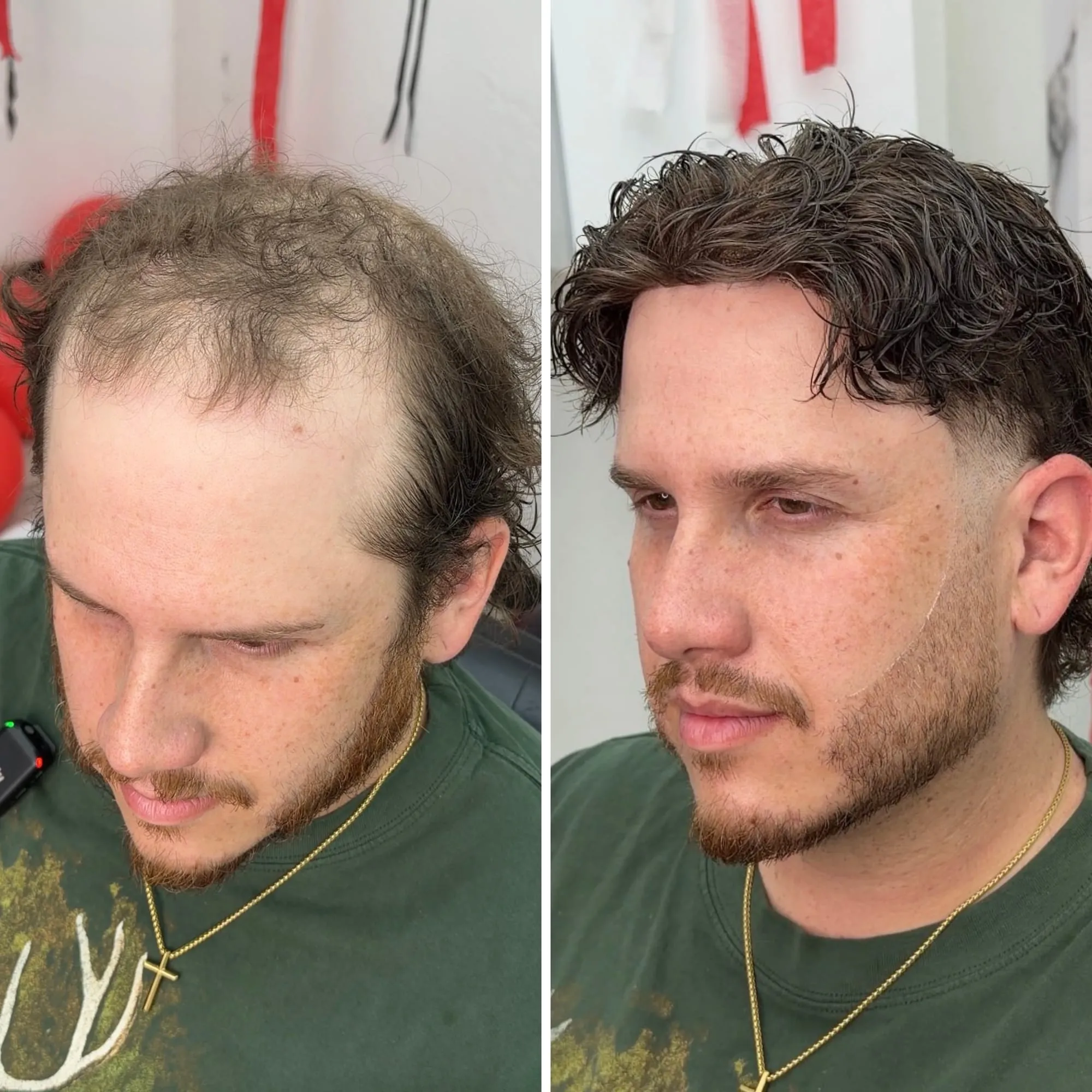
This is what it looks like.
A real client from our chair, photographed before and after his hair system was installed and cut in.
Questions, answered.
Will coloring shorten the life of my system?
Gentle toning done occasionally is not a problem. Repeated heavy lifting or bleaching stresses the hair and the base and will age the unit faster, which is one more reason we keep it controlled in the studio.
Can you make my system lighter?
Sometimes, but lifting is the riskiest direction because the hair cannot recover the way hair on a scalp does. We will look at your specific unit and tell you honestly whether it is safe or whether a replacement in the shade you want is the smarter move.
My unit has gone brassy in the sun. Can you fix it?
Yes. That warm shift is one of the most common things we correct, and a tone brings it back to match your own hair. It is a routine part of maintenance.
Can you add gray to match how my hair is changing?
We can. Blending gray into a system so it keeps pace with your natural hair is something we do regularly, and it is often what keeps an older unit looking current.
Keep reading
Related guides.
Hair System Maintenance
How to keep a hair system clean, secure, and natural: your at home routine, the maintenance schedule, and what a studio visit covers.
Color Matching
How color matching works for a hair system, and how salt-and-pepper and grey are blended so it stays believable as you age.
How Long Hair Systems Last
How long a hair system lasts depends on the base, your routine, and maintenance. Here is what to expect and how to make yours last longer.