

Start with the base, not a brand name
The base is the thin material the hair is tied into, and it decides more about your result than any other single choice. It sets how invisible the front looks, how long the unit lasts, and how it feels against your scalp all day. Get the base right and most other decisions fall into place around it.
The trade you are making is almost always the same one. The finer and more breathable the base, the more convincing the hairline and the faster it wears. The sturdier the base, the longer it lasts and the more forgiving it is, with a slightly less delicate front. There is no free lunch here, only the balance that suits you.
- Lace, the most breathable and natural at the front, and the most delicate
- Skin or poly, a thin durable base that is easy to clean with a realistic scalp look
- Hybrid, lace at the front for the hairline and a tougher material through the back for wear
Match the hair to your own
A base is only half of it. The hair tied into it has to read as yours, which comes down to type, color, texture, and density. Human hair behaves and takes styling like the hair you grew, which is why most men who want the most natural result end up there. Synthetic holds a style well and costs less to run, but it is less flexible day to day.
Density is where good intentions go wrong most often. Men reach for thick because thick feels like more hair, but real hair at your age is rarely as full as people assume, and too much density is the single most common reason a system looks bought rather than grown. The right amount is the amount that is believable for your face and your years, not the maximum the base will hold.
Treat budget as a system, not a sticker
The most useful way to think about cost is not what the first unit runs, but what a year of wearing one looks like. A finer base gives a better front and gets replaced more often. A sturdier base costs less over time because it lasts longer between replacements. Neither is cheaper in the abstract, they just spread the cost differently.
Two habits change the math in your favor. Keeping to your maintenance schedule protects the unit so it lives its full life instead of wearing out early, and rotating between two systems lets each one rest so both last longer. We walk through what all of this looks like for your specific choice at a consultation, without a number pulled out of the air.
Choose for the life you actually live
This is the filter men skip, and it is the one that decides whether you are happy in six months. Be honest about how you spend your days before you fall for the most invisible base in the room. Someone who trains hard, sweats, and works outdoors in Arizona heat has genuinely different needs from someone in an air conditioned office who wants the finest possible hairline.
The heat here is a real variable, not a footnote. Sustained high temperatures and heavy sweat ask more of an adhesive bond and a delicate base than a mild climate ever would. That does not rule any base out, it just means the honest answer for an active man in Peoria may be a hybrid, while the same man in a cooler city and a desk job might happily run full lace.
- How much you sweat, and whether you swim or train most days
- How physical your work is, and whether you wear a hat or helmet
- How often you can realistically get in for maintenance
- How fine you need the front to be for how you wear your hair
The best system is only as good as the fit
Here is the part no spec sheet captures. The same unit can look undetectable in one chair and obvious in the next, because the hairline design and the cut into your own hair are done by a person, not shipped in the box. A modest base fitted brilliantly beats a premium base fitted carelessly every time.
Some people still call this a toupee, but a custom system mapped to your head, matched to your hair, and cut in by someone who does this every day has nothing in common with that word. That is why choosing where you go matters as much as choosing what you wear, and why we would rather build the right system for you than sell you the most expensive one on the shelf.
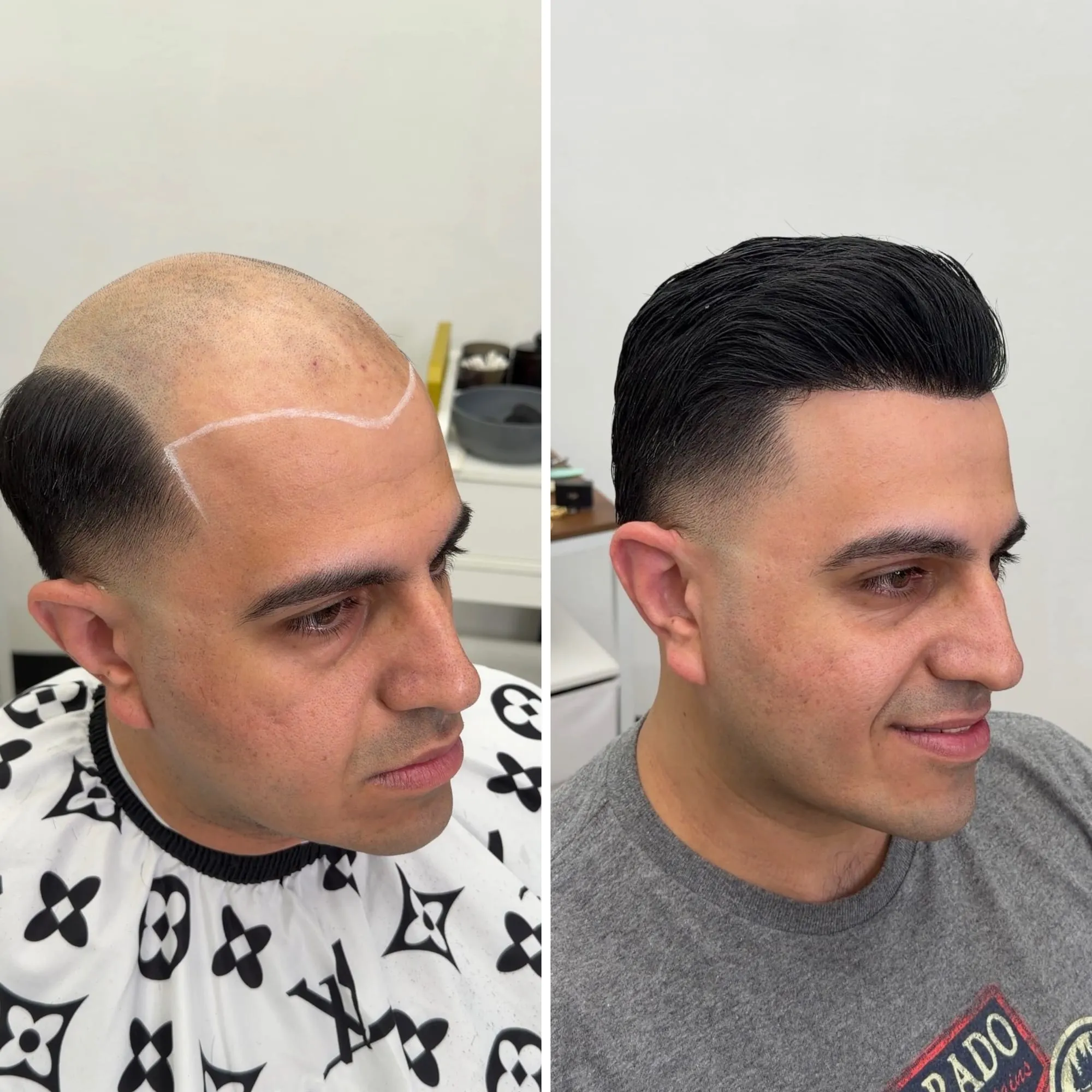
Real work
This is what it looks like.
A real client from our chair, photographed before and after his hair system was installed and cut in.
Questions, answered.
What is the best hair system for a beginner?
Usually a hybrid or skin base, because they are more durable and more forgiving while you learn the routine. You can always move to a finer base once you know what you actually want from living with one.
Is human hair always better than synthetic?
Not always. Human hair looks and styles the most naturally, which is why most men choose it. Synthetic holds a set well and costs less to run, so it can suit a specific look or budget. The right answer depends on how you wear your hair.
Does a more expensive system look more natural?
Not on its own. The finest bases give the most convincing front and wear out fastest. What consistently matters more is the hairline design, the density, and the cut, and those come down to the fitter rather than the price.
How do I find the best system for me specifically?
Bring your real situation to a consultation. We look at how much hair you have, your color and texture, how you want to wear it, and how you live, then recommend the base and density that fit rather than the priciest option.
Keep reading
Related guides.
Types of Hair Systems
Lace, skin, and poly hair systems compared by look, feel, durability, and upkeep, so you can choose the right base for your hair and lifestyle.
Lace, Poly, or Skin
Lace breathes and looks natural, skin is invisible and easy to clean, poly holds longest. How we pick a hair system base by realism and upkeep.
Human vs Synthetic
Human hair vs synthetic hair systems compared by look, styling, longevity, and care, with the honest tradeoffs we walk through in our chair.
Choosing a Studio
The questions to ask, the red flags to avoid, and what separates a great hair replacement studio from an average one.