

Last updated September 28, 2026
Wait for a full cure before you submerge
The single most common reason a unit lifts in the water is swimming on a bond that has not finished curing. Adhesives and tapes reach an initial grab within minutes, but they keep hardening and strengthening for a while after that, and warm water accelerates the release of an under cured bond. Submerging too soon is the difference between a hold that shrugs off a swim and one that peels at the edges.
As a rule, give a fresh install time to set before any real swimming. If you have just been reattached, plan your first swim for a later day rather than the same afternoon. If you are ever unsure how long your specific adhesive needs, that is a question worth asking us at your appointment, because cure time varies by product and by how humid your climate is.
- Fresh install: let the bond cure fully before submerging, not the same session
- Give the perimeter extra respect, since the edges take the most stress in water
- Hot tubs and warm pools soften a bond faster than cool water, so a cured bond matters even more there
- When in doubt, wait a day rather than risk lifting an edge
Rinse with clean water before a pool
This is the step most people skip, and it is the cheapest protection you have. Before you get into a chlorinated pool, wet your hair thoroughly with clean tap water. Hair and the base act like a sponge. If they are already saturated with clean water, they absorb far less of the chlorinated pool water, which means less chlorine sitting against your hair and your bond for the length of your swim.
The same logic works for salt water and for the heavily treated water in a hot tub. A clean water rinse first, then get in. It takes fifteen seconds and it meaningfully slows how fast chlorine and salt reach the hair and the adhesive.
Understand how chlorine actually affects a unit
Chlorine does not dissolve your adhesive on contact. The damage is cumulative. Repeated exposure over many swims gradually dries and degrades the bond, and over time it also lifts color and roughens the hair cuticle, which is what leaves a unit looking dull, brassy, or straw like after a summer of heavy pool use. One swim will not wreck anything. A whole season with no rinse and no aftercare will show.
Salt water is drying in its own way and sun adds to it, so ocean swimming asks for the same discipline. The takeaway is not to avoid the water. It is to treat every swim as a small withdrawal from the bond and the hair, and to pay it back with the rinse before and the wash after.
After you swim: the rinse and wash routine
What you do when you get out matters as much as what you did before. Chlorine and salt left to dry in the hair keep working on it, so the goal is to get them out promptly and gently.
- Rinse the hair with clean water as soon as you are out, before it dries
- Shampoo with a gentle, sulfate free cleanser made for hair systems to lift chlorine and salt
- Follow with a light conditioner to put moisture back into the hair
- Pat and air dry rather than rubbing hard with a towel, which stresses knots and the base
- Check the perimeter as it dries and press down any spot that feels like it is starting to lift
If an edge lifts or the hold feels weak
Water and friction find the weakest point of a bond, which is almost always the perimeter. If you notice an edge lifting during or after a swim, do not pick at it. Dry the area, press it back down, and if it will not hold, plan a proper reattachment rather than forcing it while wet.
A hold that feels reliable on dry land but consistently loosens in the pool usually points to one of three things: swimming before the bond cured, too little adhesive at the perimeter, or a base and adhesive pairing that is not matched to how much you are in the water. All three are fixable, and if you swim often it is worth telling us so we can build the next unit and bond around that.
Small habits that make swimming easier
A swim cap is optional but genuinely helpful. A snug silicone cap cuts down how much chlorinated water reaches the hair and shields the perimeter from drag, and it is the simplest upgrade if you swim laps regularly. It will not make a weak bond strong, but it protects a good one.
Beyond that, the routine is the whole game. Cure fully, rinse before, wash and condition after, and keep an eye on your edges. Men who swim several times a week with a hair system are not doing anything exotic. They have just made those four steps automatic, and we set every client up with the exact products and technique for their base at their appointment.
Real work
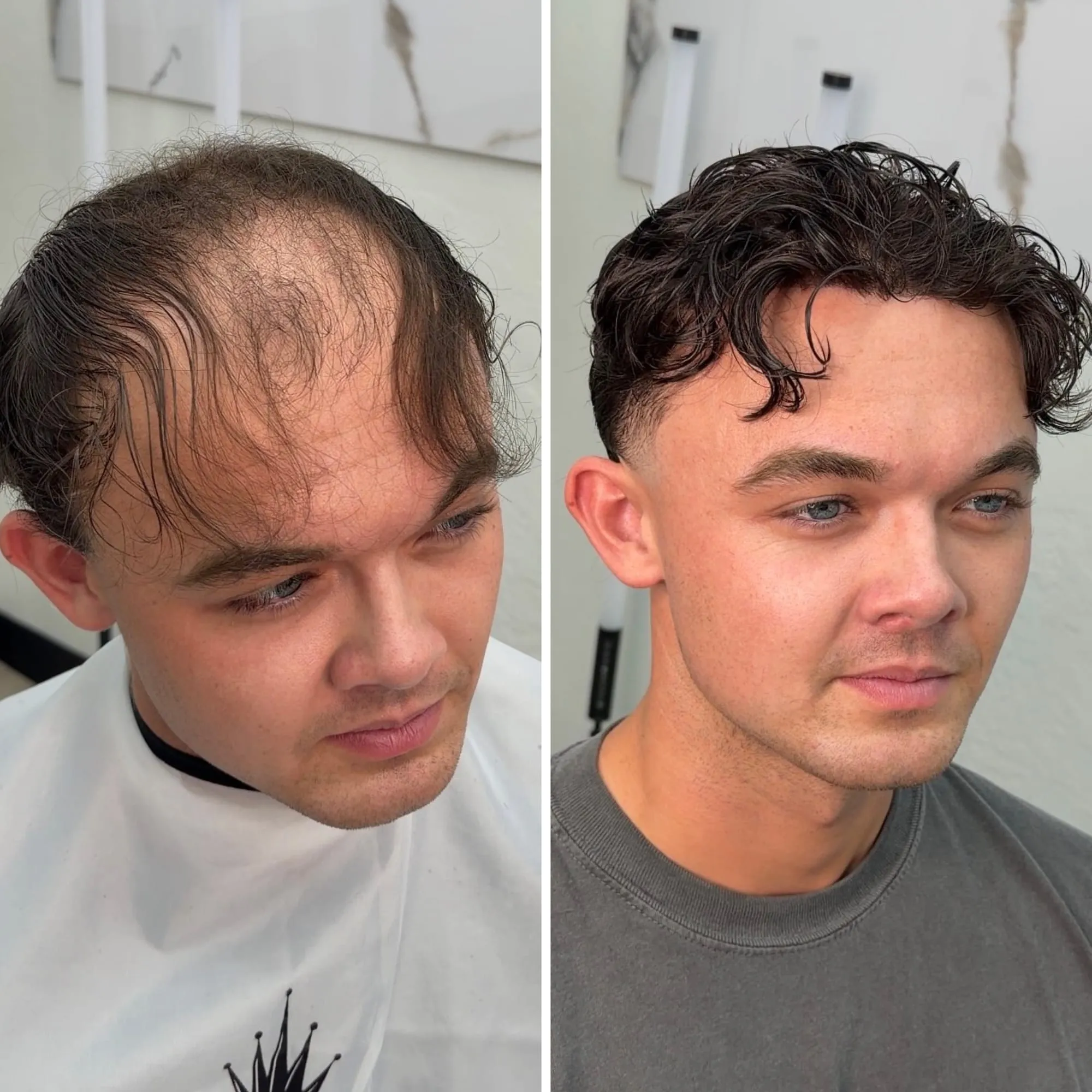
This is what it looks like.
A real client from our chair, photographed before and after his hair system was installed and cut in.
Questions, answered.
Can you swim with a hair system?
Yes. Once the adhesive bond has fully cured, you can swim in a pool, the ocean, or a lake. The keys are waiting for the cure, rinsing with clean water before you get in, and washing the hair afterward to clear chlorine or salt.
How long should I wait after an install before swimming?
Let the bond cure fully rather than swimming the same session it was applied. Warm water softens an under cured bond, so a fresh install should set before you submerge it. Cure time varies by adhesive, so ask us about the product you are using.
Does chlorine ruin a hair system?
Not in one swim. Chlorine damage is cumulative. Over many sessions it dries the bond and dulls or discolors the hair. Rinsing with clean water before you swim and washing with a gentle cleanser afterward keeps that wear to a minimum.
Why should I rinse my hair before getting in the pool?
Hair and the base absorb water like a sponge. If they are already full of clean water, they take in far less chlorinated pool water, so less chlorine sits against your hair and adhesive during your swim.
Can I use a swim cap over a hair system?
Yes, and a snug silicone cap helps. It reduces how much chlorinated water reaches the hair and protects the perimeter from drag. It does not replace a properly cured bond, but it protects a good one during regular lap swimming.
Keep reading
Related guides.
Showering With a System
Yes, you shower normally with a hair system. Here is how to wash, which products to use, and how to dry it so the bond and hair stay right.
Exercise and Swimming
Can you work out, sweat, and swim with a hair system? Yes, with the right attachment and care. Here is how to stay active and keep it secure.
Attachment Methods
Tape, bonding, and clip attachment for hair systems compared by hold, comfort, and how they suit your routine. How to attach a hair system.
Hair System Maintenance
How to keep a hair system clean, secure, and natural: your at home routine, the maintenance schedule, and what a studio visit covers.