

Why it stays on all night
The thing that surprises men most is how little sleep actually asks of the bond. You move less at night than you do walking around, working, or training. The attachment was built for a body that sweats and moves, and lying down is the easy part of its day.
In our chair we set the attachment to how you live, and how you sleep is part of that. If you are a hot sleeper, a heavy sweater, or someone who buries their face in the pillow, tell us at your consultation. It is the kind of detail that quietly shapes which attachment we recommend.
The first few nights
Almost everyone notices it for the first few nights. Not because anything is wrong, but because it is new and your hands go looking for it. That awareness fades fast. Within a week most men have stopped thinking about it entirely and sleep exactly as they did before.
You can lie on any side, share a bed, and move around normally. There is nothing to protect through the night beyond the same gentle habits you already use at the hairline during the day.
How the bond handles a night's sweat and friction
Two things work on any attachment overnight: heat and friction against the pillow. Neither is dramatic, but over weeks they add up, which is exactly what your maintenance schedule is built to stay ahead of. Sweating a lot at night, or sleeping in a warm room, tends to show up as a slightly shorter interval between visits rather than as a problem you feel in the moment.
- A cooler bedroom is easier on the bond than a hot one, which matters more in Arizona summers
- Drying your hair properly before bed protects the attachment more than anything else you do overnight
- Going to sleep on a soaking wet system is the one habit worth breaking early
Small habits that make it easier
None of this is required, and none of it changes whether you can sleep in the system. These are the small things our long-term clients land on because they keep the hair looking its best and stretch the life of the unit.
- Let it dry before you lie down, especially after an evening shower or workout
- A smoother pillowcase creates less drag on the hair than a rough one
- Give it a quick sort with your fingers in the morning, the way you would your own hair
- If you rotate two systems, the one you are not wearing gets its overnight rest anyway
When to call us instead of adjusting it yourself
If you ever wake up and feel an edge lifting, do not press it back down with whatever is in the bathroom drawer. That is the fastest way to damage a unit. Call the studio and come in. Catching a small lift early is a quick fix at a maintenance visit, and it is a far better outcome than a bond you fought with at 6am.
Real work
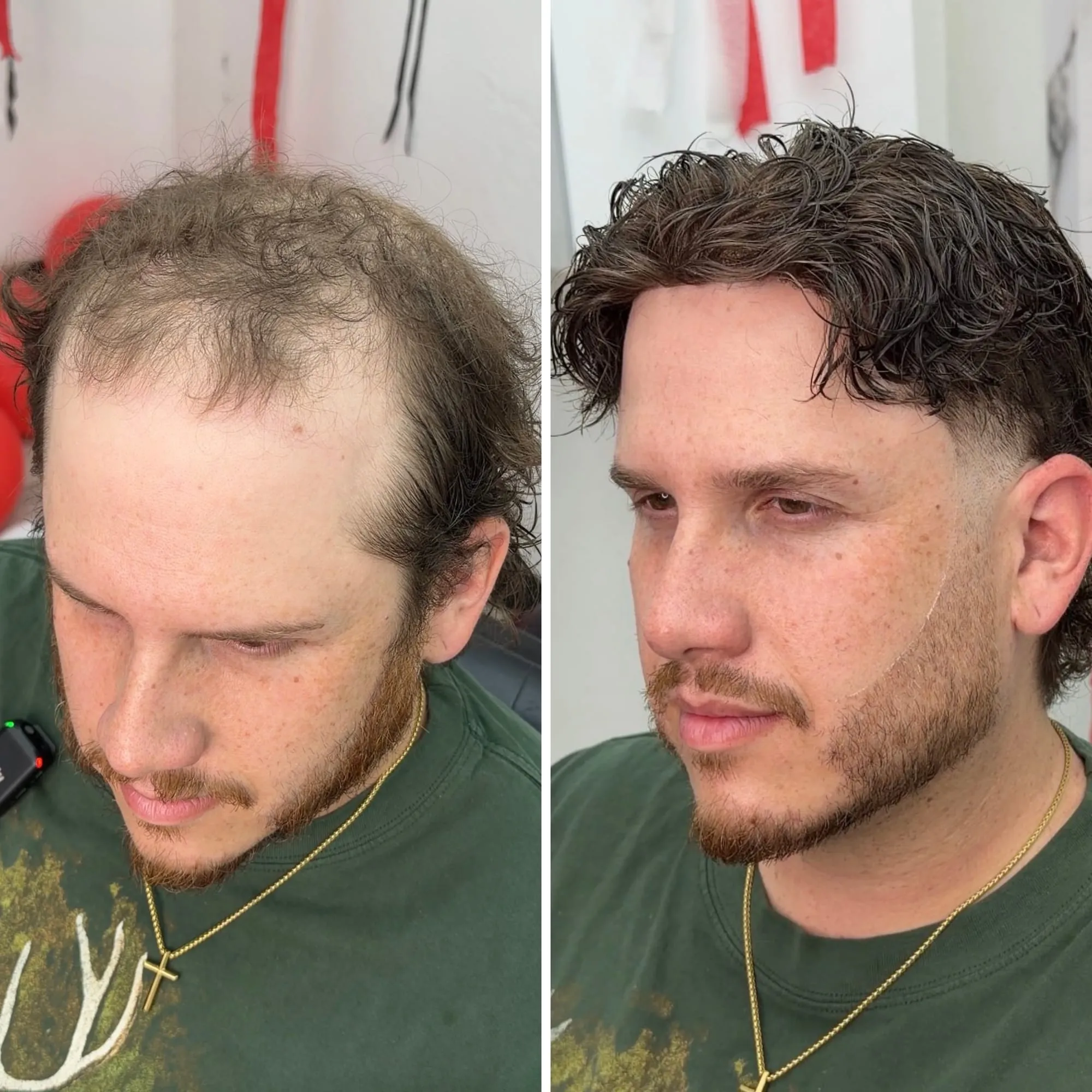
This is what it looks like.
A real client from our chair, photographed before and after his hair system was installed and cut in.
Questions, answered.
Do I take my hair system off at night?
No. You leave it on and sleep in it. It is attached to your scalp, not something you remove and store, so you wear it overnight the same way you wear it during the day.
Will it move or come off while I sleep?
A secure attachment does not come off from rolling over or lying on it. You move less asleep than awake, and the bond is set for a life that involves far more than that.
Can I sleep on my stomach or on either side?
Yes. There is no position you need to avoid. Sleep however you normally do, including face down and on either side.
What if I sweat heavily at night?
You can still sleep in it. Heavy night sweating works an attachment a little harder over time, which usually means a slightly shorter maintenance interval. Mention it to us so we can factor it into your schedule.
Do I need a special pillow?
No. A smoother pillowcase creates a bit less friction on the hair, which some men prefer, but it is a small comfort choice and not something the system requires.
Keep reading
Related guides.
Living With a Hair System
What daily life with a hair system is really like: sleeping, showering, styling, and the small habits that keep it looking its best.
Showering With a System
Yes, you shower normally with a hair system. Here is how to wash, which products to use, and how to dry it so the bond and hair stay right.
Attachment Methods
Tape, bonding, and clip attachment for hair systems compared by hold, comfort, and how they suit your routine. How to attach a hair system.
Hair System Maintenance
How to keep a hair system clean, secure, and natural: your at home routine, the maintenance schedule, and what a studio visit covers.