

The short version
Warm water, a gentle shampoo worked in the direction the hair falls, no scrubbing at the hairline, and a proper dry afterward. That is the whole routine. Men overcomplicate it because they are nervous the first week, then they stop thinking about it entirely.
The instinct to be delicate is fine at the front edge, where the bond is thinnest and the hair is most visible. Everywhere else you can wash with normal pressure. It is your own scalp under there and it needs cleaning like anyone's.
How to actually wash it
Wet the hair with warm rather than hot water. Very hot water over a long shower is one of the few things that works against an adhesive over time, so keep the temperature reasonable and you remove that variable.
Work shampoo through with your fingertips flat, following the direction the hair lies instead of piling it up and circling it around. Piling and scrubbing tangles the knots and stresses the front edge for no benefit. Rinse fully, because leftover product is what dulls the hair and builds up on the base.
- Warm water, not hot, and a shower that does not run for an age
- Fingertips flat, moving in the direction of the hair
- Gentle at the front hairline, normal pressure through the rest
- Rinse until the water runs clear, no residue left behind
Which products to use, and which to skip
Use a gentle, sulfate-free shampoo and a light conditioner on the mid-lengths and ends, kept off the base itself. Conditioner sitting on the bond is one of the quiet reasons an attachment starts to loosen early, so keep it to the hair that needs it.
Avoid anything with high alcohol content, heavy silicones, or aggressive clarifying agents. Those strip the hair, dry out a system faster than your own hair, and can attack the base. We tell every client exactly what to use at their install, because the wrong bottle off a shelf does more damage over a few months than any shower ever will.
- A gentle, sulfate-free shampoo
- Light conditioner on the ends only, kept off the bond
- No high-alcohol or heavy clarifying products
Drying it the right way
Drying is the part that actually protects the bond, more than the wash itself. Pat the hair with a towel rather than rubbing it, then let it air dry or use a dryer on a cool to warm setting held at a distance. Pay attention to the perimeter, because trapped moisture sitting against the edge is what loosens tape and adhesive over time.
A cool blast at the hairline once the hair is nearly dry helps set the edge cleanly. If you shower at night, make sure the perimeter is properly dry before bed rather than sleeping on a damp bond.
Where Arizona changes things
Two showers a day in a Phoenix summer is normal, and that is more water and more heat cycling than the average bond is asked to handle elsewhere. It does not stop anyone showering as often as they like. It just means the attachment method and your maintenance rhythm should be chosen with that in mind, which is a conversation we have upfront rather than something you discover in July.
If you rinse off after the gym or the pool on top of your regular showers, mention it. It is the kind of detail that quietly shapes which adhesive we put you on.
When something feels off in the shower
If you feel the front edge lift or catch while you wash, do not pick at it or try to press it back with whatever is in the shower caddy. Finish gently, dry the area properly, and call us. Most small lifts are a five-minute fix at the studio and a disaster if you attack them at home.
Real work
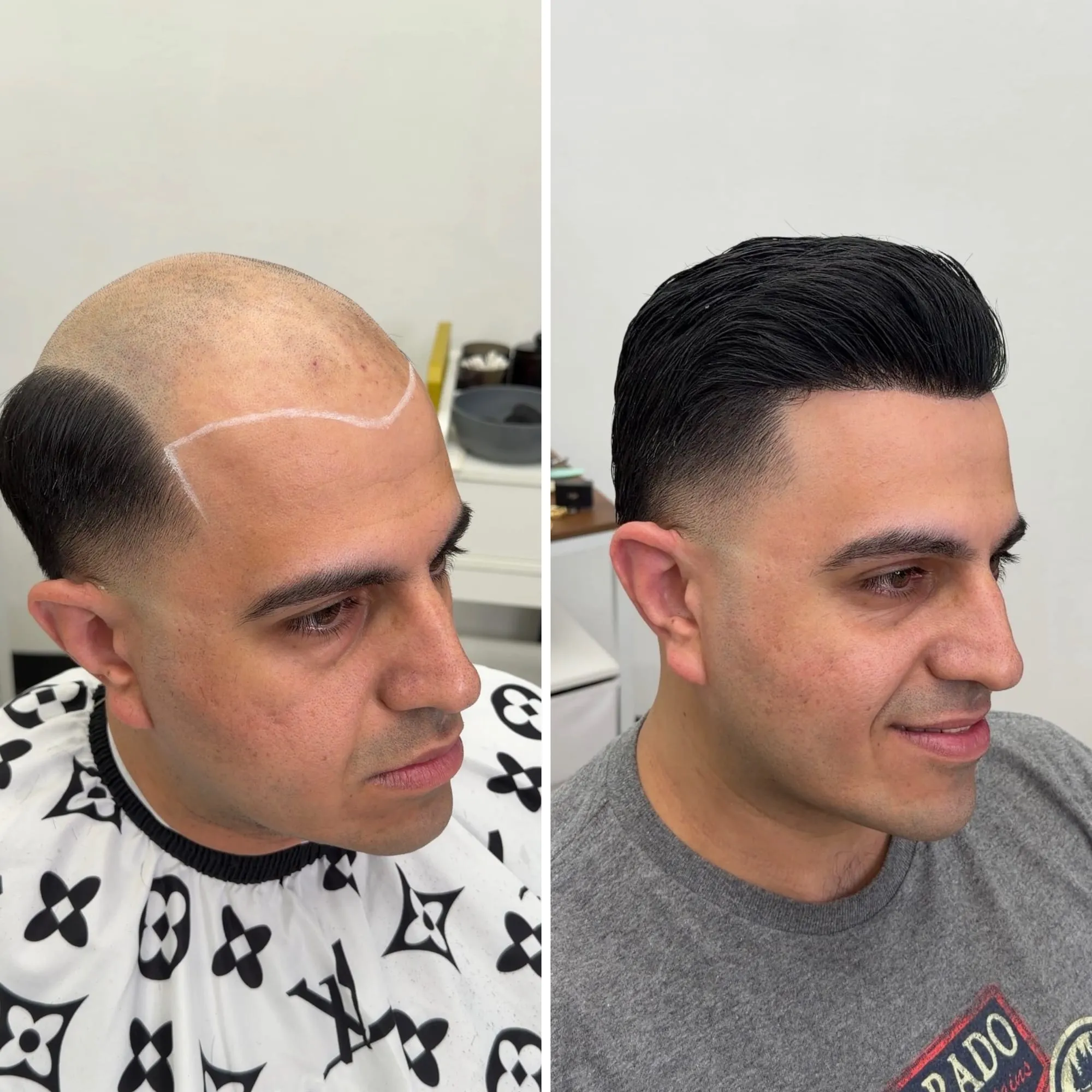
This is what it looks like.
A real client from our chair, photographed before and after his hair system was installed and cut in.
Questions, answered.
Do I take the hair system off to shower?
No. It stays bonded to your scalp and you shower with it on, the same as you would with your own hair. Water alone does not move a properly attached system.
Can I shower every day?
Yes, daily and more if you want to. The routine is built around real life. If you shower more than once a day, tell us at your consultation so the attachment suits how often you are in the water.
What shampoo should I use?
A gentle, sulfate-free shampoo, with light conditioner kept to the ends and off the base. We give you a specific product list at your install so you are not guessing in a store aisle.
Is hot water bad for a hair system?
Very hot, long showers work an adhesive harder over time. Warm water at a sensible length removes that as a concern without changing anything you actually notice.
How do I dry it without loosening the bond?
Pat, do not rub, then dry on a cool to warm setting and make sure the perimeter is fully dry. Trapped moisture at the edge is the main thing that loosens an attachment early.
Keep reading
Related guides.
Hair System Maintenance
How to keep a hair system clean, secure, and natural: your at home routine, the maintenance schedule, and what a studio visit covers.
Living With a Hair System
What daily life with a hair system is really like: sleeping, showering, styling, and the small habits that keep it looking its best.
Attachment Methods
Tape, bonding, and clip attachment for hair systems compared by hold, comfort, and how they suit your routine. How to attach a hair system.
Sleeping In It
Yes, you sleep in your hair system. Here is how the bond holds overnight, what the first few nights feel like, and simple habits that protect it.