

Last updated September 28, 2026
Why the questions matter more than the sales pitch
A hair replacement consultation is the one appointment where you can see how a studio thinks before any money or commitment is on the table. The unit you leave with months later is only as good as the decisions made in that first chair. The right questions surface whether those decisions are being made for you specifically, or pulled off a shelf.
You are not expected to be an expert. That is our job. But a buyer who asks about base spec, hair origin, and the replacement cycle is a buyer who ends up with a unit that fits their life, because the conversation went where it needed to go. Below are the questions we would want a family member to ask, grouped by what they actually protect you from.
Questions about the base and the spec
The base is the sheer foundation your hair is tied into, and it drives realism, comfort, and how long the unit lasts. Ask why a given base is right for you, not just what it is called.
- What base material are you recommending for me, and why that one over the alternatives?
- How thick is the base at the hairline versus the rest, and what does that trade off?
- Is this a stock unit or built to my template, and what changes between the two?
- How will this base hold up in my climate and with how much I sweat?
- What does the full spec sheet say, and can you walk me through it in plain terms?
Questions about density and how it will look
Density is how much hair is tied into the base. Too much reads as a helmet, too little looks sparse, and the right amount usually changes from the hairline back. Ask how the studio matches it to your age and face.
- What density are you building, and how did you land on that number for me?
- Will the hairline be lighter than the crown so it looks like real growth?
- How natural will this look in bright light and up close, honestly?
- Can I see or feel a unit built at the density you are recommending?
Questions about hair origin and quality
Where the hair comes from and how it is processed affects how it moves, how long it lasts, and how it takes color. Hair length over six inches, European hair, and heavier grey percentages are all real cost drivers, so ask how each one applies to you and let the figure be set at your consultation.
- Where does the hair come from, and is it human hair or synthetic?
- Is it Remy hair with the cuticle intact, and why does that matter for me?
- How will longer lengths or a specific grey percentage affect the build and the cost?
- How long will this hair keep looking good before it needs replacing?
Questions about the cut-in and who does the work
A unit is not finished until it is cut and blended to your head and your face. That skill is where a natural result is won or lost. Ask who actually does it and what happens on day one.
- Who cuts in and blends the unit, and how experienced are they with it?
- Will it be styled to match how I already wear my hair?
- Do I leave the first appointment looking finished, or is that a later visit?
- If I do not love the cut, what happens next?
Questions about service cadence and the replacement cycle
Owning a hair system is an ongoing routine, not a one-time purchase. The honest cost and effort live in how often you come back and how often the unit itself is replaced. Ask for real numbers.
- How often will I come in for maintenance or a reattachment?
- Can I attach and clean it at home, or is that always done here?
- How many months does a unit typically last before it needs replacing?
- Should I own a second unit so I am never without one on service days?
- What is the full routine expected of me between visits?
Questions about color and what happens when it is wrong
Color match is the detail people notice first, and hair can shift shade over time from sun and washing. A good studio has a clear answer for a mismatch before it ever happens.
- How do you match the color to my own hair and the roots coming in?
- What happens if the color comes back wrong on the first unit?
- How will the color hold up against sun and repeated washing?
- Can the shade be adjusted or blended as my natural hair changes?
How we answer these in our chair
We would rather you ask all of this than none of it. In our Peoria, AZ and Eighty Four, PA studios, Nico Rigano, Ivette Rigano, and Denisse Diaz talk through base, density, hair origin, and the replacement cycle at the consultation itself, because those are the decisions that make a unit look like it grew out of your own scalp.
On price, we are direct about the drivers, longer hair, European hair, a custom template, a silk top, a larger base, and we set the actual figure once we have seen your scalp and your hair in person. If a condition brought you in, we frame what a hair system can cover cosmetically and defer anything medical to your physician. Bring the questions above. The way they get answered will tell you most of what you need to know.
Real work
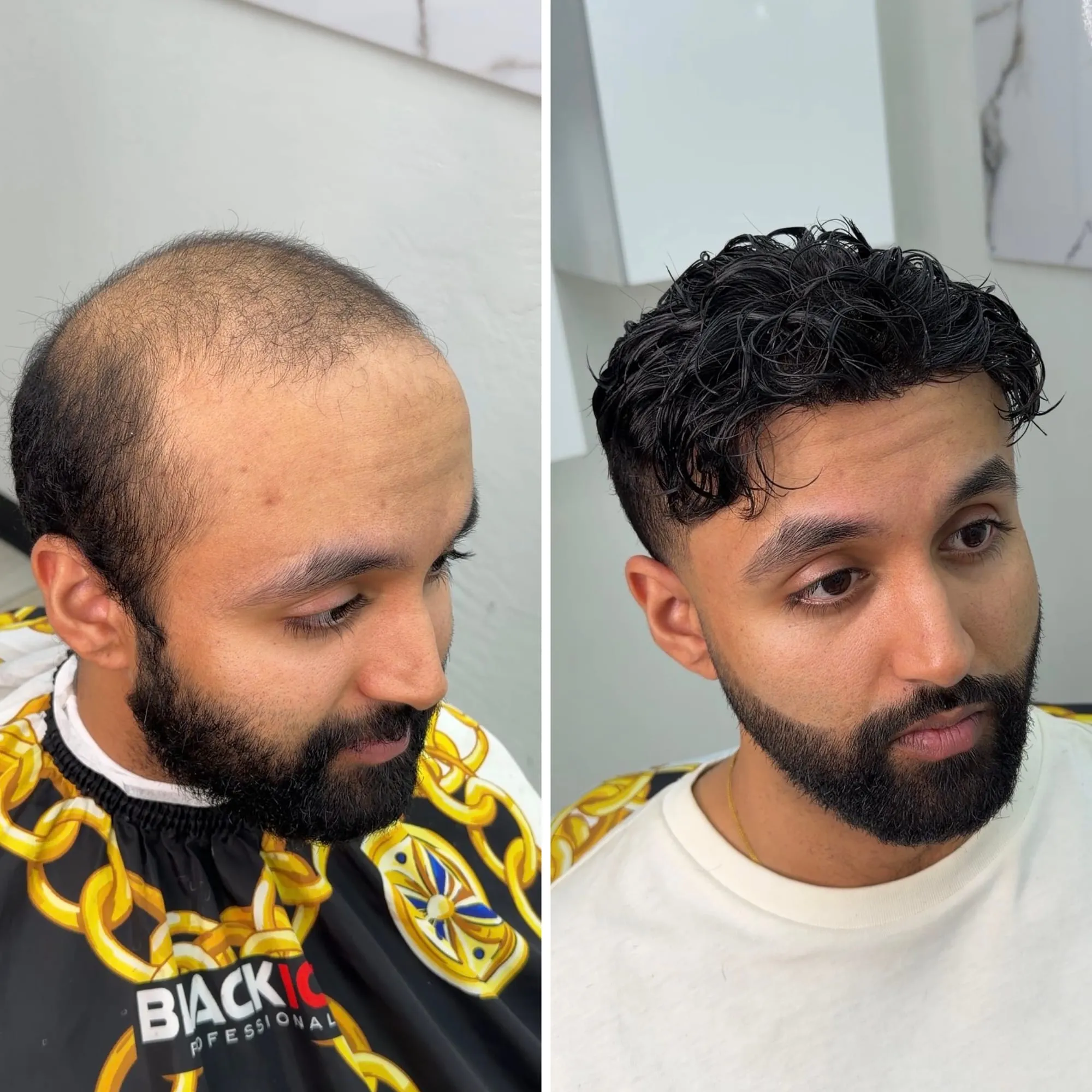
This is what it looks like.
A real client from our chair, photographed before and after his hair system was installed and cut in.
Questions, answered.
What is the single most important question to ask?
Ask why a specific base and density are being recommended for you. If the answer is tied to your scalp, your climate, your hair, and how you live, the studio is building for you. If the answer is the same one everyone gets, keep asking.
Should I ask about price at the consultation?
Yes, but ask about the cost drivers rather than a number over the phone. Longer hair, European hair, a custom template, a silk top, and a larger base all move the figure. A studio should explain those openly and set the real figure once it has seen your hair in person.
How do I know if a studio is being honest with me?
Honesty shows up in the trade-offs. A good studio tells you what a base gives up as well as what it gains, admits that no single material is best for everyone, and is clear about the ongoing routine and the replacement cycle instead of selling a one-time fix.
What should I ask if I came in because of a medical condition?
Ask how a hair system would cover your specific situation cosmetically and what the base and attachment would look like for you. Keep any diagnosis or treatment questions with your physician. A responsible studio stays in its lane and refers the medical side out.
How long does a good consultation take?
Long enough to answer every question above without being rushed. If base, density, hair origin, cut-in, and service cadence are all covered and you leave knowing what to expect, that is a thorough consultation, whether it runs short or long.
Keep reading
Related guides.
What to Expect at Your Consultation
Your first hair replacement consultation, step by step: the assessment, your options, and the plan you leave with. No pressure, no obligation.
Choosing a Studio
The questions to ask, the red flags to avoid, and what separates a great hair replacement studio from an average one.
Stock vs Custom
Stock hair systems are ready made and fast. Custom units are built to your head, color, and hairline. Here is how the two differ and when each makes sense.