

Start with training, not inventory
Every barber who fails at this fails the same way. They buy stock hair units online, watch a few clips, and practice on a paying client. The client walks out with a bad hairline and tells ten people. You do not get a second first impression in a local market.
Get hands-on training before you touch a client. Hair replacement is a skill set that sits next to barbering but is not the same craft. Templating a scalp, cutting a lace front into a believable hairline, matching density and color, choosing an attachment method for a specific head and lifestyle: none of that is intuitive. It is taught, then repped.
The fastest credible path is a structured certification followed by real mentorship, so someone experienced watches your first installs and corrects you before mistakes become habits. That is how you compress the learning curve from years to months.
- Certification that puts you on a live head, not just slides
- One to one mentorship for your first installs and cut-ins
- A named person you can text a photo to when a job goes sideways
Set up the workflow before the first client
You do not need a second location or a big spend to begin. You need a private space, a clean process, and a short list of tools and supplies you actually know how to use. Privacy matters more than square footage here. Men getting into hair replacement are often quiet about it, and a curtained-off area with a door beats a busy open floor.
Build your consultation and install process on paper first. Know exactly how you template, how you order a unit, how long attachment takes, what you tell the client about home care, and when they come back. A written process is what lets you deliver the same result on client one and client fifty.
- A private, well-lit station separate from the walk-in floor
- A core adhesive, tape, remover, and cutting kit you are trained on
- A stock-versus-custom decision made per client, not by default
- A booking flow that reserves enough time for a real install
Get your first clients the honest way
Your first clients almost always come from your existing chair. You already cut hair for men who are thinning, receding, or shaving down because they feel they have no option. Those are your warmest leads and you already have their trust. Start there with a straight conversation, not a pitch.
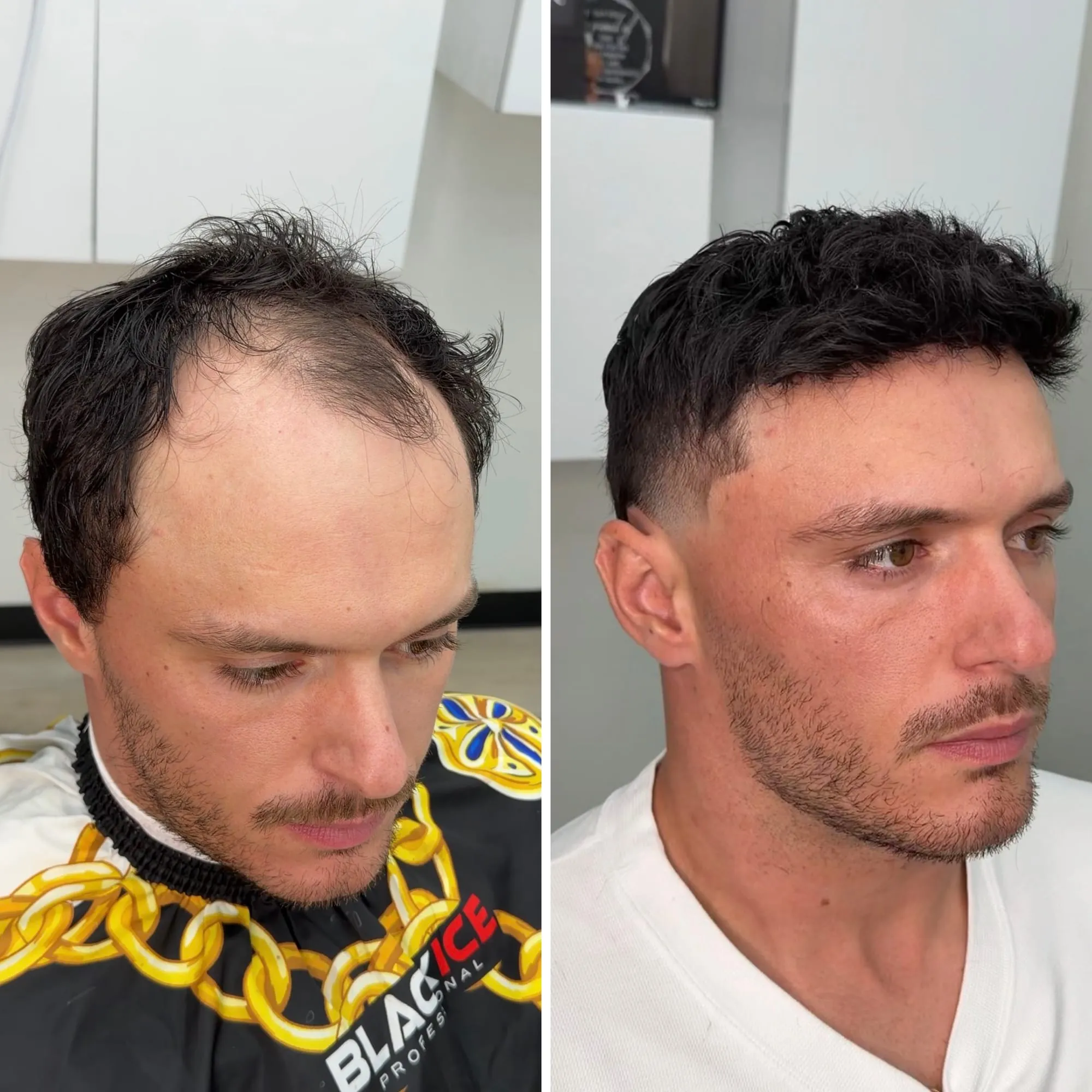
Document everything from day one, with permission. Clean before and after photos, and short video of the reveal, are the only marketing that reliably sells this service. Prospects do not believe words about hair replacement. They believe footage of a real transformation on a real head. Build that library early, because it compounds.
Price your first installs as learning reps, not as your final rate. What you charge should reflect the factors that actually drive value, and those factors change as your skill grows. Get the framework right rather than chasing a number.
Make maintenance the business, not the install
The install is the headline. Maintenance is the income. A hair system needs re-service on a regular cadence: a clean, a re-bond, a re-cut to keep the hairline honest, and a unit swap when it wears. A client you install once and never see again is a missed business, not a win.
Design your retention around that cadence from the first appointment. Book the next maintenance visit before the client leaves the chair. Explain the rhythm so they understand the service is ongoing, the way they already understand a haircut is ongoing. A small book of loyal maintenance clients on a predictable rotation is worth far more than a stream of one-time installs.
This is also what smooths your calendar. Installs are unpredictable. Maintenance is bookable weeks out, which is what turns a side service into something you can plan a week and a month around.
Protect your reputation and stay compliant
Check the rules in your state before you take money. Licensing and scope-of-practice requirements for cutting hair, working on the scalp, and using adhesives vary, and getting this wrong is an avoidable way to lose the business you just built. Confirm what your license covers and what, if anything, you need to add.
Then protect the reputation you are building. Never overpromise. Show real results, set honest expectations about upkeep and cost drivers, and never let a client leave with a result you would not wear yourself. In a local market your work is your marketing, and one bad hairline travels further than ten good ones.
Real work
This is what it looks like.
A real client from our chair, photographed before and after his hair system was installed and cut in.
Questions, answered.
Do I need to be a licensed barber or cosmetologist first?
In most cases yes, because the work involves cutting hair and working on the scalp. Requirements vary by state, so confirm what your license covers and whether you need to add anything before you take clients. Treat licensing as step one, not an afterthought.
How long before I can install on a paying client?
It depends on how much hands-on training and mentorship you get, not on the calendar. Barbers who train on real heads and have their first installs supervised are ready far sooner than those learning alone from videos. The goal is competence you can prove, not a fixed number of weeks.
How much do I need to spend to start?
Less than most expect. You need training, a private space, and a core kit you know how to use, rather than a second location or bulk inventory. Buying a large stock of units before you have the skill to install them well is the most common way barbers waste money early.
Is this actually a repeat business or a one-time sale?
It is a repeat business, and that is the whole point. A hair system needs regular maintenance, re-bonding, cut-ins, and eventual replacement, so each install becomes a recurring client on a predictable cadence. The maintenance rotation is what makes the service worth building around.
Keep reading
Related guides.
How to Become a Hair Replacement Artist
The path from barber to hair replacement artist: the skills, the training, and how to add hair systems as a high margin service line.
Training
What hair replacement training for barbers covers, how classroom and mentorship fit together, and how to choose a program that builds a paying service.
Pricing Framework
A pricing framework for barbers adding hair replacement: the factors that set install and maintenance fees, and how to build a menu that holds.
Licensing
Do you need a license to do hair replacement? What barbers and stylists should know about requirements in Arizona, Pennsylvania, and beyond.