

Answer first: price the appointment, not the head
Barbers coming from a cut-and-fade menu tend to reach for a single flat number, and that is the fastest way to lose money on hair replacement. This is not a haircut with a fixed time cost. A first install and a routine maintenance visit are different products with different time, material, and skill loads, so they need different prices.
The framework below is the same one we teach inside the certification and mentorship track. It does not hand you a dollar figure, because your number depends on your city, your overhead, and your skill level. It hands you the levers so you can set a price that is both profitable and honest.
The five factors that set your number
Every price you quote should trace back to a mix of these. When a client questions a fee, you should be able to point at which factors are driving it. That is what separates a professional service from a guess.
- Time in the chair, including consultation, prep, template or fitting, application, and the cut-in that blends the unit to their own hair
- Materials consumed per visit, meaning adhesives, solvents, tapes, cleansers, and the shop supplies that get used up whether the client sees them or not
- The unit itself, which varies by base type, hair source, and whether it is stock or custom, and which you either pass through or build into a bundled fee
- Skill and outcome, meaning the difficulty of the hairline, the density blend, and the color match, which reward experience and certification
- Maintenance rhythm, meaning how often the client returns for a reset, because that recurring cadence is where the real business lives
Separate install pricing from maintenance pricing
Your menu needs at least two distinct lines. The first is the initial install, which carries the heaviest time and consultation load and often the cost of a first unit. The second is recurring maintenance, the reset visit where you remove, clean, reapply, and re-blend on a predictable cadence.
Treat maintenance as a subscription mindset rather than a series of one-off transactions. The client is buying an ongoing result, not a single appointment. Pricing the reset visit clearly, and being upfront that it repeats, sets expectations early and stops sticker shock later. It also lets you forecast revenue instead of hoping walk-ins fill the chair.
Decide how you handle the unit cost
There are two clean ways to structure the hair unit inside your pricing, and mixing them sloppily is where trust erodes. You can pass the unit through as a separate, itemized line so the client sees exactly what the hardware costs versus what your labor costs. Or you can bundle it into an all-in service fee so they pay one number and never think about the parts.
Both are legitimate. Pass-through pricing reads as transparent and works well for custom units with real variation. Bundled pricing reads as premium and simplifies the sale. What matters is picking one, applying it consistently, and never marking up in a way you would be uncomfortable explaining out loud.
Anchor to your market and your skill, not the shop next door
Your local market sets the ceiling and the floor. A studio in a high-cost metro supports a different range than a chair in a small town, and the demand for discreet, well-executed hair replacement in your area is a real input. Research what comparable specialized services command near you rather than copying a national figure you saw online.
Your skill moves you inside that range. A certified artist who consistently delivers an invisible hairline and a clean color match is not selling the same product as someone still learning to template. Certification and documented mentorship give you a concrete reason to sit at the upper end of your market, because you are selling a reliable outcome, not a hopeful attempt.
Stress-test the price before you publish it
Before a number goes on your menu, run it through a simple gut check. Does it cover your chair time at a rate you would accept for any other service? Does it recover the materials and the unit without you eating cost? Does it leave margin after the shop takes its cut or after your overhead? If any answer is no, the price is too low, no matter what the client next door pays.
Then check it from the client side. Can you explain the number in one sentence that references the work involved? If the price only makes sense to you, it will not hold up in the consultation. A price you can defend calmly is a price clients pay without friction.
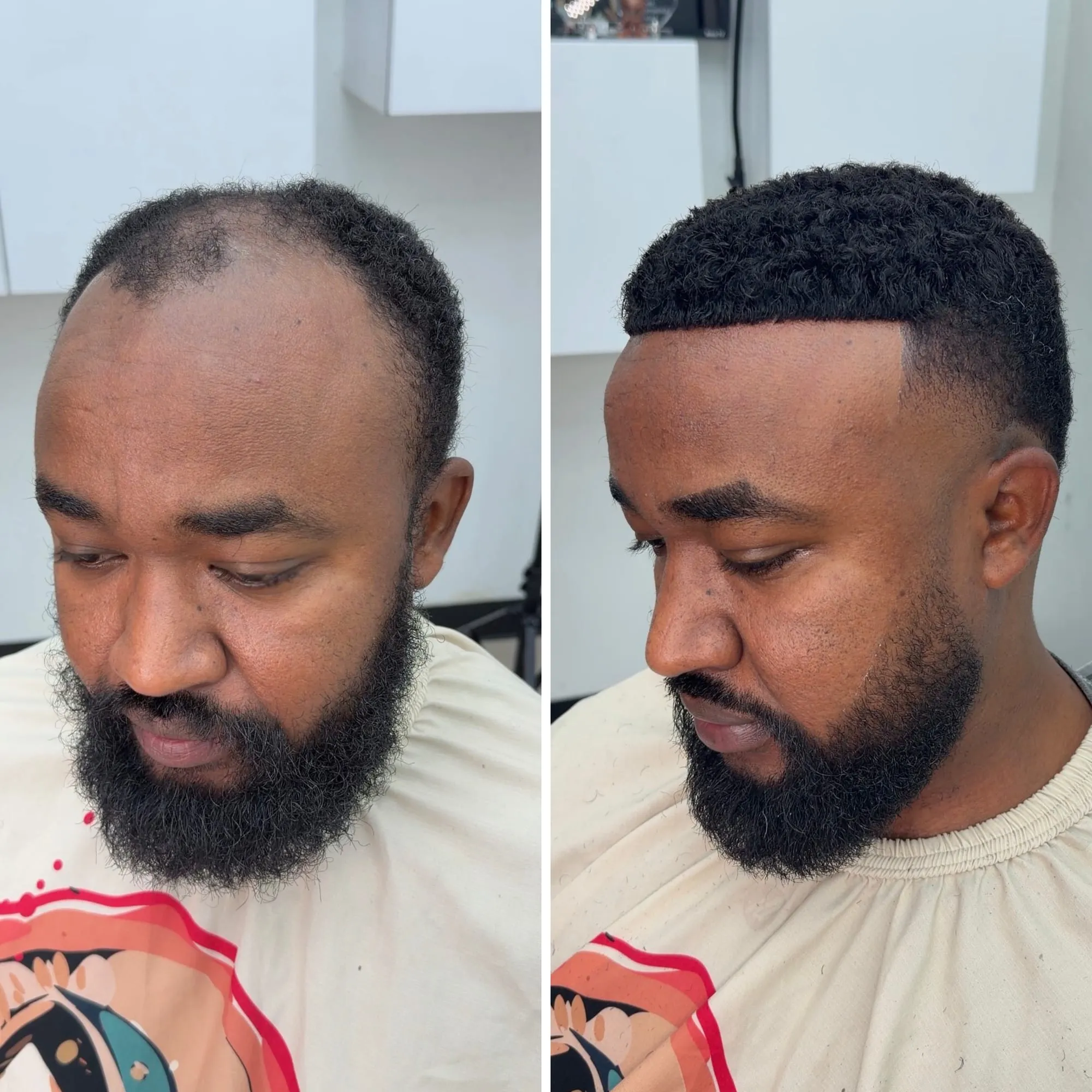
Real work
This is what it looks like.
A real client from our chair, photographed before and after his hair system was installed and cut in.
Questions, answered.
Should I charge one flat fee or break it into install and maintenance?
Break it out. The first install carries more time, consultation, and often the unit cost, while maintenance is a lighter, repeating reset. Pricing them separately protects your margin and sets honest expectations about the ongoing cadence.
How do I price the hair unit itself?
Pick one structure and stay consistent. Either itemize the unit as a pass-through line so the client sees hardware versus labor, or bundle it into an all-in service fee. Both are fine as long as any markup is something you can explain out loud.
How does certification affect what I can charge?
Certification and mentorship let you sit higher in your local range because you are selling a dependable outcome, not a learning attempt. Skill on the hairline, density blend, and color match is a legitimate pricing factor clients pay for.
How do I know my price is high enough?
Trace it back to the factors: chair time, materials, the unit, skill, and maintenance rhythm. If it does not cover time at a rate you would accept elsewhere, recover materials, and leave margin after overhead, it is too low regardless of local averages.
Keep reading
Related guides.
Artist Income
What actually decides a hair replacement artist income: service mix, rebooking, chair capacity, and client retention. A business framework for barbers.
Start a Business
The real steps to add hair replacement to a barber business: training, first clients, pricing, and building recurring maintenance revenue.
How to Become a Hair Replacement Artist
The path from barber to hair replacement artist: the skills, the training, and how to add hair systems as a high margin service line.
Licensing
Do you need a license to do hair replacement? What barbers and stylists should know about requirements in Arizona, Pennsylvania, and beyond.