

The honest timeline, stage by stage
There is no single number because the question hides four different milestones. Being able to do the process, being able to do it well, being able to do it fast, and having a book that keeps you doing it are all different finish lines. Treat them separately and the timeline stops feeling vague.
- Learn the full process: a hands-on certification class, start to finish, from template to install to cut and blend
- First paying clients: right after class, on a slow and deliberate pace, with your notes open
- Consistent quality: weeks to a few months, once the hairline and blend stop being something you think about
- Speed and confidence: several months of steady reps, until an install takes a predictable slot instead of a whole day
- A booked chair: this tracks your marketing and your maintenance base far more than your skill after month one
What the certification class actually gives you
A good class is not a lecture, it is reps on real units under someone who has done thousands of them. You leave certified and able to run the whole process: taking a template, prepping the scalp, attaching, then cutting and blending into existing hair. That is genuinely enough to start on real clients, which is the point of doing it hands-on rather than from video.
What the class cannot compress is time in your own chair. You will be slow at first and that is correct. Everyone is. The people who stay slow are the ones who stop practicing after the class ends, not the ones who were slow in it. See how-to-become-a-hair-replacement-artist for the full path and non-surgical-hair-replacement-certification for what the credential covers.
What accelerates it, and what stalls it
The single biggest accelerator is mentorship after the class. Fixing your own mistakes by trial and error is the slowest possible route, because you often cannot see what is wrong with a hairline until someone points at it. One correction from an experienced artist can save you a month of repeating the same flaw. That is why our path pairs certification with one-to-one mentorship rather than sending you off with a certificate and good luck.
- Accelerators: a hands-on class, ongoing mentorship, back-to-back reps, and building maintenance work from day one
- Stallers: learning only from video, letting weeks pass between installs, and chasing installs while ignoring maintenance
- Neutral but assumed: your existing cutting skill transfers, but hairline design and blending are new muscles
Why maintenance shortens your path to booked
Barbers fixate on the install because it is the dramatic part. The faster route to a full book is maintenance. Every client you install becomes a recurring appointment on a schedule, which means your calendar fills from repeat visits rather than from a constant hunt for new heads. An artist who builds the maintenance side is booked far sooner than one who only chases installs, even at the same skill level.
This also flattens your learning curve, because maintenance visits are reps. Cleaning, re-cutting, and reattaching on real clients is how the craft moves from deliberate to automatic. The recurring work and the skill-building are the same activity.
Setting a realistic personal timeline
Map it to your own situation instead of a generic promise. If you cut full time and can slot installs and maintenance around your existing book, you will progress far faster than someone doing one unit a month on the side. Volume is the variable that matters, so plan for it deliberately.
- Decide how many installs and maintenance visits per week you can realistically take on
- Line up mentorship or a check-in point so your early mistakes get caught fast
- Build the maintenance rhythm into your calendar from your first client, not later
- Judge your progress by consistency of the hairline and blend, not by speed alone
Real work
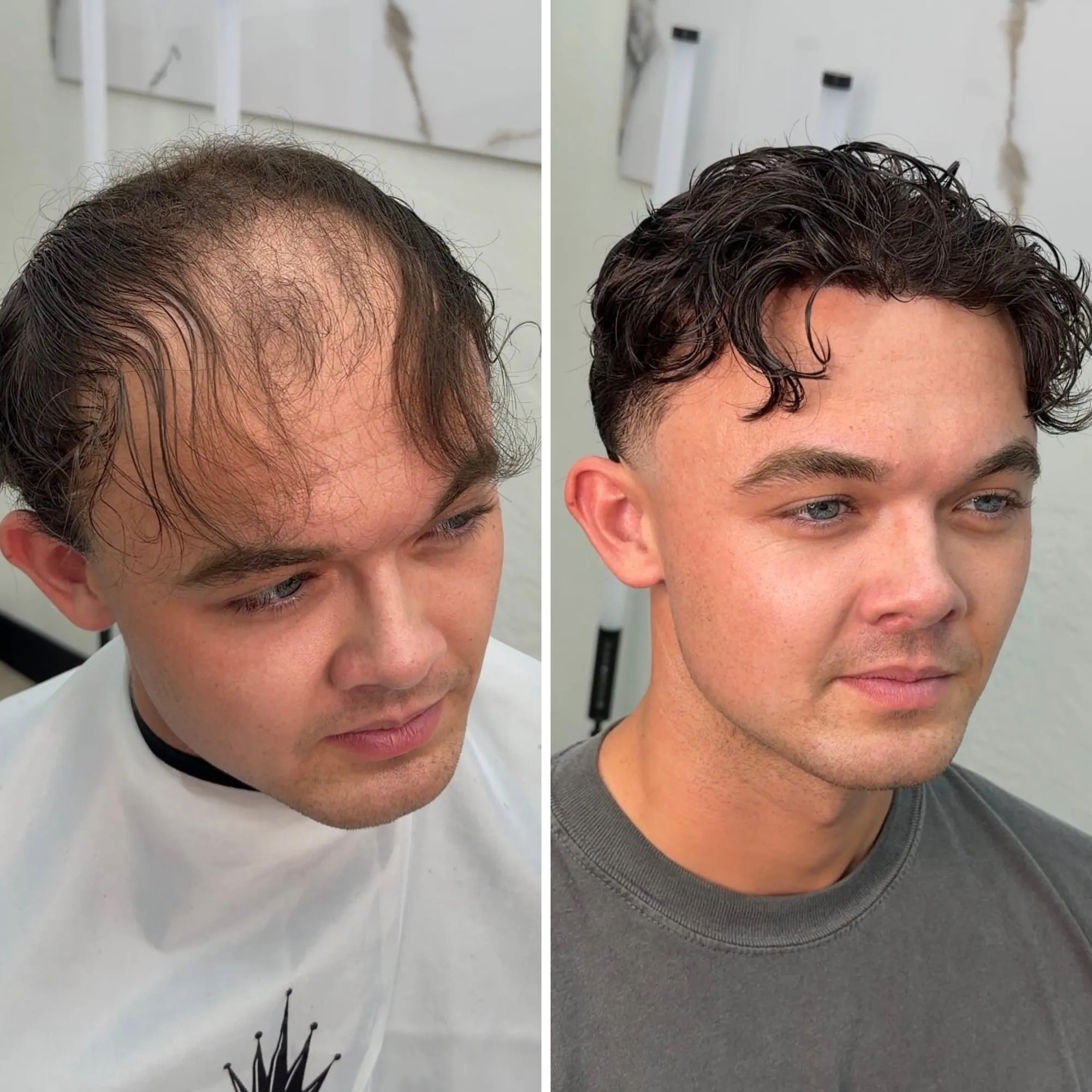
This is what it looks like.
A real client from our chair, photographed before and after his hair system was installed and cut in.
Questions, answered.
How soon can I take a paying client after the class?
You can start right after certification. Go slow at first, keep your process notes to hand, and book conservatively so you have time to do the cut and blend properly. Speed comes from reps, not from waiting.
How long until I am genuinely fast and confident?
For most people it is several months of steady work, not days. The variable is volume. Someone doing multiple units a week gets there far quicker than someone doing one a month, at the same starting skill.
Does mentorship really change the timeline?
Meaningfully. Left alone you repeat mistakes you cannot see. An experienced artist correcting your hairline and blend early can save weeks of undoing the same flaw, which is why we pair certification with one-to-one mentorship.
Do I need prior hair replacement experience to start?
No. The certification path is built for licensed barbers and stylists who have never touched a unit. Your cutting skill transfers, and the class teaches the parts that are new.
Do I need a license first?
In most places, yes, since you are cutting and styling hair on paying clients. Requirements vary by state, so confirm with your board. See hair-replacement-licensing for orientation.
Keep reading
Related guides.
How to Become a Hair Replacement Artist
The path from barber to hair replacement artist: the skills, the training, and how to add hair systems as a high margin service line.
Certification
What non-surgical hair replacement certification covers for barbers, what it proves, and how it de-risks adding hair systems to your chair.
Training
What hair replacement training for barbers covers, how classroom and mentorship fit together, and how to choose a program that builds a paying service.
Licensing
Do you need a license to do hair replacement? What barbers and stylists should know about requirements in Arizona, Pennsylvania, and beyond.