

The scalp is skin, and skin needs a routine
The area a system covers is not sealed away and forgotten. It still sheds cells, still produces oil, and still needs to be cleaned. The whole approach to scalp health comes down to a simple rhythm: keep the skin and the bond clean, give the scalp regular breaks from adhesive, and pay attention to how it feels rather than pushing through discomfort.
None of this is complicated once it is part of your week. The men who have the fewest issues treat the scalp like skin that happens to be under hair, not a surface they never see. That mindset does most of the work.
Cleaning: the bond and the skin both
Two things need cleaning, and people often only think about one. The hair on the unit gets washed, which most men are good about. The skin under the bond, and the adhesive itself, is the part that gets neglected, and that is where problems actually start. Adhesive residue that builds up over weeks traps oil and dead skin against the scalp, and that combination is what leads to itch and irritation far more often than the system itself.
This is a real argument for regular maintenance rather than stretching a bond as long as possible. At a maintenance visit the old adhesive is fully removed, the scalp and the base are properly cleaned, and the bond is reset on clean skin. Between visits, follow the cleaning routine we set for your specific attachment, because tape and liquid adhesive are not cleaned the same way.
- Wash the hair on the unit on the schedule we give you, not less
- Clean adhesive residue off the scalp fully, not just the surface hair
- Use the products we recommend for your attachment, not whatever is on hand
- Come in for maintenance rather than stretching a bond well past its limit
Breathability and giving the scalp a break
A scalp that never gets air is a scalp more likely to stay damp, and damp warm skin is where irritation and odor come from. Base materials differ in how much they breathe. The finest skin and lace fronts that look the most natural are less breathable than more open bases, which is one of the honest trade-offs we talk through rather than gloss over.
The other half of breathability is time off the bond. However good the attachment, the scalp benefits from being fully cleaned and allowed to breathe when the system is off or being reset. We build that into how we schedule maintenance, and it matters more in Arizona heat and heavy sweat than most people expect. If you sweat a lot, work outdoors, or train hard, tell us, because it changes what we recommend for both base and routine.
Spotting an issue early
A little getting-used-to sensation when you first start wearing a system is normal. What is worth acting on is anything that persists or gets worse: ongoing itch that cleaning does not settle, redness or tenderness that stays put, flaking beyond the usual, or any reaction that shows up after a change in adhesive or product. These are signals, not emergencies, and almost all of them are straightforward to sort out when they are caught early.
The single most useful habit is telling us honestly how the scalp feels, even when it seems minor. A reaction to one adhesive is easy to fix by switching to another. An attachment that is holding too aggressively for your skin is easy to adjust. The only version of these that becomes a real problem is the one someone put up with silently for months.
- Itch that cleaning does not settle within a normal wash cycle
- Redness or tenderness that stays in one area rather than fading
- Flaking or buildup beyond your usual
- Any new reaction after switching adhesive, shampoo, or product
When to talk to us, and when to see a doctor
We are hair replacement artists, not doctors, and we are clear about that line. We can fix the things that come from the system and the bond: the adhesive, the cleaning routine, the base choice, the fit. That covers the large majority of scalp complaints we see, because most of them trace back to residue, an attachment mismatch, or a routine that slipped.
What we do not do is diagnose skin conditions or treat anything medical. If something goes beyond fit and hygiene, or it is not settling once the system is ruled out as the cause, the right move is a doctor or dermatologist. Wearing a system does not stop you seeing one, and a good studio points you toward that conversation rather than away from it.
Does hair grow, and is the scalp fine, underneath
Any hair you still have under the system keeps behaving like your hair. It grows, which is part of why maintenance is scheduled the way it is, since the bond needs resetting as your own hair moves. A clean, well maintained bond on healthy skin is not doing anything to the scalp that a normal cleaning routine cannot keep in good shape.
The scalp problems that get blamed on systems are almost always problems of neglect. Keep it clean, let it breathe, catch issues early, and the skin under a unit stays as healthy as skin anywhere else. Seeing how that works in practice is exactly what a consultation is for.
Real work
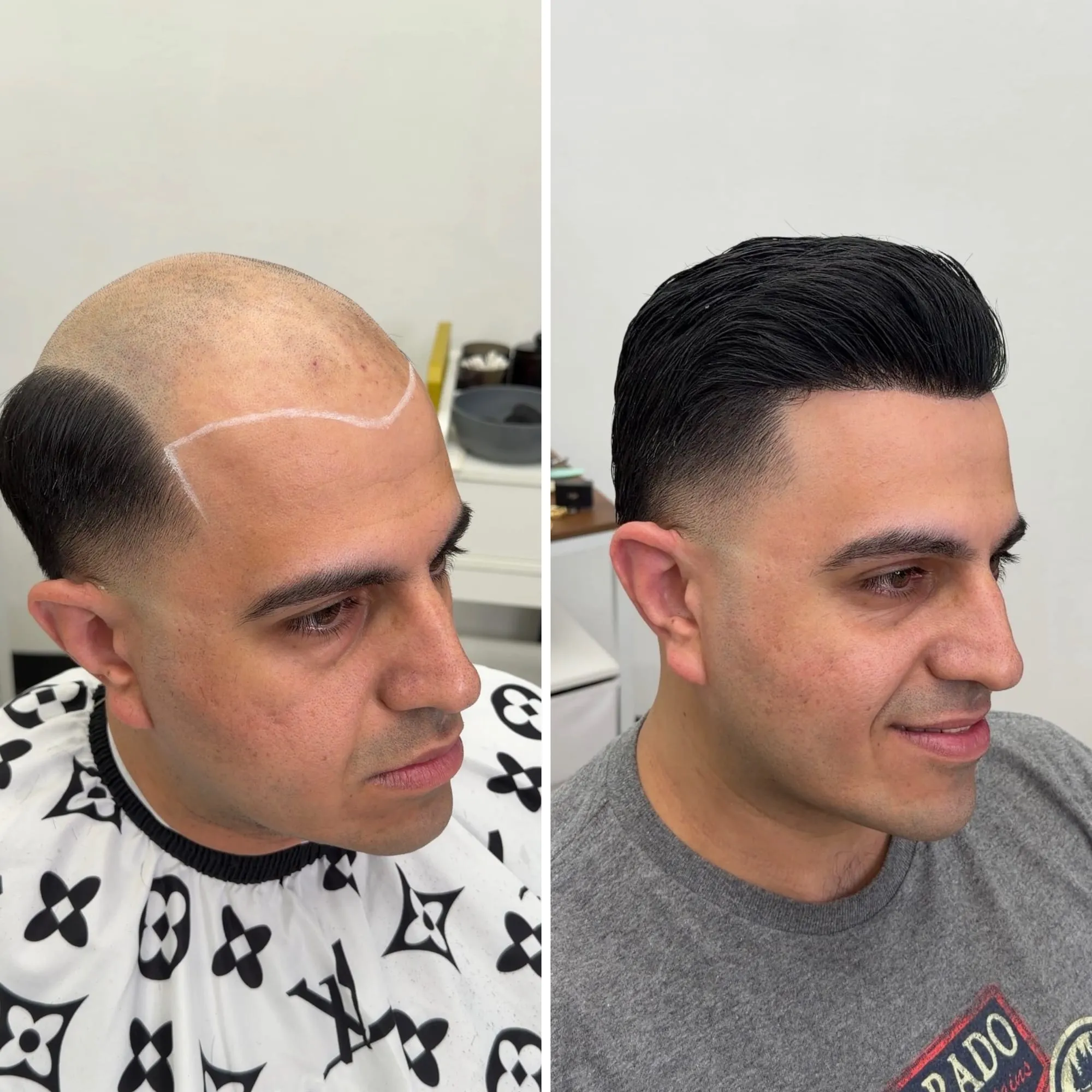
This is what it looks like.
A real client from our chair, photographed before and after his hair system was installed and cut in.
Questions, answered.
Is it bad for your scalp to wear a hair system every day?
Not on its own. Daily wear is fine when the bond and the skin under it are cleaned properly and the scalp gets regular breaks at maintenance. The issues come from residue left too long or a routine that slips, not from the system existing.
Why does my scalp itch under a hair system?
Most often it is adhesive residue and oil building up against the skin, which cleaning and a maintenance reset usually settle. It can also be a reaction to a particular adhesive or product, which is easy to fix by switching. Tell us if it does not clear.
How often should the scalp under a system be cleaned?
Follow the routine we set for your specific attachment, since tape and liquid adhesive differ. The key point most people miss is cleaning the adhesive off the skin, not just washing the hair, and coming in for maintenance rather than stretching a bond.
Can a hair system cause an infection or a skin condition?
A clean, well maintained system on healthy skin is not doing that. Persistent redness, sores, or a reaction that does not settle once the system is ruled out should be seen by a doctor or dermatologist. We handle fit and hygiene, not diagnosis.
Keep reading
Related guides.
Hair System Maintenance
How to keep a hair system clean, secure, and natural: your at home routine, the maintenance schedule, and what a studio visit covers.
Do Systems Damage Hair
Do hair systems damage the hair you still have? Done right they protect it. Done badly they can harm it. What we do in our chair to keep your hair safe.
Growth Underneath
Yes, the hair under a hair system keeps growing normally. Here is how a system accommodates that growth and why maintenance visits exist.
Living With a Hair System
What daily life with a hair system is really like: sleeping, showering, styling, and the small habits that keep it looking its best.