

Last updated September 28, 2026
Why heat and steam are harder on a bond than a quick dip
Most adhesives, tape and glue alike, are designed to hold within a normal daily temperature range. They are engineered to survive sweat and a shower, not to sit in prolonged heat. When you soak in a hot tub or sit in a sauna, the heat works into the perimeter of the bond and gradually softens it, and the longer you stay the more it gives. Steam and humidity add to that by keeping the bond line damp the whole time, so it never gets the chance to reset the way it would after a brief splash.
This is the key difference from swimming or a rinse. A dunk in the pool is a short submersion, then you are out and drying off. A sauna or hot tub is sustained exposure, and it is that duration, not the water alone, that lifts an edge. The bond does not usually fail all at once. It softens at the front or the perimeter first, which is exactly where a lift becomes visible.
What heat does to the base and the hair
The base material matters here. Thin skin and thin poly bases are the ones most affected by prolonged heat because the film is delicate and heat makes it more pliable, so repeated hot sessions can shorten its life. Lace breathes better and lets steam pass through more easily, which is one reason we often steer heavy sauna users toward a base with more airflow. Whatever base you wear, chlorine or bromine in a hot tub is an added stressor on both adhesive and hair, so a treated hot tub is harder on a unit than a dry sauna.
The hair itself reacts too. Most units use high grade synthetic fiber or human hair, and dry sauna heat is the tougher environment for synthetic. Sustained high heat can dull the fiber, cause frizz, or affect the way it holds a style over time. Human hair units tolerate heat better but still dry out and can fade with repeated exposure. Keeping your head away from direct heat sources, like the sauna heater, protects the fiber more than anything else you can do.
How to protect your unit before, during, and after
None of this means avoiding the sauna or the hot tub. It means treating them like the demanding conditions they are and setting the bond up to handle them. The routine below is what we walk clients through, and once it is habit it takes almost no thought.
- Go in on a fresh, fully cured bond. A bond that has had a day or two to set holds far better than one applied that morning, so plan hot sessions for later in your reattachment cycle, not right after an install.
- Use a stronger, heat tolerant adhesive if saunas or hot tubs are a regular part of your week. We can match you to a hold that suits how you actually live.
- Keep sessions moderate. Shorter, cooler sessions are much kinder to the bond than long, very hot ones, so build up gradually rather than sitting for the maximum time.
- Sit away from the direct heat source and off the hottest benches when you can, to keep the most intense heat off the base and fiber.
- Rinse in cool, clean water as soon as you finish, especially after a hot tub, to clear chlorine and bromine off the hair and bond.
- Pat dry and cool down before styling. Let the unit and the bond return to normal temperature rather than working hot, softened adhesive.
If you notice lifting or a change after a session
A little lifting at the front or the edges after a long hot session is the most common thing we hear about, and it is usually fixable at home. The problem is almost always softened adhesive at the perimeter rather than a failed unit. Work through the checks below, and if an edge keeps lifting after every session, that is a signal your current hold is not matched to your routine and worth a quick conversation with us.
- Edge lifting at the hairline: the perimeter adhesive softened in the heat. Cool and dry the area, then press the edge back down firmly, or reactivate it with a small amount of your adhesive once the skin is dry.
- Bond feels loose overall: heat worked deeper than usual, often from a very long or very hot session. Reattach sooner than planned rather than pushing a compromised bond.
- Fiber looks frizzy or dull after a dry sauna: sustained heat affected the hair. A gentle wash, condition, and careful styling usually restores it, and keeping future sessions shorter prevents it.
- Itching or redness at the scalp: heat and trapped moisture can irritate skin. Let the scalp breathe, keep it clean and dry, and see our scalp health guide if it persists.
How we set you up for heat if it is part of your life
If a sauna or hot tub is a real part of your week, we plan for it at your consultation rather than treating it as an exception. That usually means favoring a base with good airflow, matching you to a heat tolerant adhesive and a realistic reattachment rhythm, and talking through the aftercare so the fiber lasts. Men who train, recover in saunas, or unwind in a hot tub wear hair systems every day without a problem. The unit just needs to be built and bonded for how you actually live, which is a decision we make together at our Peoria, AZ and Eighty Four, PA studios.
Real work
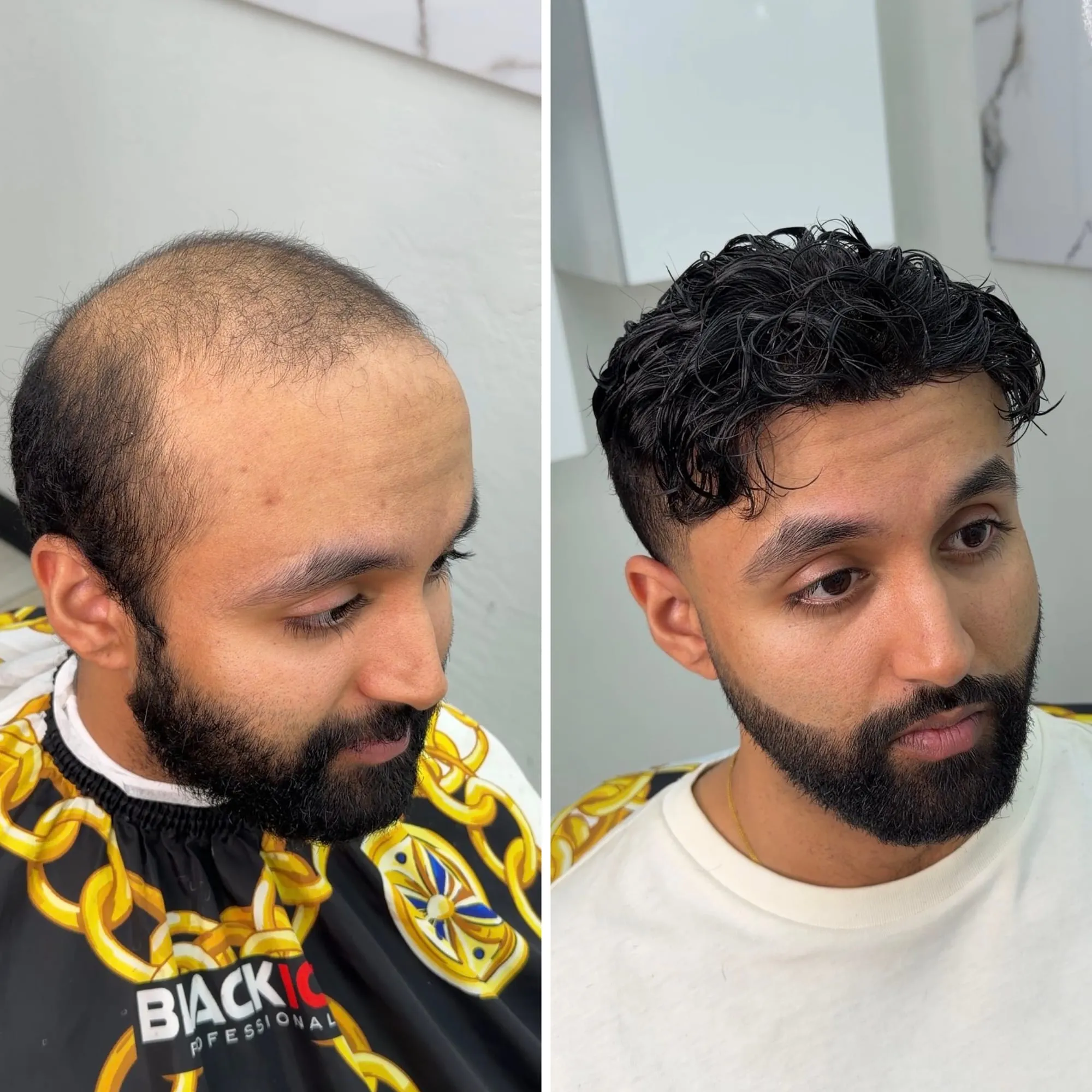
This is what it looks like.
A real client from our chair, photographed before and after his hair system was installed and cut in.
Questions, answered.
Can you wear a hair system in a sauna?
Yes. The main risk is that sustained dry heat softens the adhesive and can dull synthetic fiber over time. Go in on a fully cured bond, keep sessions moderate, sit away from the direct heat source, and let the unit cool before styling.
Is a hot tub safe for a hair system?
It can be, with care. Prolonged hot water softens the bond more than a quick dip, and the chlorine or bromine adds stress to the adhesive and hair. Use a strong hold, keep soaks reasonable, and rinse in cool clean water as soon as you get out.
Why is a sauna harder on my unit than swimming?
Duration. A swim is a short submersion, then you dry off. A sauna or hot tub holds you in wet or dry heat for many minutes, and that steady exposure is what works into the perimeter and softens the bond. The water alone is not the issue, the length of the heat is.
Which base holds up best to regular sauna use?
Lace tends to handle steam and heat better because it breathes and lets moisture pass through. Thin skin and thin poly bases are the most affected by prolonged heat because the film is delicate. If you use saunas often, we usually favor a base with more airflow.
My hairline lifted after a hot tub. What do I do?
That is almost always softened perimeter adhesive, not a failed unit. Cool and dry the edge, press it back down firmly, and reactivate it with a little adhesive if needed. If an edge lifts after every session, your hold is not matched to your routine and we should adjust it.
Keep reading
Related guides.
Hot Weather
How hair systems hold up to sweat, sun, and desert heat, and what we change for Arizona summers so the bond stays put. A practitioner guide.
Swimming
Yes, you can swim with a hair system. Wait for a full adhesive cure, rinse before you get in, and chlorine wears a bond down over time, not instantly.
Exercise and Swimming
Can you work out, sweat, and swim with a hair system? Yes, with the right attachment and care. Here is how to stay active and keep it secure.
Hair System Maintenance
How to keep a hair system clean, secure, and natural: your at home routine, the maintenance schedule, and what a studio visit covers.