Last updated September 28, 2026
Why maintenance visits exist
Adhesive does not last forever. Over two to four weeks a bond loosens at the edges, oils and sweat build under the base, and the hair loses the crisp shape it had on day one. A maintenance visit is how we stay ahead of all of that before it turns into lifting, itch, or a unit that no longer looks its best.
Think of it as the routine service that keeps everything comfortable and undetectable. It is not a repair and it is not a new unit. It is the regular reset that keeps the same hair system looking and feeling the way it did the day we first fitted it.
What happens, step by step
Every visit follows the same core sequence. The exact timing shifts with your base material, your adhesive, and how long you have gone since the last service, but the order rarely changes.
- Removal: we apply a gentle solvent along the perimeter to release the bond, then lift the unit off slowly so we protect both the base and your skin
- Scalp cleaning: we clear old adhesive, oil, and dead skin from your scalp so the surface is clean and healthy before anything new goes down
- Base cleaning: we work leftover adhesive residue out of the underside of the unit so it lies flat and bonds evenly next time
- Inspection: we check the base, the knots, and the perimeter for early wear so we can flag a repair before it becomes a problem
- Reattachment: we lay down fresh tape or glue and set the unit back into its exact position along your natural hairline
- Cut and blend: we trim, texture, and blend the hair into your own growth at the sides and back so there is no visible line
- Style: we wash, dry, and style the unit so you walk out finished, not just reattached
Removal and cleaning the scalp
Removal is slow on purpose. We soften the adhesive first with a solvent suited to your bond, whether that is tape or glue, and only lift once the grip has genuinely released. Pulling a unit that is still stuck is how bases tear and how skin gets irritated, so patience here protects the investment.
Once the unit is off, the scalp gets our full attention. This is the one window where we can see and clean the scalp directly. We clear away every trace of old product, sweat, and buildup, because a clean scalp is what lets the next bond hold cleanly and stay comfortable. If we notice tenderness or irritation, we adjust the plan and, when something looks like it belongs to a doctor rather than a stylist, we tell you to see a physician.
Adhesive residue removal from the base
The underside of your unit collects a film of cured adhesive every cycle. If we simply bonded over it, the base would sit unevenly, the hold would be uneven, and the perimeter would lift early. So we take the time to clean the base back to its original surface.
How we do it depends on the material. This is a common spot where men ask what is going wrong at home, so here is how the symptoms line up with the fix.
- Sticky film that will not wipe off: the residue has cured, so we soak the base in the right solvent rather than scrubbing, which would fray the knots
- Stiff or crunchy perimeter: old glue has hardened at the edge, so we work it loose gently and condition the area back to soft
- Thinning or see through spots on a skin base: the film is wearing, which we flag for a repair or replacement rather than trying to force another bond
- Discoloration along the front: product and oil have stained the base, so we clean and, where needed, note it for the next unit in your rotation
Reattachment, cut, and blend
With a clean scalp and a clean base, reattachment is straightforward. We map the unit back to your natural hairline, lay fresh adhesive, and press it into place so the bond is even from front to nape. Placement matters more than most people expect, since a few millimeters off changes how natural the front reads.
The cut and blend is what turns a reattached unit back into your hair. We trim any new growth of your own, texture the perimeter, and feather the system hair into your sides and back so there is no hard edge. If your own hair has grown out since the last visit, this is when we tidy it so everything moves as one. You leave styled and finished, ready to go straight back to your day.
How long it takes and how often
A standard maintenance visit runs about one to two hours, depending on your base, your adhesive, and how much cut and blend work your own hair needs that day. Longer gaps between visits usually mean more cleaning, so keeping a steady schedule tends to keep each appointment shorter.
Most men we see land on a reattachment cycle somewhere in the two to four week range, and we set your exact interval together based on how you sweat, how active you are, and which adhesive we use. Nico, Ivette, and Denisse handle these visits at both our Peoria, Arizona and Eighty Four, Pennsylvania studios, and we book the next one before you leave so your bond never has a chance to go stale.
Real work
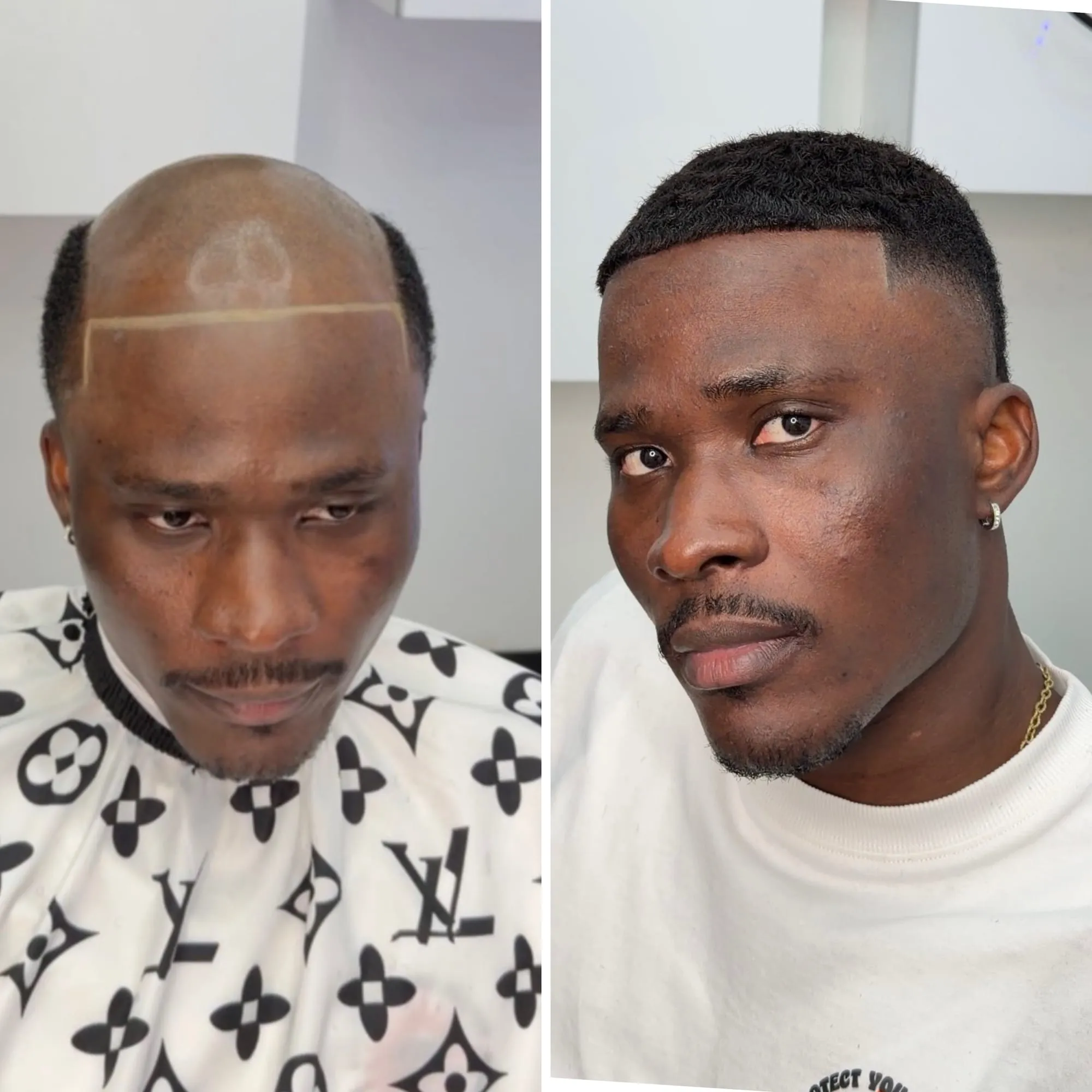
This is what it looks like.
A real client from our chair, photographed before and after his hair system was installed and cut in.
Questions, answered.
How long does a hair system maintenance visit take?
Most visits run about one to two hours. The exact time depends on your base material, your adhesive, and how much cut and blend work your own growing hair needs that day. Longer gaps since your last visit usually add cleaning time, so a steady schedule keeps each appointment shorter.
How often should I come in for maintenance?
Most men land on a two to four week reattachment cycle. We set your exact interval together based on how much you sweat, how active you are, and which adhesive we use. If you are lifting early or getting itchy, that is a sign to shorten the gap.
Does removal hurt or damage my scalp?
No, when it is done properly. We soften the adhesive with a solvent first and only lift once the bond has released, which protects both your skin and the base. If your scalp is tender or irritated, we adjust and, for anything that looks medical, we refer you to a physician.
Can I do maintenance myself at home?
Some men reattach between studio visits, but a full maintenance service is easier and cleaner in our chair, where we can inspect the base, remove cured residue safely, and cut and blend. Many clients do simple reattachments at home and come in for the deeper service.
What is the difference between maintenance and a repair?
Maintenance is the routine reset: removal, cleaning, reattachment, and a cut and blend. A repair addresses damage such as worn knots, a torn base, or thinning areas. We inspect for wear at every maintenance visit so a repair can be planned before it becomes a problem.
Keep reading
Related guides.
Hair System Maintenance
How to keep a hair system clean, secure, and natural: your at home routine, the maintenance schedule, and what a studio visit covers.
Removing a System
How to remove a hair system without damaging your hair: the right solvent, the technique, and why studio removal protects your scalp and the unit.
Attachment Methods
Tape, bonding, and clip attachment for hair systems compared by hold, comfort, and how they suit your routine. How to attach a hair system.
Tools & Supplies
The categories of tools and supplies a hair system barber needs, and how to choose each one, with no brand endorsements and no prices.