

What color matching actually is
Your hair is not one color. It is a base tone with warmth, shine, and, for most men past a certain age, a spread of grey that is uneven across the head. A believable system copies all of that, not just the darkest strand you can find in the mirror.
In our chair we match against the hair you still have, usually the sides and back, because that is the reference everyone else sees next to the unit. We look at the base shade, how warm or ash it runs, and roughly what share of it has gone grey. The goal is a system that disappears into that hair in daylight, not just under studio lights.
How grey gets blended in
Grey is not white, and it is rarely spread evenly. Most men grey at the temples first, then the sides, with the crown and hairline following at their own pace. So we do not just pick a number and call it done. We look at where your grey actually lives and build the system to echo that pattern.
Grey percentage is the shorthand the industry uses for how much white or silver hair is worked into the base color. A lower percentage reads as the first flecks of salt and pepper. A higher percentage reads as a fuller silver. Getting this number close to your own is the single biggest thing that makes a system look real, because a unit that is too dark on a greying man is the classic giveaway.
- Salt and pepper: grey scattered lightly through a darker base
- Concentrated grey at the temples and sides, thinner through the top
- Fuller silver for men who have gone mostly grey
Why the hairline gets treated differently
The front is where the eye lands, so the color at the hairline needs to be slightly softer than the density behind it. A hairline that is uniform and one flat color looks drawn on. We tend to keep the very front a touch less dense and let the grey read naturally there, because that is how a real hairline behaves.
This is also where color and construction work together. The base material, the density, and the grey blend all have to agree at the front, which is why color matching is a conversation about the whole system and not a swatch picked in isolation.
Matching a target that keeps moving
Here is the honest part most people do not think about. You are going to keep greying, and your own hair around the system will too. A system built to match you exactly today can start to look slightly too dark in a year or two if nothing changes on the unit.
We plan for that. Some men choose to have a little more grey built in from the start so the system ages with them for longer. Others prefer an exact match now and refresh the color at maintenance. Neither is wrong. What matters is that we talk about it up front instead of letting the gap open quietly.
Keeping the color from drifting
Hair systems can shift color over time the same way any hair does. Sun, water, product, and washing all pull at the tone, and human hair units tend to lighten and warm up with exposure while the grey can look brassy if it is neglected.
That is a maintenance conversation, not a flaw. At service visits we can tone the system back toward your base, refresh the grey, and correct any drift before it becomes visible. Protecting it between visits, mostly sun and harsh product, buys you a longer, cleaner match.
What we do in the studio
Color is one of the first things we lock in at consultation, because everything downstream depends on it. Nico and the team match against your existing hair in the light you actually live in, agree on a grey percentage that suits both today and where you are heading, and set expectations for how it will need to be maintained.
If you are unsure how much grey to commit to, that is normal. Bring it to the consultation and we will show you what the options look like against your own hair before anything is built.
Real work
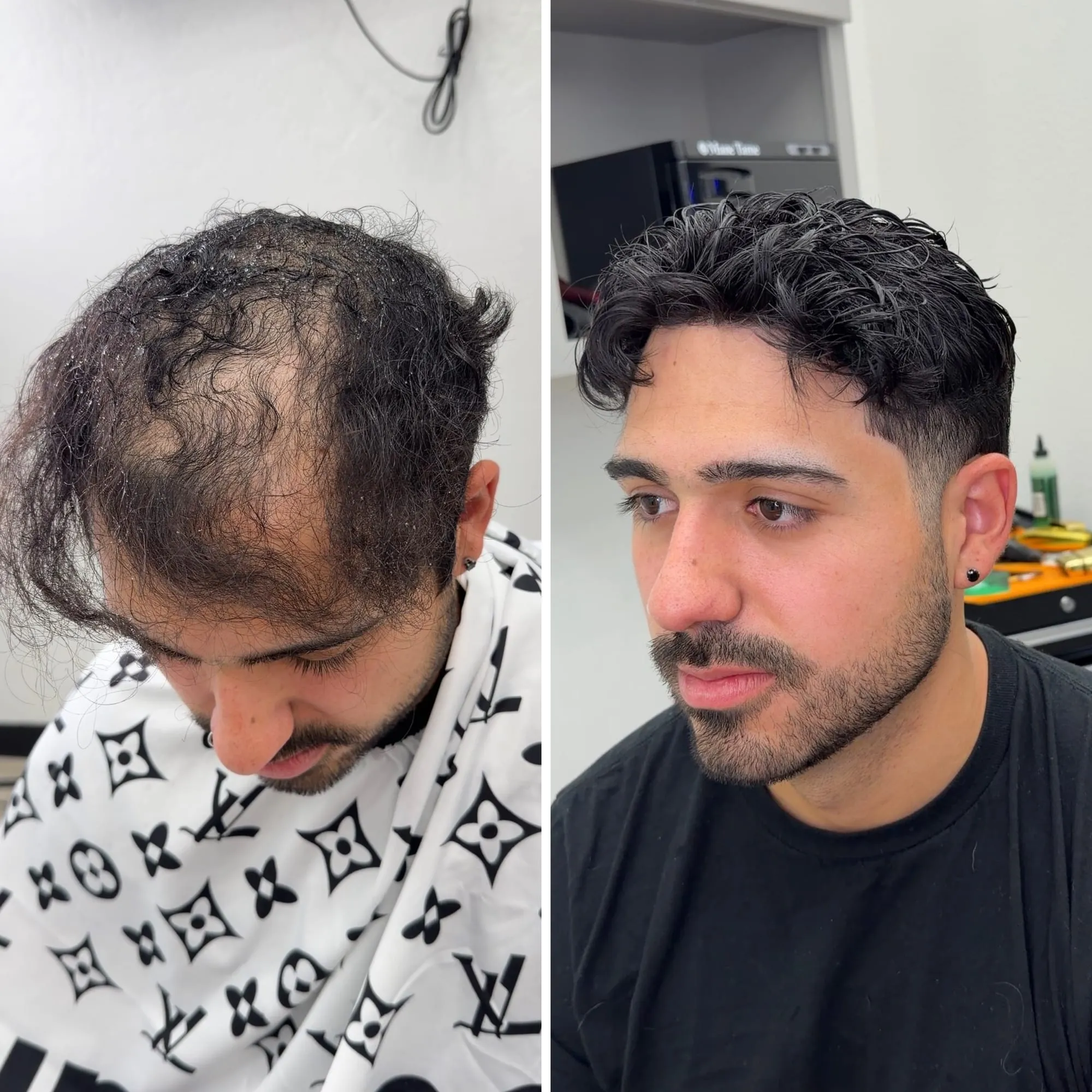
This is what it looks like.
A real client from our chair, photographed before and after his hair system was installed and cut in.
Questions, answered.
Can a hair system include grey or salt-and-pepper hair?
Yes. Grey is blended into the base color as a percentage, and it can be concentrated where your own grey naturally sits, such as the temples and sides. This is a normal part of building a believable system for a greying man.
How do you match the color to my own hair?
We match against the hair you still have, usually the sides and back, looking at the base shade, how warm or ash it runs, and roughly what share has gone grey. The system is toned to sit inside that hair rather than beside it.
What happens as I keep going grey?
Your color will keep changing, so we plan for it. Some men have a little extra grey built in so the system ages with them, others keep an exact match now and refresh the grey at maintenance visits. We talk through both at consultation.
Will the system color fade or change over time?
It can. Sun, water, and product can lighten and warm human hair and make grey look brassy. At service visits we tone it back to your base and refresh the grey, and protecting it from harsh sun and product between visits keeps the match cleaner for longer.
Keep reading
Related guides.
The Hairline
A natural hair system hairline is built from irregularity, a soft density gradient, and careful placement. Here is how we design one that reads as yours.
Human vs Synthetic
Human hair vs synthetic hair systems compared by look, styling, longevity, and care, with the honest tradeoffs we walk through in our chair.
Hair System Maintenance
How to keep a hair system clean, secure, and natural: your at home routine, the maintenance schedule, and what a studio visit covers.
What to Expect at Your Consultation
Your first hair replacement consultation, step by step: the assessment, your options, and the plan you leave with. No pressure, no obligation.