

The short answer
Hair replacement pays better than most barbering services for one structural reason: it is a subscription in disguise. The first install is a single event, but a well fit hair system needs regular maintenance, and that maintenance is where a stable book comes from. Barbers who treat it as a one time sale leave most of the money on the table. Barbers who treat it as an ongoing relationship build income that does not reset to zero every Monday.
So the honest answer to how much hair replacement artists make is: it depends on how well you run four levers. None of them are luck. All of them are learnable, which is exactly what the certification and mentorship path teaches.
Lever one: service mix
Your mix is the ratio of new installs to recurring maintenance, plus whatever cutting and grooming you keep alongside it. A book that is all new installs is fragile, because it depends on constantly filling the top of the funnel. A book weighted toward maintenance is durable, because the same clients come back on a predictable cadence.
The goal is not to abandon barbering. It is to add a higher margin service on top of skills you already have, so a single client can carry a system fit, ongoing maintenance, and their regular cut. That stacked relationship is worth far more than any one line item.
- New installs bring growth but demand marketing and consult time
- Maintenance brings stability and fills your calendar in advance
- Add on grooming keeps the relationship broad and sticky
Lever two: rebooking rate
Rebooking is the single most underrated driver. If a client walks out without the next maintenance appointment on the calendar, you are gambling that they remember, stay motivated, and choose you again. If they walk out already booked, you have converted a service into a schedule.
The mechanics matter more than the intention. Book the next visit before the client leaves the chair. Send reminders. Make the maintenance interval part of the initial expectation rather than a surprise. A high rebooking rate turns a handful of installs into a full week, which is the difference between a side service and a real column of income.
Lever three: chair capacity
Capacity is how much of your available chair time is actually billable, and how efficiently you use it. Two artists can charge the same and earn very differently because one is faster, cleaner, and better scheduled. Speed without quality is worthless here, but speed with quality directly expands what a single chair can produce.
This is where training pays for itself. A confident artist spends less time second guessing color match, density, and attachment, so each appointment runs on rails. Tight scheduling, a stocked station, and a repeatable process reduce the dead time between clients that quietly caps your ceiling.
- Procedure speed earned through reps, not rushing
- Scheduling that minimizes gaps between billable appointments
- A prepped station so supplies never stall a service
Lever four: retention
Retention is how long a client stays before they drift, and it quietly dwarfs everything else over time. A client who stays for years is worth many times one who leaves after a couple of visits, and you paid the acquisition cost only once. That is why trust, comfort, and a natural result are not just craft points, they are income points.
Retention is built at the edges: honest consults that set real expectations, a fit that looks like hair and not a helmet, and maintenance that keeps it that way. When the result holds up in daily life, clients stop shopping. When it does not, no amount of new install volume can outrun the churn.
What raises or lowers the ceiling
Beyond the four levers, a handful of factors move the range up or down. These are the variables to weigh honestly before you project anything, because they explain why two artists in different situations land in very different places.
- Your local market and how much demand exists near your chair
- Whether you own the chair, rent a booth, or earn on a split
- Your skill level and the range of hair systems you can confidently fit
- How much of your week you protect for hair replacement versus general barbering
- Your marketing, referrals, and reputation for natural results
Where certification changes the math
Every lever above compounds faster when you are trained rather than self taught. Certification and hands on mentorship shorten the time it takes to work at billable speed, widen the range of clients you can serve, and give you the consult confidence that drives retention. That is not a soft benefit, it is the fastest path to filling the four levers that decide your income.
If you are weighing the move, start with how the credential and mentorship work, then look at the licensing side so you understand what is required to offer the service where you practice. The skill is teachable. The income follows the levers once the skill is in place.
Real work
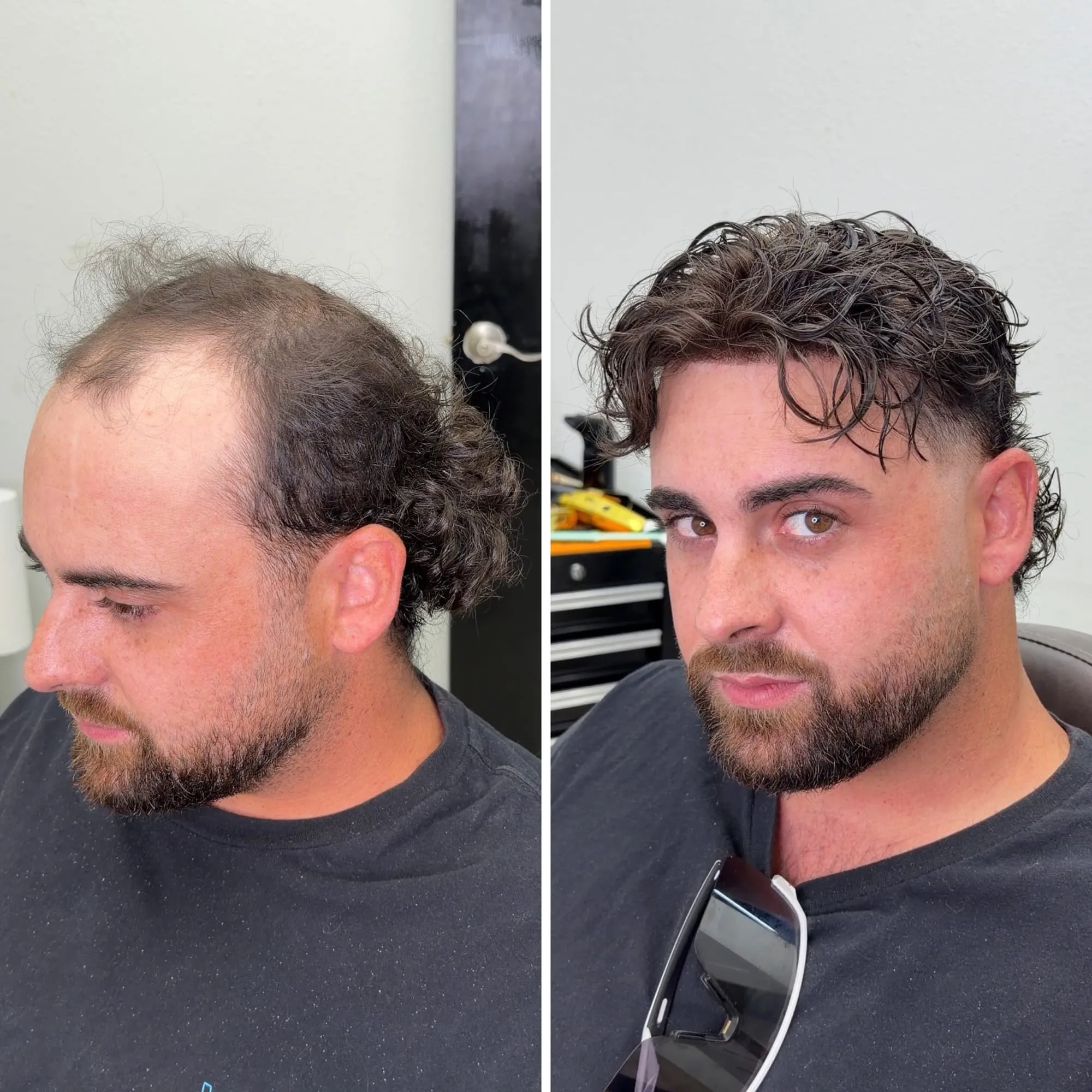
This is what it looks like.
A real client from our chair, photographed before and after his hair system was installed and cut in.
Questions, answered.
How much do hair replacement artists make?
There is no single figure, and anyone promising one is guessing. Income is driven by your service mix, rebooking rate, chair capacity, and client retention, layered on top of your local market and how you earn from your chair. Focus on those levers rather than a headline number.
Is hair replacement really more profitable than barbering?
It can be, mainly because it adds recurring maintenance income on top of skills you already have. The advantage is structural: a fit is followed by ongoing maintenance, so one client relationship produces value repeatedly instead of once.
What is the biggest mistake that limits income?
Treating installs as one time sales. Artists who do not rebook maintenance or invest in retention keep refilling the top of the funnel and never build the durable, recurring book that makes the service worthwhile.
Do I need certification to earn well?
You need skill, and certification with mentorship is the fastest way to reach billable speed and consult confidence. Those directly raise capacity and retention, which are two of the four levers that set your income.
How long before hair replacement becomes real income?
It depends on how quickly you fill the four levers, especially rebooking and retention. Training accelerates it because you spend less time second guessing and more time running clean, repeatable appointments.
Keep reading
Related guides.
How to Become a Hair Replacement Artist
The path from barber to hair replacement artist: the skills, the training, and how to add hair systems as a high margin service line.
Licensing
Do you need a license to do hair replacement? What barbers and stylists should know about requirements in Arizona, Pennsylvania, and beyond.
Pricing Framework
A pricing framework for barbers adding hair replacement: the factors that set install and maintenance fees, and how to build a menu that holds.
Start a Business
The real steps to add hair replacement to a barber business: training, first clients, pricing, and building recurring maintenance revenue.