

Last updated September 28, 2026
The short version, and why it splits in two
Whether insurance helps almost always comes down to one question your plan asks: is this cosmetic or is this medical? A hair system worn to restore the look of a full head of hair is, in most plans' language, a cosmetic choice, and cosmetic choices are the classic thing insurance leaves to you. That is the default answer for the majority of the men we see in our chair.
The picture can change when hair loss is caused by a diagnosed medical condition rather than ordinary pattern loss. In that situation the same physical item is sometimes classified by a different name, a cranial prosthesis, and a minority of plans and pre tax accounts treat that category differently. It is not automatic, it is never guaranteed, and it always runs through your own plan and your own doctor. We stay in the cosmetic lane, so we help you look your best while your physician handles anything medical.
Why a cosmetic hair system usually is not covered
Health insurance is built to pay for care that treats illness or injury. A hair system does not treat, cure, or regrow anything. It covers hair loss cosmetically, restoring the appearance you want without touching the underlying cause. Because of that, most plans file it alongside other elective, appearance driven services and decline to cover it, the same way they would decline a purely cosmetic procedure.
This is worth knowing up front rather than discovering after a denied claim. Going in with clear expectations means you can plan the investment sensibly instead of counting on a reimbursement that, for most men, is not coming. If cost is the concern behind the question, the more useful levers are how the work is structured and paid for over time, which we cover in the pages linked below.
The medical exception: a prescribed cranial prosthesis
When hair loss follows a diagnosed condition, some plans recognize a cranial prosthesis as a covered or partially covered item. Conditions that sometimes open this door include alopecia in its various forms and hair loss connected to medical treatment such as chemotherapy. We are describing how insurers categorize things, not making any medical claim. Whether your specific situation qualifies is a question only your physician and your plan can answer.
If you think you may fall into this category, the path runs through your doctor, not through us. A physician makes the diagnosis and, where appropriate, writes the prescription or letter of medical necessity your plan will ask for. Our role stays cosmetic: we build, fit, and maintain a natural looking unit. We are glad to provide a clear, itemized description of the work so you have the paperwork to submit, but we cannot diagnose a condition or promise how your insurer will respond.
- The diagnosis and prescription come from your physician, not from a studio
- Plans that recognize a cranial prosthesis often ask for a letter of medical necessity
- Coverage, when it exists, is frequently partial rather than full
- Every plan writes its own rules, so verify yours directly before assuming anything
Two paths, side by side
The table below lays out the difference between the everyday cosmetic path and the medical exception so you can see quickly which one your situation resembles. It describes how insurers tend to categorize each case, not a promise about your plan.
| Aspect | Cosmetic hair system | Prescribed cranial prosthesis |
|---|---|---|
| How the plan classifies it | Elective, appearance driven | Tied to a diagnosed medical condition |
| Typical coverage outcome | Generally not covered | Sometimes covered, often partial, never guaranteed |
| What your plan usually needs | Nothing, it is out of pocket | Diagnosis plus a letter or prescription from your physician |
| Who leads the paperwork | You, as a personal purchase | Your physician and your insurer, with our itemized receipt |
| Our role | Build, fit, and maintain the unit | Same, we stay cosmetic and support your documentation |
HSA and FSA accounts are a separate question
Even when a regular health plan will not cover a hair system, a health savings account or flexible spending account can sometimes be used when there is a genuine medical basis, again usually with a letter of medical necessity from your doctor. These accounts follow their own rules, which differ from your health plan's rules, so the two need to be checked separately.
Because the requirements shift from one administrator to the next, the only reliable move is to ask yours directly before you count on it. Treat anything you read in general terms, including this page, as a starting point for that conversation, not as a green light.
Questions to ask your plan before you assume anything
A short, specific call to your insurer or account administrator will tell you more than any general guide can. Ask these, write down the answers, and get a reference number for the call.
- Do you cover a cranial prosthesis, and under what diagnosis codes?
- Do you require a letter of medical necessity, and what must it contain?
- Is coverage full or partial, and is there a limit per year or per item?
- Can I use my HSA or FSA for this, and what documentation do you need?
- Do you need an itemized receipt from the provider, and in what format?
What we can and cannot do
Here is where we are honest about our lane. We do not bill insurance, we do not diagnose medical conditions, and we will never tell you a claim is likely to be approved, because that is your plan's decision and not ours. What we can do is build a hair system that looks like your own hair, maintain it properly, and hand you a clear itemized receipt describing exactly what you paid for so you have clean paperwork to submit if you choose to.
If insurance is part of your thinking, start with your physician for the medical side and your plan for the coverage side, then come to us for the work itself. At your consultation in Peoria, Arizona or Eighty Four, Pennsylvania, we will walk you through the cost drivers and the options without any obligation, so you can make the decision with real information rather than guesswork.
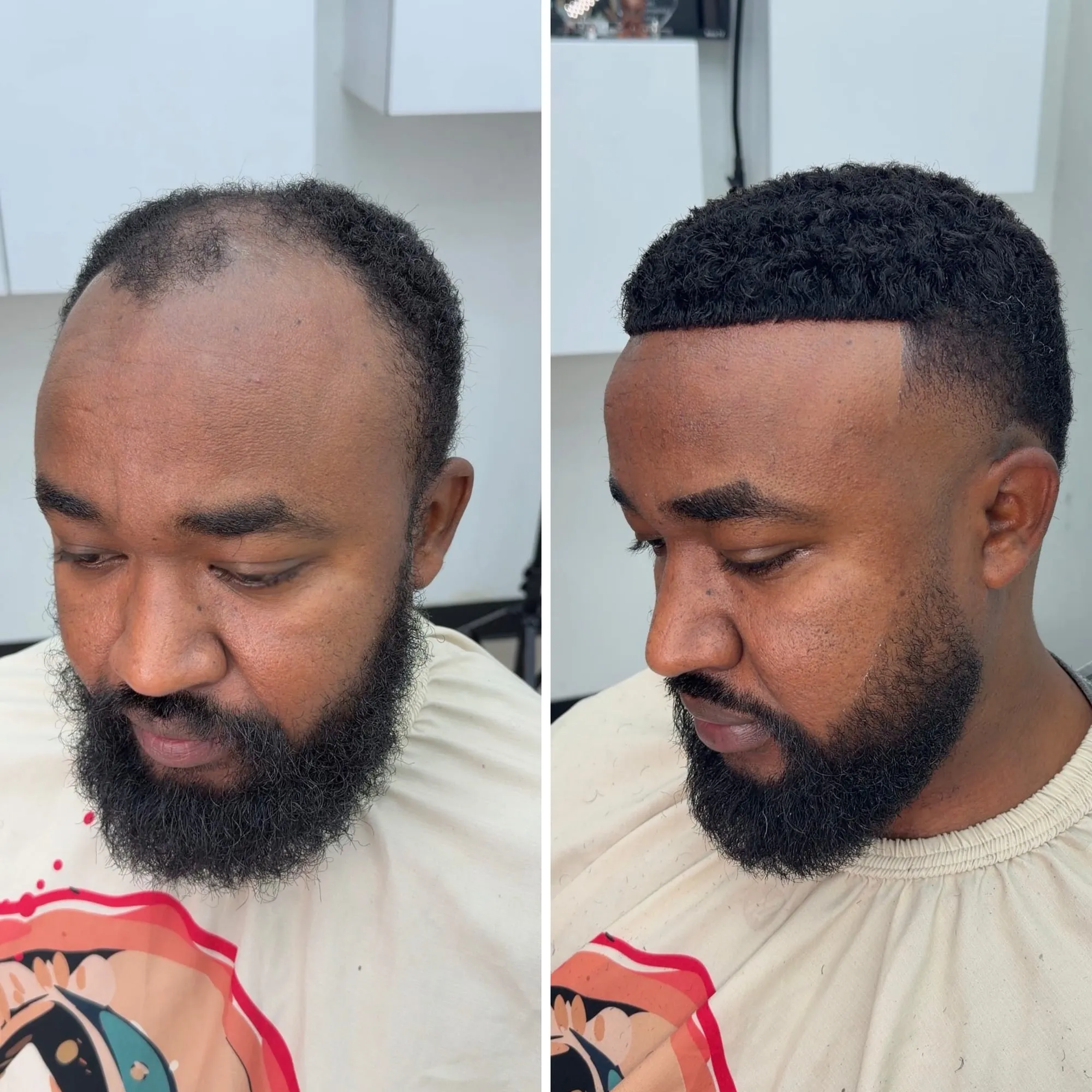
Real work
This is what it looks like.
A real client from our chair, photographed before and after his hair system was installed and cut in.
Questions, answered.
Will my health insurance pay for a hair system?
For most men the answer is no, because plans treat a cosmetic hair system as an elective service that does not treat a medical condition. The exception is hair loss tied to a diagnosed condition, where some plans recognize a prescribed cranial prosthesis. Verify your own plan directly, since none of this is guaranteed.
What is a cranial prosthesis and how is it different?
It is the term insurers and physicians use for a hair system supplied for medically diagnosed hair loss. The physical unit can be the same, but the classification is different, which is why some plans and pre tax accounts treat it differently. Your physician determines whether your situation qualifies.
Can I use my HSA or FSA to pay for a hair system?
Sometimes, when there is a genuine medical basis and usually with a letter of medical necessity from your doctor. These accounts follow their own rules, separate from your health plan, so check with your account administrator before assuming it is eligible.
Do you handle the insurance paperwork for me?
We do not bill insurance or diagnose conditions, and we will never promise that a claim will be approved. What we provide is a clear itemized receipt of the work so you or your physician can submit it. The diagnosis and any letter of medical necessity come from your doctor.
If insurance will not cover it, how do people afford it?
Most men treat a hair system as a planned personal investment and focus on how the work is structured and paid for over time rather than on reimbursement. Our cost and payment guides walk through the drivers, and we set your specific figures at a no obligation consultation.
Keep reading
Related guides.
Payment Options
How paying for hair replacement works: a deposit at order, membership versus per-visit maintenance, and third-party health financing in this field.
Cost Per Year
What a hair system costs to run per year and month comes down to how long it lasts, your maintenance rhythm, and supplies. Here is the whole picture.
What to Expect at Your Consultation
Your first hair replacement consultation, step by step: the assessment, your options, and the plan you leave with. No pressure, no obligation.