Last updated September 28, 2026
The short answer, and why it is not either-or
The question people ask is which is better, and the honest answer is that they solve different problems. Certification answers can I learn the correct method and prove I know it. Mentorship answers can I actually do it, consistently, on a stranger who is sitting in my chair paying attention to every move. A certificate with no chair time behind it produces a person who knows the steps but freezes under a real hairline. Chair time with no structured method behind it produces a person with habits, some of them wrong, that are hard to unlearn later.
So we do not frame this as a fork in the road. We frame it as an order of operations. Certification gives you the map. Mentorship is the terrain. The people who move fastest get the map first so they are not wandering, then spend real time in the terrain with someone who has walked it before. What follows is how the two actually differ, criterion by criterion, so you can see which one you need next.
Certification and mentorship side by side
Here is how the two tracks compare across the criteria that decide which one serves you right now. Neither column is the winner in the abstract. The right choice depends on how much runway you have, how you learn, and whether your problem is knowing the method or repeating it under pressure.
| Criteria | Certification | Mentorship |
|---|---|---|
| Format | Structured curriculum with a defined start, sequence, and finish. Hands-on practice on training material and models. | Ongoing one to one time beside a working practitioner during real client work, shaped around what you are struggling with that week. |
| Depth | Broad and complete on the core method. Covers the full process end to end so nothing is missing from your foundation. | Narrow but deep. Goes as far into cut-in, blend, and consultation nuance as your questions push, on real variation you cannot script. |
| Pace | Compressed and predictable. You know when it starts and when you finish, which makes it easy to plan around a job. | Open-ended and set by your progress, not a calendar. Faster on some skills, slower on the ones that need repetition to stick. |
| Support | Instructor-led during the block, with reference material and a defined standard to measure yourself against afterward. | Continuous and personal. A practitioner who knows your specific weak points and corrects them in the moment, over time. |
| Who it suits | Someone new to the method, or a barber or stylist adding hair replacement who needs the full process fast and correct. | Someone who has the method down and now needs reps, judgment, and confidence before working solo on paying clients. |
What certification actually gives you
Certification is a structured transfer of a proven method. In a defined window you learn how a hair system is templated and measured, how it is cut in and blended to a real head, how attachment and reattachment work, and how to run a consultation so a client leaves understanding what they are buying. Because it is a curriculum rather than a conversation, nothing critical gets skipped. You come out with the whole process in order, a shared vocabulary, and a standard you can hold yourself to.
Its strength is also its limit. A curriculum is efficient precisely because it is controlled, and real clients are not controlled. Certification teaches you the method on material that behaves. It cannot, on its own, hand you the judgment that only comes from doing the method again and again on heads that do not cooperate. That is what certification is for: getting the correct foundation into your hands quickly, so that every rep you do afterward is building on the right technique instead of reinforcing a guess.
What mentorship actually gives you
Mentorship is time. Specifically, it is time beside someone who already does this well, while real work is happening, focused on the exact places you are weak. The value is not new information, because the method does not change. The value is judgment: knowing how much tension a lace front wants before it lifts, reading how a client's own growth pattern will fight a blend, catching your own mistake a second before it becomes a redo. None of that lives in a document. It lives in reps and in feedback the moment you need it.
Mentorship is slower and less predictable than certification by design. Some skills click in an afternoon. Others need weeks of repetition before your hands stop thinking about them. A good mentor speeds this up by pointing at what actually matters and pulling you back from the habits that quietly cost you later, but they cannot compress the reps themselves. This is why mentorship works best after certification rather than instead of it. You are not paying a mentor to teach you the method from zero. You are paying for their eyes on your reps while you make the method your own.
How to choose the one you need next
Start with an honest read of what is actually stopping you. If you do not yet know the full method, if there are steps in templating, cut-in, or consultation you could not confidently explain, your gap is knowledge and certification is the right next move. If you know the steps cold but freeze on a real client, redo your own work too often, or cannot yet quote a job with confidence, your gap is reps and mentorship is what moves you.
For most people the sequence is the same. Get certified first so your foundation is correct and complete, then move into mentorship so that foundation gets tested and hardened on real heads. Trying to skip certification and learn purely by watching tends to leave holes you do not know are there. Trying to certify and then go straight to solo client work tends to produce clean theory and shaky hands. The pairing is what produces a practitioner who is both correct and confident.
- Your gap is knowing the method: certification is the right next step
- Your gap is repeating the method under pressure: mentorship is the right next step
- You are brand new to hair replacement: certification first, then mentorship
- You are switching in from barbering or styling: certification to convert your existing hands, then mentorship to specialize
Why we can speak to both
We are not selling one path because it is the only one we offer. We built and run both a certification track and a mentorship track, and we send people between them constantly based on where they actually are. That is the whole reason we can be blunt about the limits of each. A certification-only shop will tell you a certificate is enough. A mentor-only arrangement will tell you structured courses are a waste. Because we deliver both, out of Peoria and Eighty Four, we have no reason to oversell either one, and every reason to put you on the track that fits.
If you are not sure which you need, that is a normal place to start, and it is a short conversation to sort out. Nico Rigano, Ivette Rigano, or Denisse Diaz will walk through where your skills are, what you are trying to build, and which track moves you fastest from here. Book a consultation and we will map the honest next step rather than sell you the longer one.
Real work
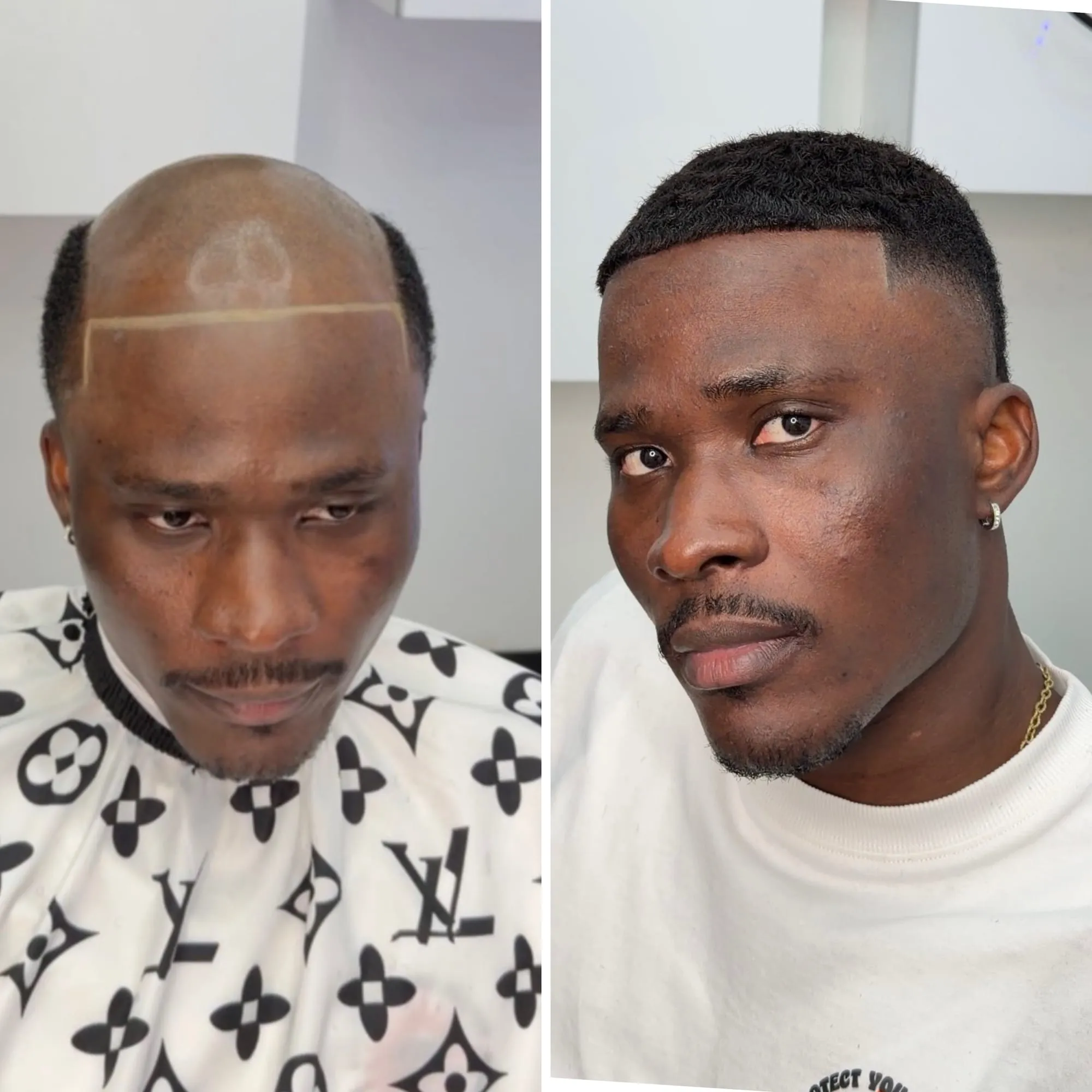
This is what it looks like.
A real client from our chair, photographed before and after his hair system was installed and cut in.
Questions, answered.
Is certification or mentorship better for hair replacement?
They solve different problems. Certification teaches the full method fast in a structured block. Mentorship builds judgment and confidence through reps on real clients over time. Most people do certification first, then mentorship, because the pairing produces someone who is both correct and confident.
Can I skip certification and just find a mentor?
You can, but it tends to leave gaps you do not know are there, because a mentor works on what comes up rather than a complete curriculum. Certification first gets the whole method into your hands in order, so every rep you do under a mentor is building on correct technique instead of guesswork.
Is certification alone enough to start working on clients?
It gives you the correct method and a standard to hold yourself to, but a curriculum is taught on material that behaves and real clients do not. Most people need mentorship time after certification before they are steady working solo on paying clients.
How long does mentorship take compared to certification?
Certification is compressed and predictable, with a defined start and finish you can plan around a job. Mentorship is open-ended and set by your progress rather than a calendar, because some skills click quickly and others need weeks of repetition to stick.
Which should a barber or stylist adding hair replacement choose?
Usually certification first, to convert existing scissor and consultation skills into the specific hair replacement method, then mentorship to specialize and build speed. Your hands already know a lot, so the fastest path is getting the method correct, then getting reps under someone watching.
Keep reading
Related guides.
How to Become a Hair Replacement Artist
The path from barber to hair replacement artist: the skills, the training, and how to add hair systems as a high margin service line.
Training
What hair replacement training for barbers covers, how classroom and mentorship fit together, and how to choose a program that builds a paying service.
Certification
What non-surgical hair replacement certification covers for barbers, what it proves, and how it de-risks adding hair systems to your chair.
How Long It Takes
A realistic timeline from your first hair replacement class to a confident, booked artist, plus the specific things that speed it up.