

Why age-appropriate is the whole point
The fastest way to make a hair system obvious is to give a man in his sixties the density and hairline of a teenager. People who have known you for decades have a mental picture of how your hair has changed over the years, and a sudden thick, low, jet-black head of hair does not fit that picture. The eye and the memory both push back on it.
So the goal is not maximum hair. It is the right hair for you now. We build toward what a man your age credibly has, which usually means honest density, some grey left in, and a hairline that sits where a mature one sits. Done that way, the change reads as looking after yourself rather than something added on.
Density set for your age, not maxed out
Natural hair thins gradually with age, and it does so unevenly, so a uniform, packed unit is one of the clearest giveaways. A system that looks full without looking dense is what we are after, because that is how real hair reads on a man in his fifties and sixties.
In practice we set the density a notch below what most men first ask for, then feather it into the hair around it so there is no wall where the unit begins. A lighter, honest density also tends to sit and move more naturally, and it holds up better day to day than a unit that is stuffed solid.
- Density pitched to look right for your age rather than piled on
- Feathered edges so there is no sudden line where the system starts
- Fullness on top without the packed, planted look
- Set to move and part the way thinner hair actually does
Blending grey honestly
Grey is where a lot of hair replacement goes wrong for older men. Colouring everything back to a single dark shade is what tips people off, because almost nobody past 50 has one flat colour. Real hair at this age is a mix: grey coming through at the temples, salt and pepper in patches, a base colour that has softened.
We match that mix rather than erasing it. That can mean carrying grey through the unit to match your temples and sides, blending salt and pepper so the system and your own hair tell the same story, and choosing a base colour that reads soft rather than dyed. If you want to knock the grey back a little, that is your call, but we do it in a way that still looks like your hair and not a bottle.
A hairline that has matured
A mature hairline is not the same shape as a young one, and building the young version on an older face is a giveaway on its own. Hairlines naturally recede a little and soften at the temples over time, and a believable result respects that rather than fighting it.
We cut the front to sit where a mature hairline sits for your face, with a slightly higher, softer temple rather than a hard, low line. It still frames your face and takes years off how you feel, but it does it by looking like a well-kept version of your own hairline, not a borrowed one from decades ago.
Comfort, skin, and a routine that fits your life
Skin changes with age, and it is worth being straight about that. Thinner, drier scalp skin can react differently to adhesives, so we take time to find an attachment that holds well without irritating your skin, and we adjust it if it is not sitting right rather than asking you to put up with it.
The routine matters too. A good system should fit the life you actually lead, whether you are still working, retired, travelling, or on the golf course most mornings. We talk through how much upkeep you want to take on and set the attachment and maintenance schedule around that, so wearing a system stays simple instead of becoming a second job.
Deciding whether it is right for you
Plenty of men reach their fifties and sixties weighing a system against just shaving it off, living with the thinning, or considering surgery. A hair system is not the only answer, and we will tell you honestly whether it is a good fit for your hair, your skin, and what you want out of it.
The way to find out is to sit down and look at it in person. In a consultation we look at your existing hair and grey, talk through age-appropriate density and hairline options, and tell you plainly what upkeep it takes. If it is the right call, we build it to read as your own. If it is not, we will say so.
Real work
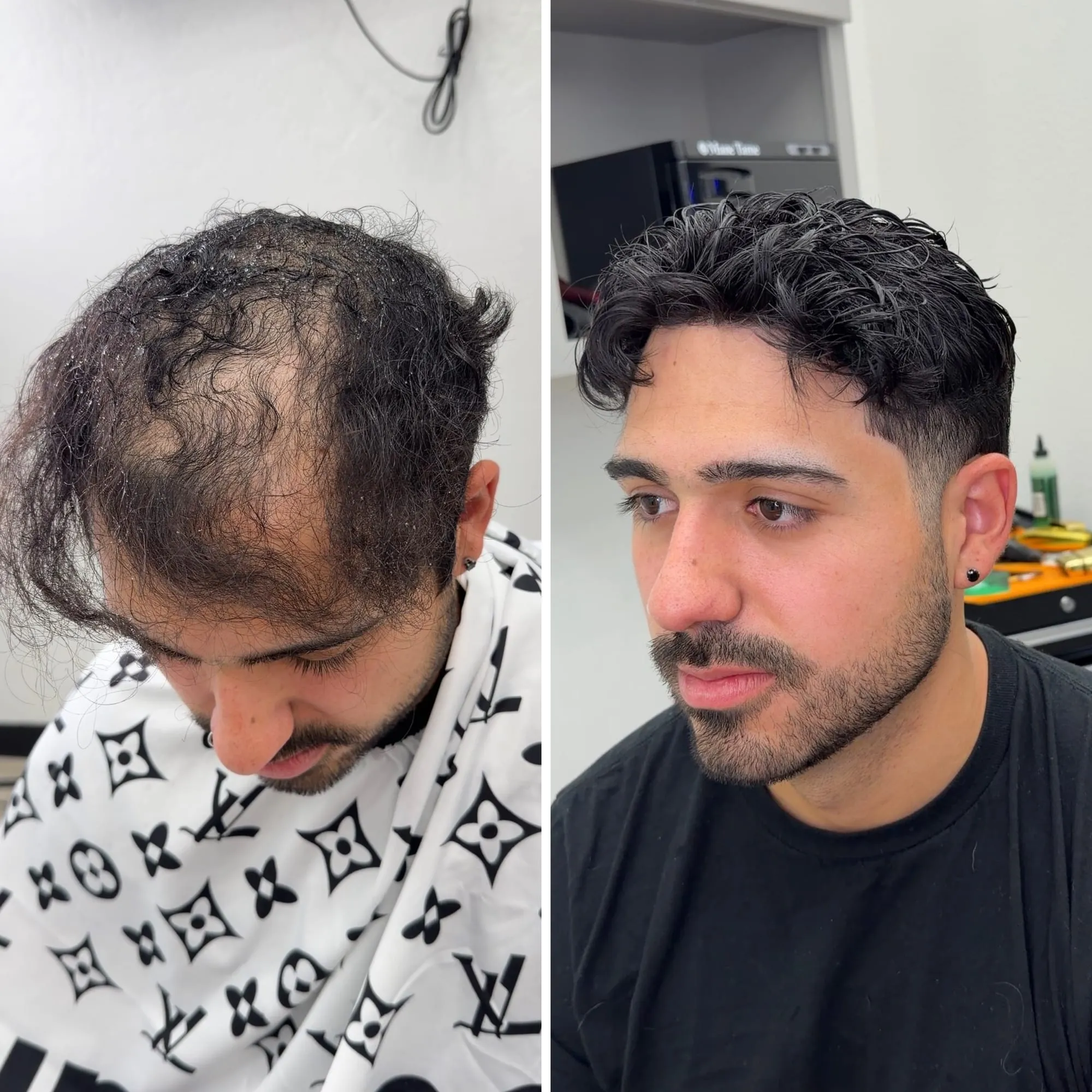
This is what it looks like.
A real client from our chair, photographed before and after his hair system was installed and cut in.
Questions, answered.
Will a hair system look natural on a man in his 60s?
Yes, when it is built for your age rather than turned back decades. That means honest density instead of maximum fullness, grey carried through to match your temples and sides, and a mature hairline. Built that way, it reads as your own hair kept well.
Should I keep my grey in the system?
Usually some of it, yes. Almost nobody past 50 has one flat dark colour, so matching the salt and pepper in your own hair is what keeps a system believable. If you want to soften the grey a little we can, but we do it so it still looks like your hair.
Is a lower density really better?
For most older men, yes. Natural hair thins gradually with age, so a packed unit is one of the clearest giveaways. We aim for full without dense, set a notch below what men first ask for, then feather it so there is no wall where the system starts.
Will thinner or more sensitive scalp skin be a problem?
It is something we account for rather than a dealbreaker. Skin changes with age and can react differently to adhesives, so we take time to find an attachment that holds without irritation and adjust it if it is not sitting right.
How do I decide between a system, shaving it off, or surgery?
Sit down and look at it in person. In a consultation we assess your hair, grey, and skin, walk through age-appropriate options, and tell you plainly what a system takes to maintain. If it is not the right fit for you, we will say so.